
Alltagsküche
Kochen, wie es zuhause schmeckt
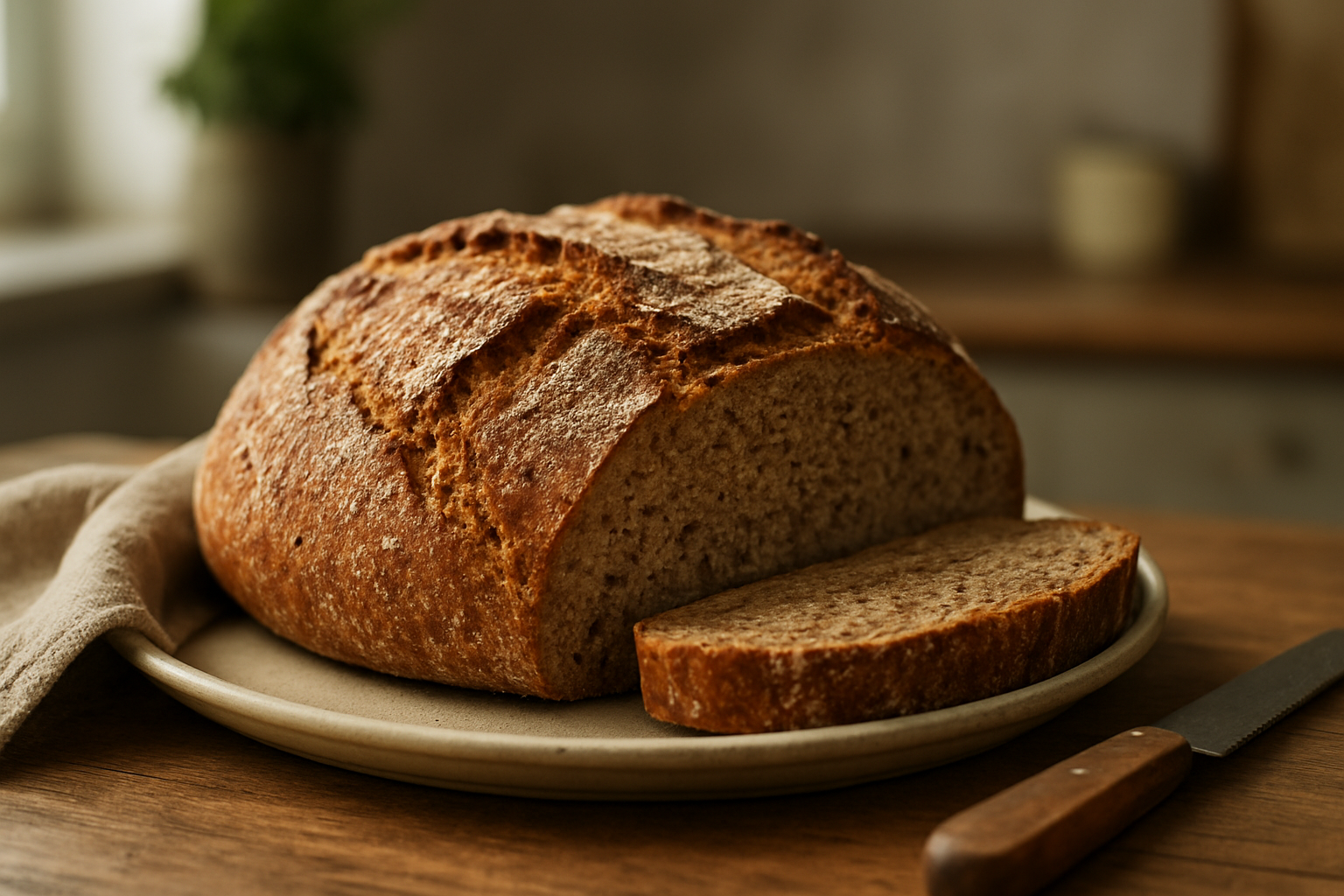
Wholemeal Yoghurt Bread: Soft, Moist and Easy to Bake
🛒 Ingredients
- ✓
300 g wholemeal wheat flour
- ✓
200 g plain flour
- ✓
2 level tsp salt
- ✓
2 tbsp linseeds
- ✓
1 tsp dried coriander
- ✓
200 ml milk
- ✓
150 g natural yoghurt
- ✓
20 g fresh yeast
- ✓
1 tsp sugar
- ✓
water, for brushing
This recipe is also available in German.
📌 Overview
Wholemeal yoghurt bread is a good everyday loaf when you want homemade bread that tastes hearty but does not turn dry, heavy or crumbly. The yoghurt adds moisture and a gentle tang, while wholemeal wheat flour, linseeds and dried coriander give the loaf fibre, nuttiness and a warm savoury aroma. To get a soft, even crumb, the key details are simple: the milk and yoghurt mixture must be only lukewarm, the yeast needs time to work, and the dough should rise fully before baking.
This recipe takes you through the full method, from mixing the two flours to checking the dough texture, shaping the loaf and baking it at 200°C conventional heat. The blend of wholemeal flour and plain flour keeps the bread wholesome but prevents it from becoming too compact. Linseeds bind moisture and add bite, while dried coriander rounds out the flavour without overpowering the loaf. If you enjoy hearty wholegrain baking, the rustic wholemeal loaf with wheatgerm is a stronger wholegrain option. For a lighter crisp-crust bake, try how to bake a crisp white bread baton at home. The homemade walnut bread recipe is a nuttier variation, while the Parmesan campfire bread twists are a savoury idea for informal outdoor meals. Below you will also find practical fixes for common problems such as dense bread, gummy crumb, a soft crust or dough that refuses to rise.
👨🍳 How to make Wholemeal Yoghurt Bread
- 1
Mix the wholemeal wheat flour, plain flour, salt, linseeds and dried coriander together in a large bowl so the salt, seeds and spice are evenly distributed.
- 2
Warm the milk and natural yoghurt gently until the mixture is only lukewarm. It should feel warm to the touch but not hot, as excessive heat can weaken or kill the yeast.
- 3
Crumble the fresh yeast into the milk and yoghurt mixture, add the sugar and stir until the yeast has completely dissolved. If you want to check that the yeast is active, leave the mixture for 5 minutes.
- 4
Pour the yeast mixture into the flour and knead by hand or with a stand mixer for 8–10 minutes, until you have a smooth, elastic and slightly moist dough. If the dough feels very dry, add lukewarm milk or water one tablespoon at a time.
- 5
Cover the dough and leave it to rise in a warm, draught-free place for about 2 hours, or until it has noticeably increased in size. It does not need to double perfectly, but it should look lighter and more aerated.
- 6
Knead the dough only briefly once more so you do not knock out too much air, then shape it into a round loaf with a lightly tightened surface.
- 7
Place the loaf on a baking tray lined with baking parchment, slash the top several times at an angle and cover it with a clean tea towel. The cuts help the loaf expand in a controlled way instead of tearing randomly.
- 8
Leave the shaped loaf to rest for a further 30 minutes, until it has risen slightly and feels elastic when gently touched.
- 9
Preheat the oven to 200°C conventional heat. A fully preheated oven is important for good oven spring.
- 10
Brush the loaf lightly with water just before baking. For a stronger crust, place a small ovenproof dish of water in the oven to create steam.
- 11
Bake on the middle shelf for about 60 minutes, until the loaf is golden brown and the base sounds hollow when tapped. If the top browns too quickly, cover it loosely with baking parchment for the last 10–15 minutes.
- 12
Leave the bread to cool completely on a wire rack before slicing. This allows steam to escape and helps the crumb set instead of becoming gummy.
🧠 Why It Works
This wholemeal yoghurt bread works because it balances wholegrain flour, moisture, acidity and proofing time. Wholemeal wheat flour brings flavour, fibre and structure, but it can make bread heavy if the dough is too dry or under-proofed. Plain flour helps lighten the texture and supports a more elastic crumb. Natural yoghurt adds moisture and gentle acidity, keeping the loaf softer and giving it a mild tang. Linseeds absorb water and add a nutty bite, which helps the bread stay pleasant the next day. Dried coriander adds a warm savoury note that complements the wholemeal flavour without dominating it. The long first rise gives the yeast time to develop flavour and volume, while the second rise after shaping helps create a more even crumb. Brushing the loaf with water and baking it in a fully preheated oven encourage a firmer, crisper crust.
🛠️ Troubleshooting
Why is my wholemeal yoghurt bread too dense?
Dense wholemeal yoghurt bread is usually caused by inactive yeast, a milk and yoghurt mixture that was too hot, insufficient rising time or a dough that was too dry. The liquid should be lukewarm only, and the dough should feel elastic and slightly moist after kneading. If the room is cool, give the dough an extra 20–30 minutes to rise.
How do I stop wholemeal yoghurt bread from being gummy inside?
If the bread is wet or gummy inside, it was probably underbaked or sliced too soon. Bake it for about 60 minutes and check that the base sounds hollow when tapped. Cool the loaf completely on a wire rack before slicing, because the crumb continues to set as it cools.
Can I prepare the dough in advance and bake it later?
Yes, you can refrigerate the dough after the first rise for up to 24 hours. Let it lose some of its chill before shaping. After shaping, the loaf still needs to rise visibly before it goes into the hot oven.
How can I vary the flavour of this bread?
You can replace linseeds with chia seeds, sunflower seeds or chopped walnuts. Chia seeds absorb a lot of liquid, so the dough may need a little extra milk or water. A small splash of cider vinegar can sharpen the flavour, but it does not replace proper kneading and proofing.
Why is the crust on my wholemeal yoghurt bread not crisp?
A soft crust often means the bread was wrapped while still warm or not cooled on a rack. Let it cool uncovered on a wire rack. For a crisper crust, brush the loaf with water before baking, make sure the oven is fully preheated and use a little steam during the first part of baking.
What should I do if the yeast dough does not rise?
If the dough does not rise, the yeast may be old, the liquid may have been too hot, or the room may be too cold. The yeast mixture should smell active and may foam slightly after a few minutes. Keep the dough warm but not hot, and extend the proofing time if needed.
💡 Tips and Variations
- •
For a richer version, replace the milk with buttermilk and add 50 g chopped walnuts. This gives the bread more bite, a deeper flavour and a more savoury character.
- •
A stand mixer with a dough hook is useful because wholemeal dough benefits from thorough kneading. Knead until the dough looks smoother and no longer breaks apart in a crumbly way.
- •
The defining feature of this loaf is the combination of wholemeal flour and yoghurt: the flour gives a hearty flavour, while the yoghurt keeps the crumb moist and adds a mild tang.
- •
For a vegetarian version, no changes are needed. For a vegan alternative, replace the natural yoghurt with unsweetened soy yoghurt and use soy or oat milk instead of dairy milk. Judge the proofing by appearance, as the dough may rise slightly differently.
- •
You can use chia seeds instead of linseeds. Because chia seeds swell strongly, keep an eye on the dough texture and add a little extra liquid if it feels too tight.
- •
A small splash of cider vinegar can make the flavour brighter and the crumb feel fresher. Use it sparingly so the bread does not taste sour.
- •
A gluten-free adaptation needs more than a direct flour swap. Use a gluten-free bread flour blend with a binder such as psyllium husk or xanthan gum, and expect less oven spring and a different crumb.
- •
For an especially moist loaf, soak the linseeds for 10 minutes in part of the milk and yoghurt mixture before kneading them into the dough.
- •
For better crust development, bake the bread with steam for the first 10 minutes, then briefly open the oven door near the end of baking to release excess moisture.
- •
The key success sign is the crumb after cooling: it should be moist and elastic, but not sticky. Do not slice the loaf while it is still hot.
📦 Storage
- •
Store the fully cooled wholemeal yoghurt bread in a bread bin or cotton bag. This helps preserve the crust while stopping the crumb from drying out too quickly.
- •
The bread keeps well at room temperature for about 2–3 days. If the crust softens, toast individual slices or refresh the loaf briefly in the oven at 180°C.
- •
For longer storage, slice the bread, pack it airtight and freeze it. The slices can be toasted from frozen or reheated briefly in the oven.
🍷 Pairing
- •
Wholemeal yoghurt bread pairs well with butter, cream cheese, herb quark, mild cheese, honey, jam, eggs, hummus and savoury spreads. Its gentle tang also works well with smoked fish, avocado, tomatoes, cucumber and hearty soups.
- •
For breakfast, serve it with coffee, black tea or herbal tea. With a savoury meal, a German Riesling Kabinett complements the yoghurt tang and nutty flavour, while a Franconian Silvaner works well with the coriander note and cheese. For a non-alcoholic pairing, try sparkling apple juice, malt drink or a lightly bitter alcohol-free wheat beer.
❓ F.A.Q.
How long should wholemeal yoghurt bread dough rise?
The dough needs about 2 hours for the first rise and another 30 minutes after shaping. In a cool kitchen, the first rise may take longer. The important sign is that the dough has visibly increased in size and looks lighter.
Can I make wholemeal yoghurt bread vegan?
Yes, you can make it dairy-free and vegan by replacing natural yoghurt with unsweetened soy yoghurt and milk with soy or oat milk. Avoid strongly sweetened or flavoured alternatives, as they can change the bread’s flavour.
What is the best way to store wholemeal yoghurt bread?
Store the bread fully cooled in a bread bin or cotton bag at room temperature. It keeps for about 2–3 days. For longer storage, slice and freeze it, then toast or reheat slices as needed.
What does dried coriander do in this bread recipe?
Dried coriander gives the bread a warm, lightly savoury aroma that works well with linseeds and wholemeal flour. It should support the flavour rather than dominate it. If you dislike coriander, leave it out or use a mild bread spice blend.
How do I get a crisp crust on wholemeal yoghurt bread?
Brush the loaf with water before baking, preheat the oven fully and let the bread cool on a wire rack. For a stronger crust, add a small dish of water to the oven for steam, then allow excess moisture to escape near the end of baking.
Why add yoghurt to bread dough?
Yoghurt adds moisture, mild acidity and tenderness. This is especially useful in wholemeal bread because wholemeal flour absorbs more liquid and can otherwise make the loaf dry or compact.
Can I use dried yeast instead of fresh yeast?
Yes, dried yeast can replace fresh yeast. For 20 g fresh yeast, use about 7 g dried yeast, depending on the packet instructions. Mix it into the flour or dissolve it in the lukewarm milk and yoghurt mixture. The rise time may vary slightly.
Can I prepare wholemeal yoghurt bread overnight?
Yes, the dough can rest overnight in the fridge after the first rise. The next day, let it warm slightly before shaping. Once shaped, the loaf must rise visibly again before baking.
🏛️ History and Tradition
Wholemeal yoghurt bread is rooted in traditional German baking, where combining whole grains with fermented dairy products has long been a method to enhance flavour and texture. Historically popular in southern Germany, especially Bavaria and Swabia, this bread reflects the region’s emphasis on wholesome, rustic ingredients and slow fermentation. Its use of fresh yeast and yoghurt aligns with centuries-old practices of natural leavening and dairy integration, often enjoyed during everyday meals and festive occasions alike. This recipe embodies authentic German culinary heritage, reinforcing Alltagsküche’s commitment to cultural and gastronomic authenticity.
- •
This wholemeal yoghurt bread is a reliable everyday loaf when you want a moist, flavourful bread with a hearty wholegrain character. The yoghurt keeps the crumb soft, while linseeds and coriander add texture and savoury depth.
- •
Pay particular attention to lukewarm liquid, active yeast, enough rising time and complete cooling before slicing. With those details in place, the loaf works well for breakfast, sandwiches, simple suppers and freezing in slices.
Rate this recipe
Click or tap the stars to rate