
Alltagsküche
Kochen, wie es zuhause schmeckt
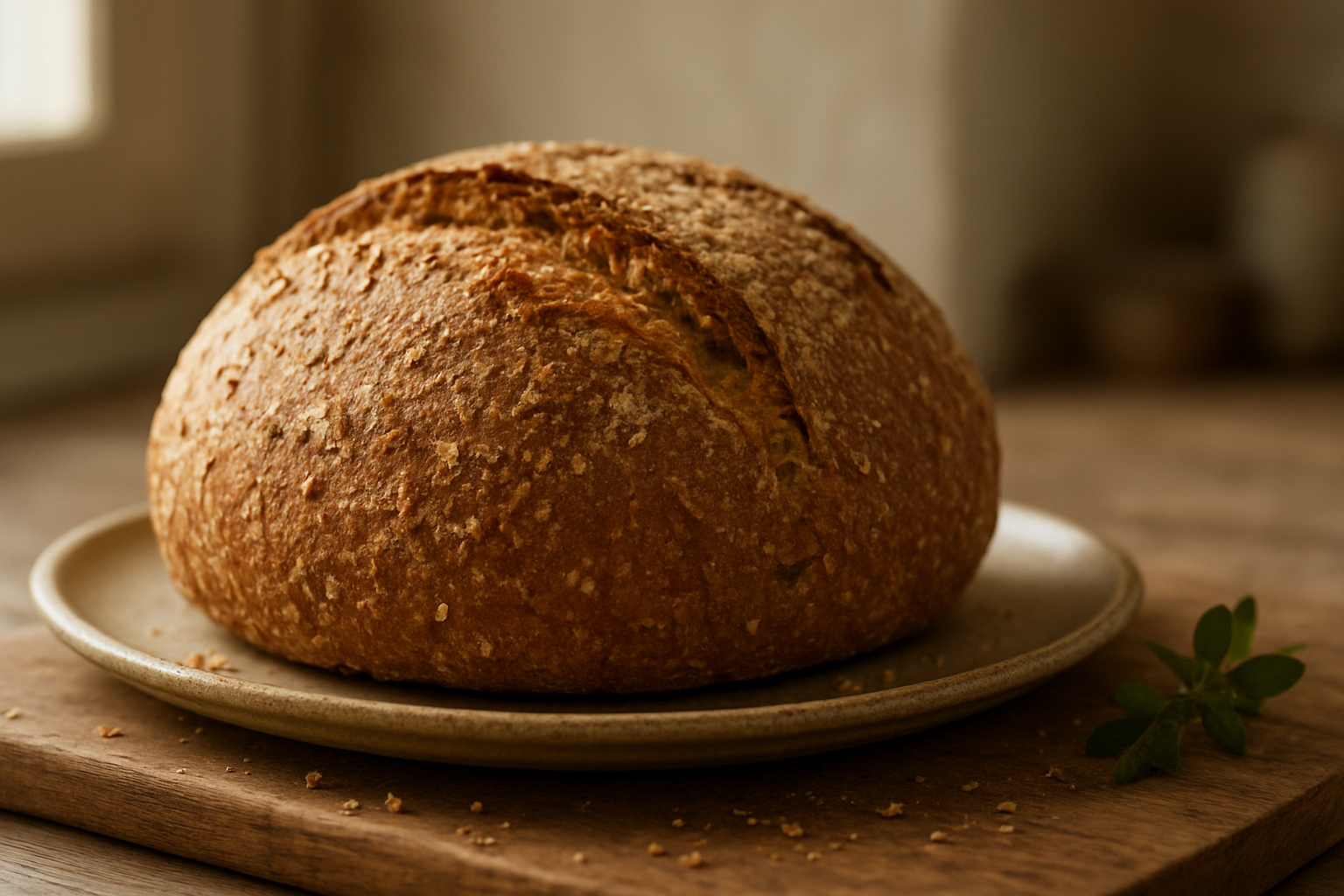
Rustic Wholemeal Loaf with Wheatgerm
🛒 Ingredients
- ✓
420 ml lukewarm water
- ✓
1 tbsp honey
- ✓
500 g wholemeal wheat flour
- ✓
50 g wheatgerm
- ✓
1 sachet dried yeast (7 g)
- ✓
1 tsp salt
- ✓
2 tbsp corn oil
This recipe is also available in German.
📌 Overview
A rustic wholemeal loaf with wheatgerm is a hearty tin loaf made with wholemeal wheat flour, wheatgerm, dried yeast, honey and a little oil. It has a nutty flavour, is filling and works well for breakfast, supper, soups or savoury spreads. To keep it from becoming dry or overly dense, the wholemeal dough needs enough liquid, proper kneading and a full rise before baking.
If you enjoy rustic breads, the rustic Swiss country loaf and the wholesome wholemeal yoghurt bread are good everyday alternatives. For a lighter, crisper option, try the crisp white bread baton. If you like Mediterranean flavours, the wholemeal baguettes with olives and tomatoes are a strong match.
The key detail in this recipe is dough hydration: wholemeal flour and wheatgerm absorb a lot of water. The dough may be soft and slightly sticky at first, but it should become more elastic after kneading. Once it has risen visibly and cooled completely after baking, you get a moist, sliceable crumb.
👨🍳 How to make Rustic Wholemeal Loaf with Wheatgerm
- 1
Warm the water until lukewarm, not hot. Stir in the honey until fully dissolved. Water that is too hot can weaken the yeast.
- 2
In a large mixing bowl, combine the wholemeal wheat flour, wheatgerm, dried yeast and salt. Make sure the yeast is evenly distributed.
- 3
Make a well in the centre of the dry ingredients, then pour in the honey water and the corn oil.
- 4
Gradually mix the liquid with the flour from the edges until a soft, slightly sticky dough forms. Wholemeal dough can be wetter than white bread dough.
- 5
Knead the dough for about 10 minutes by hand or 6–8 minutes in a stand mixer. It should become smoother and hold together better, but it may still feel slightly tacky.
- 6
If the dough feels very dry or cracked, add lukewarm water one tablespoon at a time. If it looks loose, rest it for 5 minutes before adding extra flour.
- 7
Shape the dough into a long loaf and place it in a lightly oiled loaf tin, about 30 cm long.
- 8
Cover the tin with lightly oiled cling film or a damp tea towel and leave the dough in a warm, draught-free place for 60–75 minutes, until visibly risen.
- 9
Heat the oven to 200°C conventional. If needed, place a small heatproof dish of hot water on the oven floor so the crust does not dry too quickly.
- 10
Remove the cover, score the top of the loaf several times with a sharp knife and brush the surface lightly with water.
- 11
Bake on the middle shelf for 35–40 minutes, until the crust is golden brown and the loaf sounds hollow when tapped underneath.
- 12
Remove the loaf from the tin and leave it to cool completely on a wire rack. Slice only once fully cool so the crumb does not become compressed or gummy.
🧠 Why It Works
This rustic wholemeal loaf with wheatgerm works because wholemeal wheat flour and wheatgerm bring flavour, fibre and a substantial crumb. Wheatgerm adds a nutty taste but also increases how much water the dough absorbs. That is why the 420 ml water matters and why the dough can look soft at first. Honey supports the yeast, rounds out the stronger wholemeal notes and helps the crust brown. Corn oil keeps the crumb moister and improves freshness. The loaf tin supports the heavier wholemeal dough so it rises evenly. Complete cooling is essential because the moist wholemeal crumb continues to set after baking.
🛠️ Troubleshooting
Why is my wholemeal loaf dense or dry?
A dense or dry loaf is often caused by too little water, insufficient rising or overbaking. The dough should be soft and slightly sticky, rise visibly and bake only until the loaf sounds hollow underneath.
How do I stop the crust becoming too hard?
The crust becomes too hard if the oven is very dry or the loaf bakes too long. Brush the top with water and use a small dish of hot water in the oven at the start of baking.
Why is my wholemeal bread not rising?
If the dough does not rise, the yeast may be old or the water may have been too hot. Use fresh dried yeast, lukewarm water and keep the dough in a warm, draught-free place.
Why is the crumb gummy inside?
The loaf was probably sliced too early or not baked long enough. Let it cool completely and check for a hollow sound underneath before removing it from the oven.
What should I do if the dough is very sticky?
Sticky dough is normal with wholemeal bread. Rest it for 5 minutes after mixing so the flour and wheatgerm absorb water. Add only a little flour, or the bread may turn dry.
Can I prepare the dough ahead and bake later?
Yes, after kneading, the dough can rest covered in the fridge for up to 12 hours. Let it come closer to room temperature and rise visibly before baking.
How do I reheat frozen wholemeal bread?
Frozen slices can be reheated in a toaster or in the oven at 150–160°C. Larger pieces should be warmed more slowly so they heat through properly.
Why does my wholemeal loaf collapse after baking?
This can happen if the dough was too loose, lacked surface tension or was baked before fully risen. A loaf tin helps, but the dough should be risen and not liquid before baking.
💡 Tips and Variations
- •
For more bite, add 30–50 g toasted sunflower seeds, pumpkin seeds, walnuts or linseed to the dough. If you add a lot of seeds, include 1–2 tbsp extra water.
- •
Corn oil can be replaced with rapeseed oil, sunflower oil or a mild olive oil. Olive oil gives the loaf a slightly stronger, more Mediterranean flavour.
- •
Honey can be replaced with agave syrup, rice syrup or maple syrup. For a fully vegan version, use a plant-based sweetener.
- •
If you omit the honey completely, the rise may be a little slower and the crust may brown less. Give the dough extra time if needed.
- •
A teaspoon of malt extract deepens the bread flavour and helps browning. Alternatively, a small splash of cider vinegar can round out the wholemeal notes.
- •
For a milder loaf, replace part of the wholemeal wheat flour with wholemeal spelt flour. The dough will be slightly softer and the flavour gentler.
- •
A gluten-free version needs a proper gluten-free bread flour blend with a binder. Plain buckwheat flour does not behave like wholemeal wheat flour and will give a different structure.
- •
The main secret is patience after baking: wholemeal bread must cool completely before slicing, otherwise the crumb can seem damp and heavy.
📦 Storage
- •
Store the fully cooled loaf in a bread bin or cotton bag at room temperature. It keeps well for about 3 days and dries out more slowly this way.
- •
For longer storage, slice the loaf and freeze it in portions. Frozen slices can be toasted directly or refreshed briefly in the oven.
🍷 Pairing
- •
Rustic wholemeal loaf with wheatgerm pairs well with butter, cream cheese, herb quark, sliced cheese, hummus, avocado, honey, jam or savoury vegetable spreads. It is also a filling side for soups, stews and salads.
- •
For drinks, choose coffee, black tea, herbal tea, buttermilk or apple spritzer. For a savoury supper, dry Riesling, Pinot Gris or a light alcohol-free beer work well.
❓ F.A.Q.
How long should wholemeal bread with wheatgerm rise?
The dough should rise for 60–75 minutes in a warm place, until visibly puffed. In a cool kitchen, the rise may take longer.
Can I make this wholemeal loaf without honey?
Yes, you can replace honey with agave syrup, rice syrup or maple syrup. If you omit it completely, the yeast may work more slowly and the crust may brown less.
How should I store wholemeal bread?
Store it in a bread bin or cotton bag at room temperature. For longer keeping, slice the loaf and freeze it, then toast or warm slices as needed.
What can I use instead of corn oil?
Rapeseed oil, sunflower oil, mild olive oil or another neutral vegetable oil all work. Olive oil gives a stronger flavour.
Is rustic wholemeal bread with wheatgerm vegan?
With honey, it is not strictly vegan. Replace the honey with agave syrup, rice syrup or maple syrup to make the bread vegan.
What does wheatgerm do in bread?
Wheatgerm is the nutrient-rich germ of the wheat kernel. It gives bread a nutty flavour and also increases how much water the dough absorbs.
Can I let wholemeal bread dough rise overnight?
Yes, after kneading, the dough can rise overnight in the fridge. The next day, let it come closer to room temperature and rise visibly before baking.
How do I make wholemeal bread moist instead of dry?
Wholemeal bread stays moister when the dough has enough water, is kneaded properly and is not overbaked. Oil and complete cooling also help the crumb stay soft.
🏛️ History and Tradition
Rustic wholemeal bread has long been a cornerstone of German baking, prized for its wholesome ingredients and sustaining qualities. Traditionally baked in rural Bavarian and Swabian households, this bread reflects a culture of simplicity and nourishment. Often enjoyed during everyday meals and festive occasions alike, it embodies the German ethos of hearty, honest food. The use of wheatgerm and wholemeal flour connects modern recipes to centuries-old practices, reinforcing the dish’s authentic regional identity and culinary heritage.
This rustic wholemeal loaf with wheatgerm is a reliable basic recipe for a nutty, filling tin loaf. The key points are a soft wholemeal dough, active yeast, enough rising time and complete cooling before slicing. This gives a moister, more sliceable bread that works for breakfast, supper and savoury meals.
Rate this recipe
Click or tap the stars to rate