
Alltagsküche
Kochen, wie es zuhause schmeckt
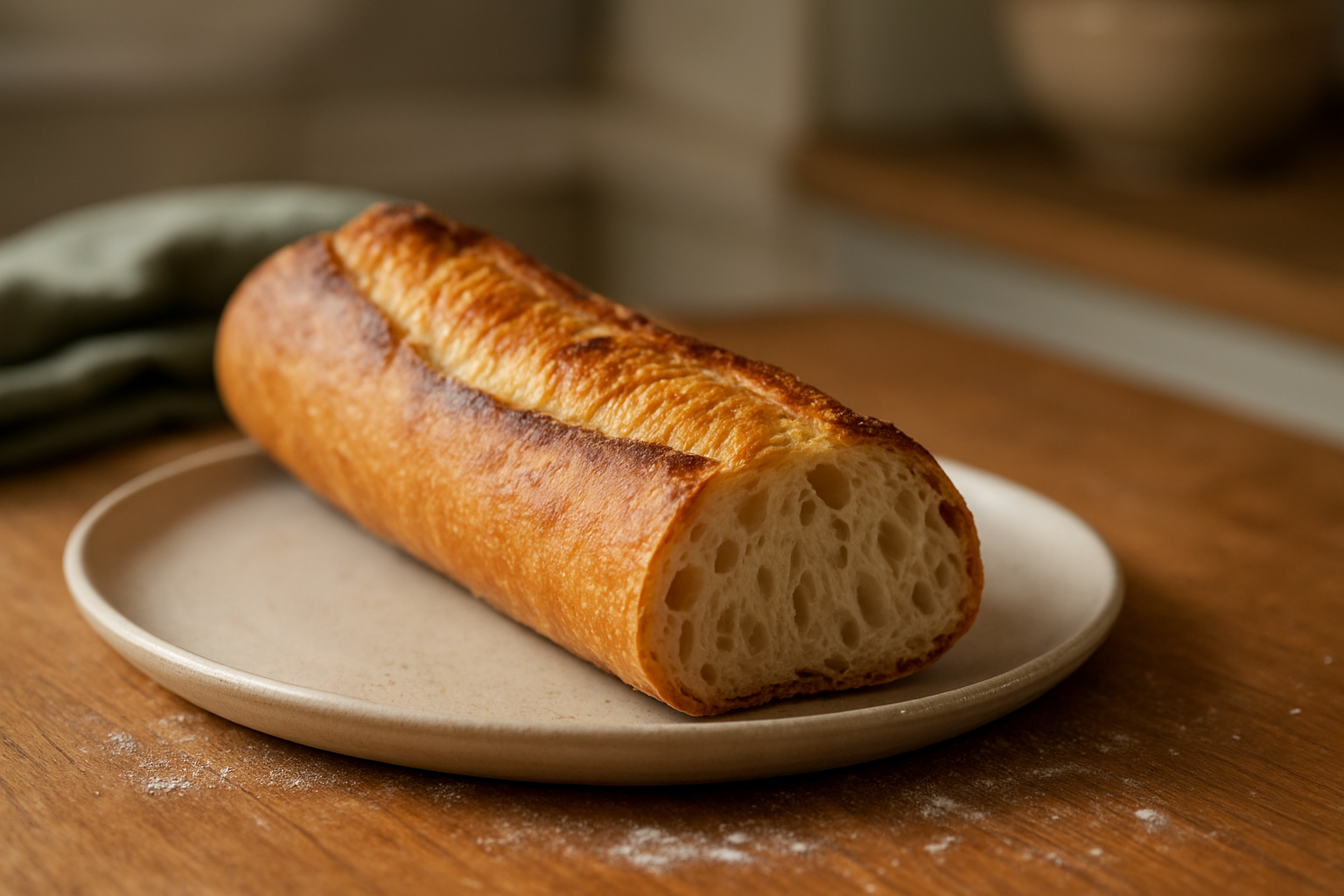
Crisp White Bread Baton: Easy Homemade Yeast Bread Recipe
🛒 Ingredients
- ✓
500 g strong white bread flour
- ✓
1 tsp salt
- ✓
a pinch of ascorbic acid (vitamin C), optional
- ✓
1 sachet dried yeast or 21 g fresh yeast
- ✓
300 ml lukewarm water
This recipe is also available in German.
📌 Overview
A crisp white bread baton is easy to bake at home when dough structure, proving time, shaping and oven heat are handled properly. This recipe makes a long white loaf with a golden crust and a soft, airy crumb, ideal for breakfast, soups, salads, cheese, spreads or simple everyday meals. Strong white bread flour gives better structure than plain cake-style flour because it helps the dough hold gas during fermentation. Ascorbic acid is optional, but it can strengthen the gluten structure and improve oven spring. The key steps are thorough kneading, enough time for the dough to rise, careful shaping, diagonal slashing just before baking and a little steam in the oven for a better crust.
You may also find it useful to look at recipes Buttermilk Loaf with Honey, Wholemeal Yoghurt Bread, and Homemade Walnut Bread Recipe with Rye and Wheat Flour, in addition to this one.
👨🍳 How to make Crisp White Bread Baton
- 1
Mix the strong white bread flour, salt and optional ascorbic acid together in a large bowl. Make sure the salt is evenly distributed so the dough rises consistently.
- 2
Dissolve the dried yeast or fresh yeast in the lukewarm water. The water should feel warm, not hot, because high heat can weaken or kill the yeast.
- 3
Pour the yeast water into the flour mixture and mix with a spoon or your hands until no dry patches of flour remain.
- 4
Knead the dough for 8–10 minutes by hand or 5–7 minutes in a stand mixer fitted with a dough hook, until smooth, elastic and slightly springy. It should come away from the sides of the bowl but still feel soft.
- 5
If the dough feels dry or cracked, add water one teaspoon at a time. If it feels sticky, keep kneading before adding extra flour; wheat dough often becomes smoother as gluten develops.
- 6
Cover the bowl with a damp tea towel or lid and leave the dough to rise in a warm place for about 45–60 minutes, until noticeably puffed and showing small bubbles.
- 7
Turn the dough out onto a lightly floured work surface and gently flatten it without pressing out all the air.
- 8
Shape the dough loosely into a rectangle. Fold the long sides slightly towards the middle, press the seam closed and roll the dough from the centre into a long, even baton.
- 9
Place the bread baton diagonally on a baking tray lined with baking parchment. Cover loosely and leave it to prove for another 30–40 minutes, until visibly risen and lighter to the touch.
- 10
Preheat the oven to 220°C conventional heat. Place a small oven-safe dish or tray on the oven floor so you can create steam at the start of baking.
- 11
Slash the top of the dough several times at an angle with a very sharp knife or razor blade just before baking. These cuts help the bread expand in a controlled way.
- 12
Place the bread on the middle shelf and pour a small amount of hot water into the preheated dish to create steam. Bake for about 25 minutes, until golden and crisp and the loaf sounds hollow when tapped underneath.
- 13
Leave the bread to cool completely on a wire rack before slicing. Cutting too early can make the crumb seem damp and compact.
🧠 Why It Works
This white bread baton works because flour, water, yeast, salt and technique all support structure and crust. Strong white bread flour forms a more reliable gluten network than plain flour, so it can hold the gas produced during fermentation and create a lighter crumb. Thorough kneading makes the dough elastic, while the first rise builds volume and flavour. The second prove after shaping prevents the baton from baking up dense. Ascorbic acid can strengthen the dough slightly, but it is not essential. Steam at the start of baking keeps the surface flexible for long enough to improve oven spring before the crust sets. Diagonal slashes guide expansion and give the loaf its rustic, crusty finish.
🛠️ Troubleshooting
Why is my white bread baton dense instead of airy?
A dense loaf is usually caused by too little kneading, too short a rise or too much extra flour during shaping. Knead until the dough is elastic, let it rise visibly and use only a light dusting of flour on the work surface.
Why does my bread not rise properly in the oven?
The yeast may be old, the water may have been too hot, the shaped loaf may have been under-proved or the surface may not have been slashed. Use lukewarm water, allow a proper final prove and slash just before baking.
How do I get a crisp crust on a white bread baton?
Bake at 220°C and add a little steam at the start of baking. After baking, cool the bread on a wire rack so moisture can escape and the crust does not soften underneath.
Why is the crust too hard or too dark?
The bread may have baked too long or too close to the top heat. Bake on the middle shelf and reduce the time slightly if needed. If the loaf browns too quickly, cover it loosely near the end.
What should I do if the bread dough is too sticky?
Sticky dough is normal at first. Keep kneading before adding flour, as the dough often becomes smoother as gluten develops. If needed, use only a very light dusting of flour for shaping.
Can I prepare the dough ahead and bake later?
Yes. After the dough has started to rise, you can cover it and refrigerate it overnight for a slower fermentation. Let it warm slightly before shaping and allow a final prove before baking.
How do I reheat frozen or day-old white bread baton?
Let frozen bread thaw first, then refresh it in a 180°C oven for 5–8 minutes. This helps restore the crust without drying the crumb too much.
💡 Tips and Variations
- •
Strong white bread flour is the best choice for a light white bread baton. Plain flour can work, but the loaf may be less airy and less structured.
- •
If you do not have ascorbic acid, simply leave it out. The bread will still work if the dough is kneaded well and given enough time to rise.
- •
For more flavour, let the mixed dough rest for 10 minutes before kneading fully. This short rest helps hydration and makes the dough easier to work with.
- •
A burst of steam at the start of baking improves oven spring and crust. Avoid opening the oven door too often afterwards, as heat loss can affect the bake.
- •
For a Mediterranean variation, add 1–2 tablespoons of olive oil or finely chopped rosemary to the dough. The loaf will be slightly softer and more aromatic.
- •
For a savoury side loaf, add thyme, chopped sun-dried tomatoes, olives or roasted garlic. Keep additions small and well drained so they do not weigh down the dough.
- •
This recipe is naturally vegan as long as your ingredients contain no animal-derived additives.
- •
A gluten-free version is not a simple one-for-one swap. Use a gluten-free bread flour blend, xanthan gum or psyllium husk, and adjust hydration and proving time.
- •
Slice the bread only once it has cooled completely. The crumb sets as it cools and will look lighter and cleaner when cut.
📦 Storage
- •
This white bread baton is best on the day it is baked, when the crust is crisp and the crumb is soft. Store it at room temperature in a bread bin or cotton bread bag.
- •
It stays usable for 2 to 3 days, though the crust will gradually lose crispness. Refreshing it briefly in the oven brings back much of the texture.
- •
For longer storage, slice the bread and freeze it. The slices can be toasted from frozen or warmed briefly in the oven.
🍷 Pairing
A crisp white bread baton pairs well with breakfast spreads, cheese, butter, jam, soups, salads and Mediterranean starters. With savoury toppings, a dry Mosel Riesling or Grauburgunder from Baden works well. If serving the bread with soup or salad, sparkling water, apple spritzer or a light herbal tea are good alcohol-free options. For breakfast, serve it with filter coffee, milky coffee or black tea.
❓ F.A.Q.
What flour is best for a white bread baton?
Strong white bread flour is best because it has more protein and forms a stronger gluten network than plain flour. This gives the bread better rise, structure and a lighter crumb.
How long should white bread dough rise?
Let the dough rise first for about 45–60 minutes, until noticeably puffed. After shaping, prove it for another 30–40 minutes so the baton bakes up light rather than dense.
Can I bake white bread without ascorbic acid?
Yes, ascorbic acid is optional. It can improve dough strength, but the bread will still work if you knead it well, allow enough proving time and bake it in a hot oven.
How do I make homemade white bread crusty?
Use a hot oven, add steam at the beginning of baking and cool the bread on a wire rack. Steam helps the loaf expand before the crust sets, while rack cooling prevents trapped moisture.
Can I prove the dough overnight in the fridge?
Yes, a cold overnight prove is possible and can improve flavour. You may reduce the yeast slightly, keep the dough covered in the fridge and let it warm a little before shaping or final proving.
Is this white bread baton vegan?
Yes, the recipe uses flour, water, yeast, salt and optional ascorbic acid, so it is naturally vegan as long as the specific ingredients contain no animal-derived additives.
How should I store a white bread baton?
Keep it at room temperature in a bread bin or cotton bag for 2 to 3 days. For longer storage, slice and freeze it, then toast or warm the slices when needed.
🏛️ History and Tradition
The white bread baton is a traditional German loaf with roots in regional baking practices dating back centuries. Originating in southern Germany, especially Bavaria and Baden-Württemberg, it reflects the local preference for crusty breads with soft interiors. Historically, such bread was a daily staple and featured prominently in festive meals and communal gatherings. Its enduring popularity underscores German baking’s emphasis on quality ingredients, precise technique, and cultural identity, reinforcing its place as a beloved everyday and celebratory bread.
A white bread baton is a useful basic yeast bread for anyone who wants a crisp crust and soft, airy crumb without complicated ingredients. Success depends more on technique than on the ingredient list: use suitable flour, knead thoroughly, allow enough proving time, bake with steam and let the loaf cool fully before slicing. Freshly baked, it works for breakfast, soups, salads, sandwiches and simple savoury toppings.
Rate this recipe
Click or tap the stars to rate