Alltagsküche
Kochen, wie es zuhause schmeckt
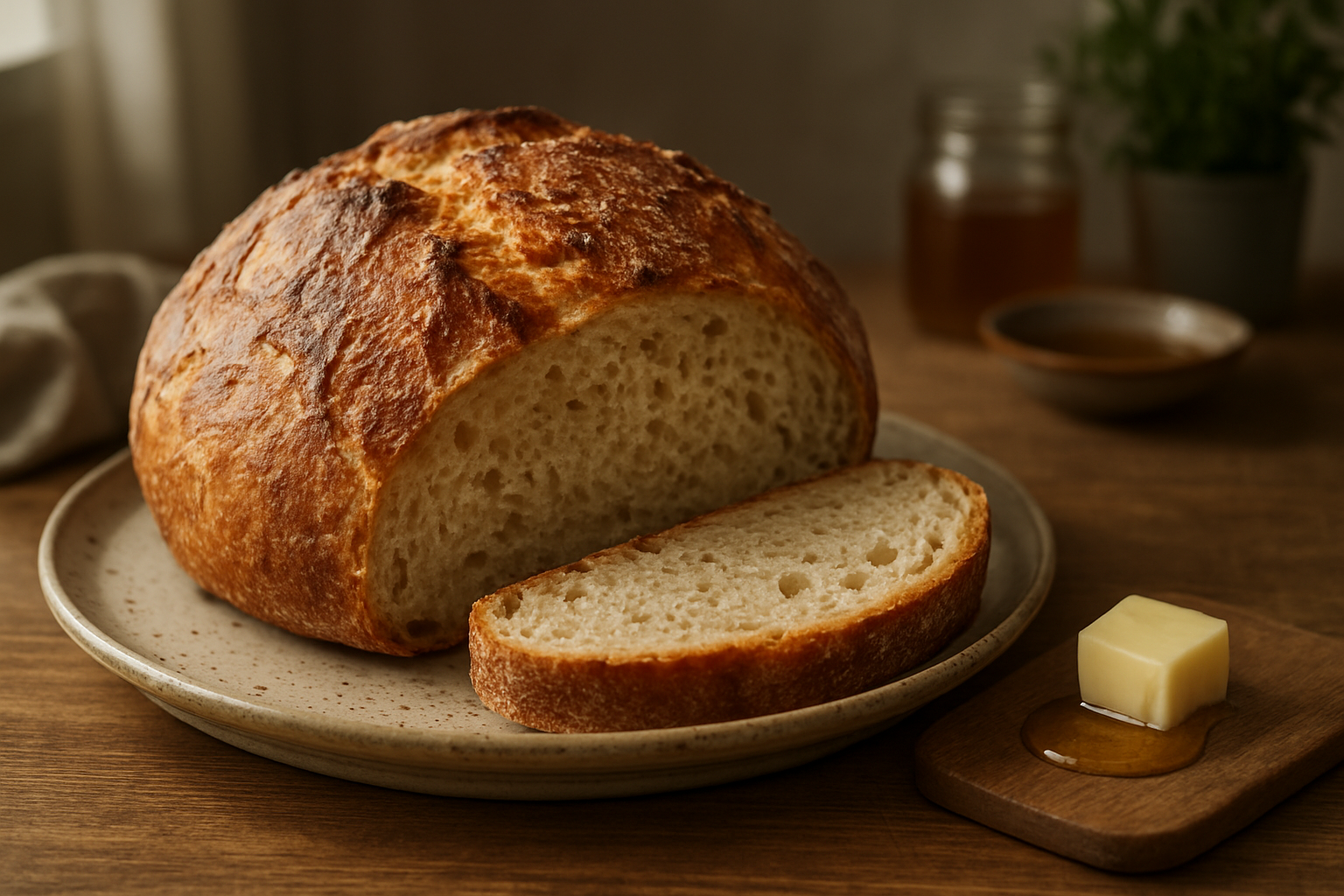
Buttermilk Loaf with Honey: A Classic German Baking Recipe for Everyday
🛒 Ingredients
- ✓
500 g wheat flour
- ✓
1 tsp salt
- ✓
1 sachet dried yeast (7 g)
- ✓
1/2 tsp bicarbonate of soda
- ✓
1 tbsp honey
- ✓
400 ml buttermilk
- ✓
30 g butter
This recipe is also available in German.
📌 Overview
The buttermilk loaf with honey is a traditional German bread known for its light, airy texture and subtle tang from buttermilk and bicarbonate of soda. Rooted in everyday Bavarian baking, this loaf pairs beautifully with hearty soups and stews, making it a versatile staple in German households throughout the year. Its gentle sweetness and soft crumb reflect authentic regional baking techniques.
👨🍳 Preparation
- 1
Warm the buttermilk and butter gently in a small saucepan until the butter has melted and the mixture is just lukewarm.
- 2
In a large bowl, mix together the flour, salt, dried yeast, bicarbonate of soda and honey.
- 3
Pour in the lukewarm buttermilk and butter mixture, then knead everything into a smooth, supple dough. This is easiest with the dough hooks of an electric hand mixer or a stand mixer.
- 4
Cover the bowl with a clean tea towel and leave the dough to rise in a warm place for about 45 minutes, or until noticeably puffed up.
- 5
Grease a loaf tin (about 30 cm long) with butter and dust it lightly with flour.
- 6
Shape the dough loosely and place it in the prepared tin. Cover again and leave to rest for a further 30 minutes.
- 7
Heat the oven to 190°C conventional.
- 8
Slash the loaf lengthways with a sharp knife so it opens neatly as it bakes.
- 9
Bake on the middle shelf for about 45 minutes, until the crust is golden and crisp.
- 10
Remove from the oven, leave to cool briefly, then turn out of the tin and allow to cool completely.
🧠 Why It Works
This loaf achieves its distinctive lightness through the combined leavening action of yeast and bicarbonate of soda, which creates an airy crumb with a delicate tang. The buttermilk provides acidity that activates the bicarbonate, balancing the dough’s pH and enhancing flavour depth. Honey adds a natural sweetness that complements the slight sourness, while butter enriches the crumb for tenderness. The slow rise allows gluten development, ensuring a supple dough with a crisp, golden crust typical of German baking traditions.
🛠️ Troubleshooting
Why is my buttermilk loaf dense instead of light and airy?
Dense bread often results from insufficient kneading or inadequate rising time. Ensure the dough is kneaded until smooth and allowed to rise in a warm place until visibly puffed before baking.
How can I prevent the crust from becoming too hard?
Avoid overbaking and consider brushing the crust with melted butter immediately after baking to soften it while maintaining a golden finish.
What if my loaf doesn’t rise properly?
Check that your yeast is fresh and that the buttermilk and butter mixture is lukewarm, not hot, to avoid killing the yeast. Also, ensure the dough rests in a warm, draft-free environment.
Can I prepare the dough in advance?
Yes, you can prepare the dough and refrigerate it overnight to develop flavour. Bring it to room temperature and allow it to rise before baking for best results.
How should I reheat leftover slices without drying them out?
Warm slices gently in a preheated oven wrapped in foil or toast them lightly to preserve moisture and enhance flavour.
💡 Tips and Variations
- •
For a richer loaf, swap in a really good salted butter and add 1 tbsp sour cream to the dough for an even softer, more tender crumb.
- •
A non-stick loaf tin works particularly well here, or you can line the tin with baking parchment to make turning out easier.
- •
The real charm of this loaf is the combination of yeast and bicarbonate of soda, which gives it an especially airy crumb and a delicate tang.
- •
This recipe is already vegetarian, and you can make it vegan by using a plant-based butter alternative.
- •
If needed, you can use a little baking powder in place of the bicarbonate of soda to help with the rise.
- •
A small splash of cider vinegar in the dough can give the loaf an extra lift and bring out the flavour beautifully.
- •
For a vegan version, replace the butter with margarine and the buttermilk with a mixture of plant milk and lemon juice. For a gluten-free version, try a blend of rice flour and potato starch, though the texture will be quite different.
- •
The secret to this loaf lies in the pairing of yeast and bicarbonate of soda, along with giving the dough enough time to rest and develop its lovely texture.
📦 Storage
The loaf will keep well for about 2 days in a bread bin or a cotton bag at room temperature. You can also slice and freeze it, then simply toast or warm it through in the oven when you fancy a piece.
🍷 Pairing
This gently tangy buttermilk loaf harmonises exquisitely with German white wines that balance acidity and subtle fruitiness. A Riesling Kabinett from the Mosel region offers crisp acidity and delicate minerality that refresh the palate alongside the loaf’s soft crumb. Similarly, a Silvaner from Franconia complements the bread’s mild sweetness with its earthy undertones and moderate acidity. For an international touch, an Italian Verdicchio presents a vibrant citrus profile and balanced body, enhancing the loaf’s honeyed notes while maintaining gastronomic coherence with German culinary traditions.
❓ F.A.Q.
Can I make this buttermilk loaf without yeast?
While yeast contributes to the loaf’s airy texture, you can omit it and rely solely on bicarbonate of soda and an acid like cider vinegar for a quicker soda bread version, though the crumb will be denser and less elastic.
How do I store the buttermilk loaf to keep it fresh?
Store the loaf in a bread bin or a cotton bag at room temperature for up to two days. For longer storage, slice and freeze the bread, then toast or warm slices as needed to restore freshness.
What is the role of bicarbonate of soda in this recipe?
Bicarbonate of soda reacts with the acidity of buttermilk to produce carbon dioxide, which helps the dough rise quickly and contributes to the loaf’s tender crumb and slight tang.
Can I make a vegan version of this buttermilk loaf?
Yes, replace butter with a plant-based alternative and substitute buttermilk with a mixture of plant milk and lemon juice or vinegar to mimic the acidity and texture.
Is this loaf suitable for festive occasions like Christmas or Oktoberfest?
Absolutely. Its mild sweetness and soft texture make it an excellent accompaniment to traditional German festive dishes, enhancing seasonal meals with authentic regional flavour.
🏛️ History and Tradition
The buttermilk loaf with honey is a classic example of German everyday baking, combining simple ingredients to create a bread with a distinctive tang and light texture. Historically, buttermilk breads were common in rural Bavaria and Swabia, where dairy farming was prevalent and buttermilk was a staple ingredient. This loaf reflects the resourcefulness of traditional German home bakers, often prepared for family breakfasts or served alongside hearty seasonal stews. Its enduring popularity underscores its role in regional identity and festive occasions, reinforcing Alltagsküche’s commitment to authentic German culinary heritage.
If you’re after a reliable homemade loaf that feels both comforting and a little bit special, this one is well worth a place in your kitchen. It’s easy to make, wonderfully versatile and perfect for sharing, whether at breakfast, lunch or alongside a cosy supper. Give it a try and don’t forget to pass a few slices around the table.
Rate this recipe
Click or tap the stars to rate