
Alltagsküche
Kochen, wie es zuhause schmeckt
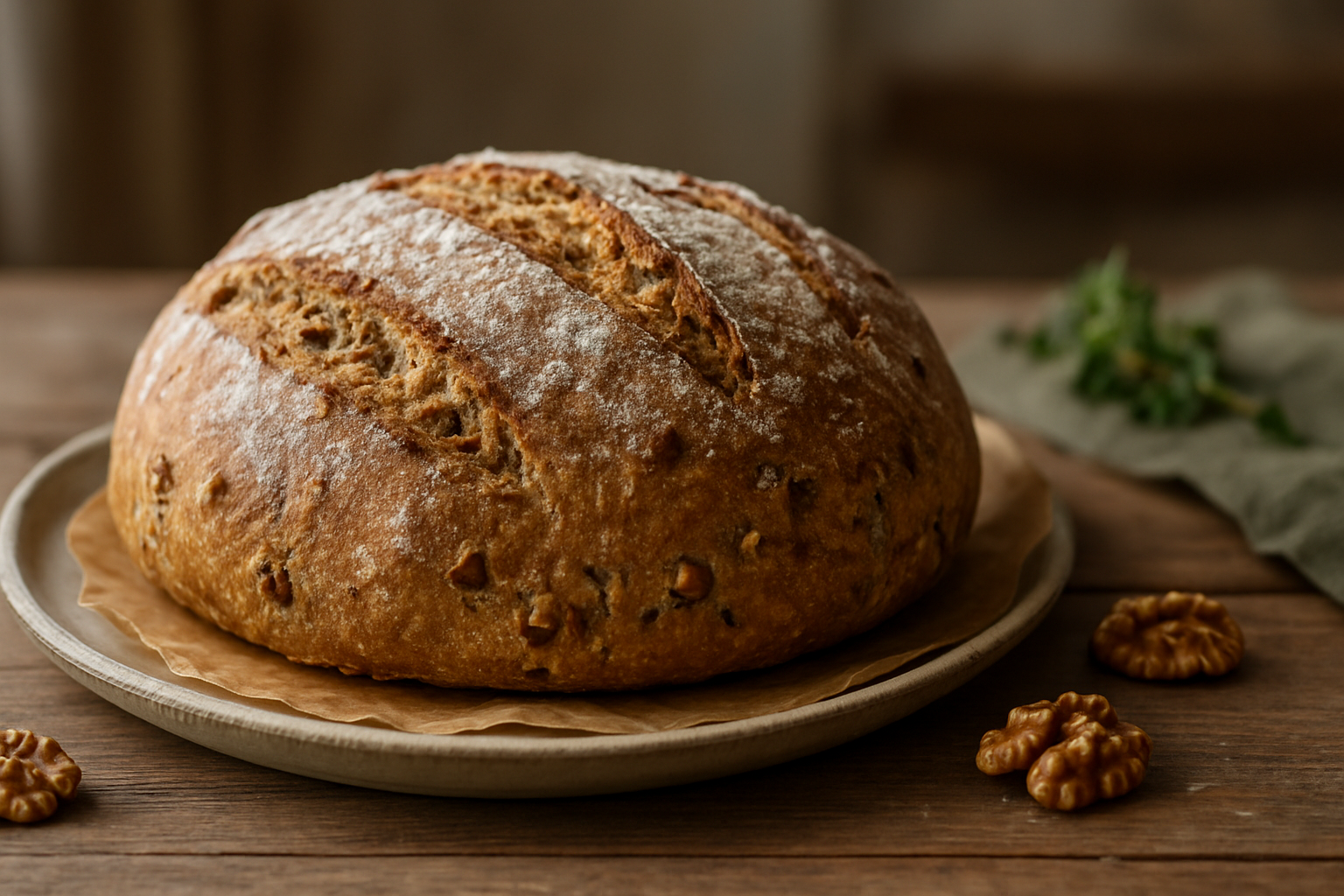
Homemade Walnut Bread Recipe with Rye and Wheat Flour
🛒 Ingredients
- ✓
20 g fresh yeast
- ✓
300 ml lukewarm water
- ✓
1 tsp sugar
- ✓
250 g strong white bread flour or wheat flour
- ✓
250 g rye flour
- ✓
1 level tbsp salt
- ✓
2 tbsp neutral oil, such as sunflower oil
- ✓
100 g walnut halves
This recipe is also available in German.
📌 Overview
Homemade walnut bread is easier than it may seem: this recipe combines wheat flour, rye flour, fresh yeast, lukewarm water and roughly chopped walnuts to make a savoury mixed-flour loaf with a nutty aroma, moist crumb and firm crust. It works well with cheese, butter, savoury spreads, soups, salads or even sweeter toppings such as honey and jam.
To keep walnut bread from becoming dense, the most important factors are rising time, hydration and dough structure. Rye flour makes the dough stickier and heavier than a pure wheat dough, while wheat flour provides more elasticity. The dough should stay soft and slightly tacky; adding too much extra flour makes the loaf dry and compact.
The walnuts are added after the first rise so they distribute evenly and do not weigh down the dough too early. After shaping, the loaf gets a second rest, is scored, brushed with water and dusted with rye flour. The result is a simple vegan walnut bread with a rustic surface and an everyday character.
You may also find it useful to look at recipes Authentic Beer Bread with Ham and Crispy Onions, Rustic Wholemeal Loaf with Wheatgerm, and Wholemeal Yoghurt Bread, in addition to this one.
👨🍳 How to make Homemade Walnut Bread Recipe with Rye and Wheat Flour
- 1
Crumble the fresh yeast into a large bowl. Add the lukewarm water and sugar, then stir until the yeast has dissolved. The water should be warm, but not hot, so the yeast stays active.
- 2
Leave the yeast mixture for 5 to 10 minutes, until it looks slightly frothy or visibly active. If nothing happens, the yeast may be old or the water may have been too hot.
- 3
In a separate bowl, mix the wheat flour, rye flour and salt. Mixing the salt into the flour first stops it coming into direct concentrated contact with the yeast.
- 4
Add the yeast mixture and the oil to the flour mixture. Knead for 6 to 8 minutes into a soft, slightly sticky dough. It will not become as elastic as a pure wheat dough, but it should hold together and not look dry.
- 5
Cover the bowl with a clean tea towel or lid and leave the dough to rise in a warm, draught-free place for about 45 minutes, until noticeably puffed up.
- 6
Roughly chop the walnuts. For a deeper flavour, you can toast them briefly in a dry pan first, then let them cool completely.
- 7
Work the walnuts evenly into the dough after the first rise. Knead only until they are distributed so the dough structure is not weakened too much.
- 8
Lightly flour the work surface and shape the dough into a long oval loaf. Use only as much flour as needed so the bread does not become dry.
- 9
Place the loaf on a baking tray lined with baking parchment. Cover it again and leave it to rest for another 30 minutes, until slightly risen.
- 10
Preheat the oven to 200°C conventional. For a stronger crust, place an empty tray or heatproof dish on the oven floor and add a little water when the bread goes in.
- 11
Score the top of the loaf several times across with a very sharp knife. The cuts help the bread expand in a controlled way instead of splitting randomly.
- 12
Brush the loaf lightly with water and dust it with a little rye flour. This helps create a rustic surface and a better crust.
- 13
Bake the walnut bread on the middle shelf for about 45 minutes, until the crust is well browned and the loaf sounds hollow when tapped on the underside.
- 14
Let the bread cool completely on a wire rack before slicing. Do not cut it too early, as the crumb continues to set as it cools.
🧠 Why It Works
This homemade walnut bread works because wheat flour and rye flour play different roles. Wheat flour brings elasticity and helps the loaf rise, while rye flour adds depth, moisture and rustic flavour. Because rye develops less gluten structure, the dough stays a little stickier; it should not be stiffened with too much extra flour.
Fresh yeast gives reliable lift when activated in lukewarm water. The sugar helps start the yeast, while salt adds flavour and supports the dough structure. The oil softens the crumb slightly and helps the bread stay more pleasant on the following day.
Walnuts add aroma, bite and a slightly bitter note that works especially well with rye. They are added after the first rise so the dough can build volume first. Scoring, brushing with water and dusting with rye flour encourage a controlled crust and rustic appearance. Full cooling is essential so the crumb does not seem gummy and the loaf slices cleanly.
🛠️ Troubleshooting
Why is my walnut bread too dense?
Common causes are too little rising time, old yeast, water that was too hot or too much extra flour. The dough should stay soft and slightly tacky. Let it rise visibly and give it the second rest after shaping.
Why does the dough not rise properly?
The yeast may be old or the water may have been too hot. Lukewarm water is ideal; hot water can weaken the yeast. Also keep the dough in a warm, draught-free place and give it enough time.
What should I do if the dough is very sticky?
Rye dough is naturally stickier than pure wheat dough. Lightly flour your work surface and hands, or work with lightly oiled hands. Too much flour will make the bread dry and dense.
Why does my walnut bread split unevenly?
The loaf may not have been scored deeply enough or the second rise may have been too short. Score the loaf with a sharp knife and let it rest for about 30 minutes after shaping.
How do I prevent the crust from becoming too hard?
Do not bake the bread longer than needed and let it cool on a wire rack. If you prefer a softer crust, cover the bread briefly with a clean tea towel after baking.
Why is the crumb gummy inside?
The bread was probably sliced too early or was not fully baked. Let it cool completely and check next time by tapping the underside; it should sound hollow.
Can I prepare walnut bread dough ahead and bake it later?
Yes, after the first rise you can shape the dough and let it rise more slowly in the fridge. Before baking, let it come closer to room temperature and make sure it has risen visibly.
How do I reheat walnut bread without drying it out?
Toast individual slices briefly or warm the loaf at about 150°C in the oven. If reheating a larger piece, wrapping it loosely in foil helps prevent drying.
💡 Tips and Variations
- •
For more flavour, toast the walnuts briefly in a dry pan before adding them to the dough. Let them cool completely so they do not warm the dough.
- •
Walnut oil can replace part of the neutral oil and deepen the nutty flavour. Use it sparingly because it has a strong taste.
- •
A baking stone or preheated tray improves bottom heat and helps create a stronger crust.
- •
For a milder crumb, slightly increase the wheat flour and reduce the rye flour. More rye gives a stronger flavour but also a denser loaf.
- •
For a light tang, add 1 tsp cider vinegar to the dough. This is optional, but it can highlight the rye and walnut flavour.
- •
Replace walnuts with roughly chopped hazelnuts or almonds if you like. Hazelnuts taste sweeter and toastier, while almonds are milder.
- •
This recipe is naturally vegan as long as all ingredients are plain and free from animal-derived additives.
- •
For a gluten-free version, a simple flour swap is not enough. Use a gluten-free bread flour blend and a binder such as xanthan gum or psyllium husk, because wheat and rye normally provide structure through gluten.
- •
Slice the bread only once it has cooled completely. Warm bread can seem gummy inside and is harder to cut cleanly.
- •
Walnut bread is especially good with cream cheese, goat’s cheese, mature mountain cheese, honey, fig jam, soups and autumn salads.
📦 Storage
Walnut bread keeps well for about 2 to 3 days at room temperature in a bread bin, bread bag or cotton bag. Avoid storing it airtight in plastic, as this softens the crust. For longer storage, let the bread cool completely, slice it and freeze it. The slices can be toasted straight from frozen or warmed briefly in the oven. Bread dries out faster in the fridge, so refrigeration is not recommended unless absolutely necessary.
🍷 Pairing
Walnut bread is very versatile and pairs with both savoury and lightly sweet toppings. With cheese, cream cheese or goat’s cheese, a dry Riesling works well because its acidity refreshes the nutty crumb. A Baden Grauburgunder suits stronger cheese or a breadboard with spreads. If the bread is served with honey or figs, an off-dry Riesling can work. Non-alcoholic options include apple spritz, black tea, herbal tea or a mild grape juice.
❓ F.A.Q.
What flour is best for homemade walnut bread?
A mixture of strong white bread flour or wheat flour and rye flour works well. Wheat provides elasticity, while rye gives a stronger flavour and a moister crumb.
Can I use dry yeast instead of fresh yeast?
Yes, 20 g fresh yeast is roughly equivalent to 7 g dry yeast. Dry yeast can be mixed with the flour or activated in lukewarm water with the sugar.
How long should walnut bread dough rise?
The dough rises first for about 45 minutes and then again for about 30 minutes after shaping. The exact time matters less than visible rise and a slightly puffed loaf.
Why is my walnut bread gummy inside?
This often happens when the bread is sliced too early or is not fully baked. Let it cool completely on a wire rack and check that the loaf sounds hollow when tapped underneath.
Can I make walnut bread without yeast?
Yes, walnut bread can be made with sourdough, but the timing, acidity and dough handling change significantly. For this simple version, yeast is the more straightforward choice.
How do I get a crisp crust on walnut bread?
A well-preheated oven, scoring the loaf, brushing it with water and adding a little steam at the start of baking all help. A baking stone or preheated tray also improves the crust.
Can I freeze walnut bread?
Yes, let the bread cool completely, slice it and freeze it in portions. The slices can later be toasted or reheated briefly in the oven.
What do you serve with walnut bread?
Walnut bread pairs well with cheese, cream cheese, goat’s cheese, honey, fig jam, savoury spreads, soups, salads and simple breadboard meals.
🏛️ History and Tradition
Walnut bread has deep roots in German baking traditions, especially in southern regions like Baden-Württemberg and Bavaria, where nuts and rye flour are staple ingredients. Historically, this bread was valued for its hearty nutrition and long shelf life, making it a common everyday staple and festive accompaniment. Its nutty flavour and dense texture reflect the agricultural heritage of these regions, where walnuts were harvested in autumn and incorporated into seasonal breads. Today, walnut bread remains a symbol of German culinary identity, celebrated for its rustic authenticity and versatility in both traditional and modern kitchens.
Homemade walnut bread is reliable when the dough stays soft, gets enough time to rise and is sliced only after cooling fully. The mix of wheat and rye gives structure and flavour, while walnuts add bite and nutty depth. This simple vegan loaf works for everyday meals, breadboards, cheese plates, soups and autumn dishes.
Rate this recipe
Click or tap the stars to rate