
Alltagsküche
Kochen, wie es zuhause schmeckt
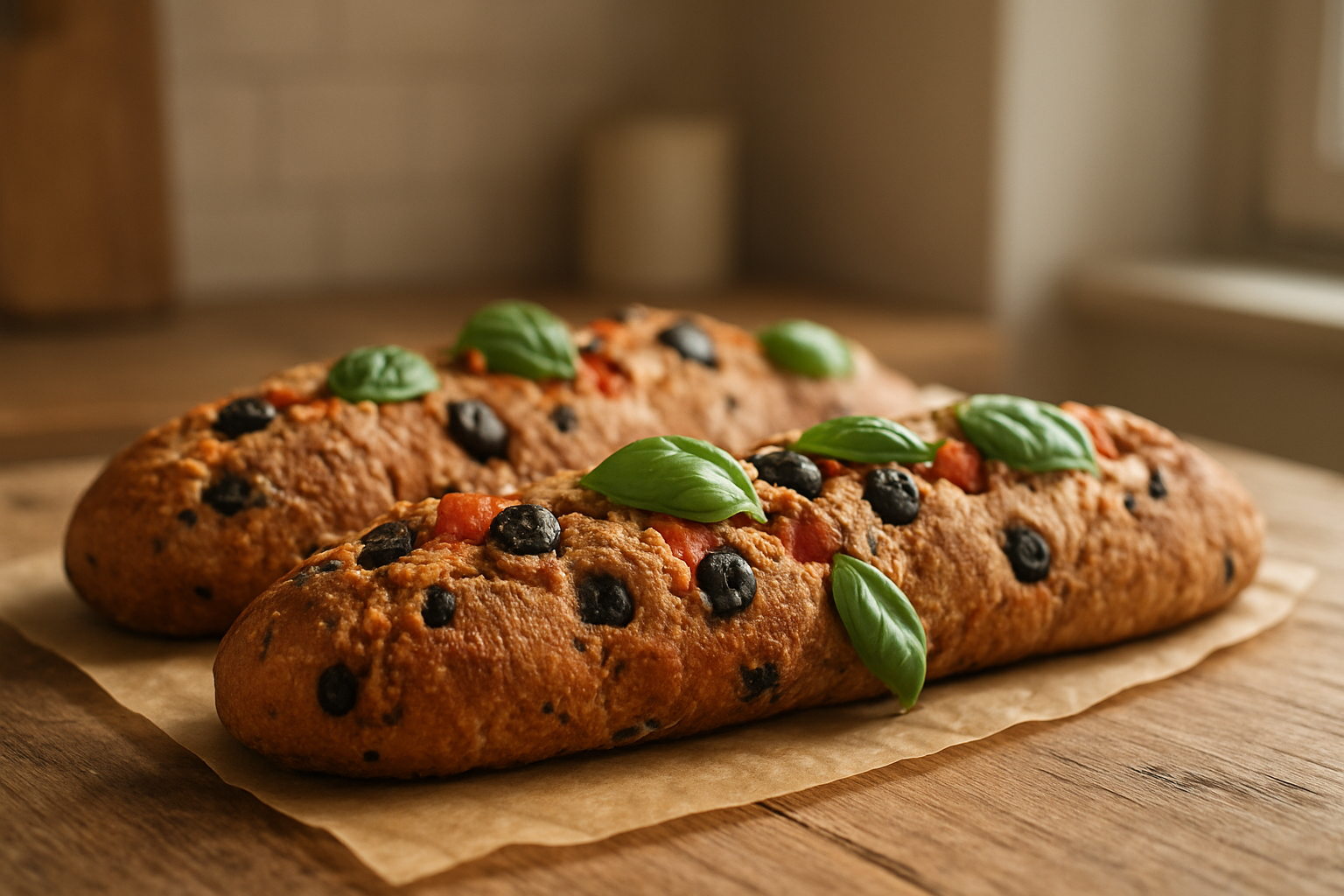
Wholemeal Baguettes with Olives and Tomatoes
🛒 Ingredients
- ✓
150 g wholemeal spelt flour
- ✓
150 g wholemeal wheat flour
- ✓
1 tsp salt
- ✓
1/2 cube fresh yeast (about 21 g)
- ✓
100 g ripe tomatoes
- ✓
80 g pitted black olives
- ✓
1 handful fresh basil leaves
This recipe is also available in German.
📌 Overview
Wholemeal baguettes with olives and tomatoes are savoury Mediterranean-style breads made with wholemeal spelt flour, wholemeal wheat flour, fresh yeast, ripe tomatoes, black olives and fresh basil. They are nuttier and more robust than classic white baguettes, stay moist from the tomatoes and get a savoury lift from the olives and basil. To avoid a dense or overly wet dough, the tomatoes and olives should be chopped finely and drained where necessary.
If you enjoy wholemeal baking, the rustic wholemeal loaf with wheatgerm is a stronger everyday alternative. For more tomato flavour, try the tomato bread with herbs and onions. If you prefer a milder wholemeal loaf, the wholesome wholemeal yoghurt bread is a good option.
For the best result, focus on three things: the wholemeal dough needs enough moisture but not wet add-ins; the yeast must be active; and the baguettes should start baking in a very hot oven so a crust forms. This gives a bread that is crisp outside, aromatic inside and not heavy.
👨🍳 How to make Wholemeal Baguettes with Olives and Tomatoes
- 1
Mix the wholemeal spelt flour, wholemeal wheat flour and salt in a large bowl. The salt should be evenly distributed but not placed directly onto the dissolved yeast.
- 2
Wash the tomatoes, remove the watery seeds if they are very juicy and chop the flesh very finely. Drain the olives well and chop them finely. Finely slice the basil leaves.
- 3
Crumble the fresh yeast into a small bowl and dissolve it in 100 ml lukewarm water. The water should be warm but not hot. Leave for 5–10 minutes until slightly foamy.
- 4
Add the yeast mixture to the flour, followed by the tomatoes, olives and basil. Knead for 8–10 minutes until the dough is supple. If it feels very dry, add lukewarm water one tablespoon at a time; if too sticky, add only a little flour.
- 5
Cover the bowl with a damp tea towel and leave the dough in a warm, draught-free place for about 60–75 minutes, or until visibly risen.
- 6
Knead the dough only briefly so you do not press out all the air. Divide it into two equal portions.
- 7
Shape each portion into a long baguette. Twist each piece gently to create a subtle spiral without compressing the dough too much.
- 8
Place the baguettes on a baking tray lined with baking parchment. Cover again and leave to rest for another 20–25 minutes until slightly risen.
- 9
Heat the oven to 240°C conventional. Place a small heatproof dish of hot water on the oven floor, or add a little steam when putting the bread in if your oven allows it.
- 10
Bake the baguettes on the middle shelf for 12 minutes at 240°C. Lower the temperature to 180°C and bake for another 15–18 minutes, until golden brown and hollow-sounding when tapped underneath.
- 11
Leave the wholemeal baguettes to cool on a wire rack for at least 20 minutes before slicing. Straight from the oven, the crumb is still very soft and needs time to settle.
🧠 Why It Works
These wholemeal baguettes with olives and tomatoes work because wholemeal spelt flour and wholemeal wheat flour bring different strengths: spelt adds a mild nutty flavour, while wholemeal wheat gives the dough more structure. Wholemeal flour absorbs more liquid than white flour, so the dough must be kneaded properly and adjusted with water if needed. Tomatoes add moisture and gentle acidity but should not be too watery. Olives bring salt, fat and umami, while basil adds freshness. The first high-temperature bake sets the crust, and the lower-temperature finish bakes the crumb through without drying the bread too much.
🛠️ Troubleshooting
Why is my wholemeal baguette dense inside?
Wholemeal baguettes become dense when the dough is too dry, not kneaded enough or not allowed to rise fully. Knead for 8–10 minutes, let the dough visibly rise and add a little water if needed.
How do I stop the crust becoming too hard?
A very hard crust can come from overbaking or too little steam. Start hot, lower the temperature after the first phase and add a little steam at the beginning with a dish of hot water.
What should I do if the dough is too sticky?
Sticky dough is often caused by very juicy tomatoes or olives that have not drained properly. Remove tomato seeds, drain olives well and add only a small amount of flour if needed.
What if the wholemeal dough is too dry?
The dough probably needs more liquid. Wholemeal flour absorbs a lot of water. Add lukewarm water one tablespoon at a time until the dough feels supple and shapeable.
Why is my baguette dough not rising?
Check that the yeast is fresh and that the water was not too hot. The dough also needs a warm, draught-free place. In a cool kitchen, the rise may take longer than 75 minutes.
Can I prepare the dough ahead and bake later?
Yes, after kneading, the dough can rise overnight in the fridge. Let it sit at room temperature for 30–45 minutes before shaping.
How do I reheat frozen wholemeal baguette?
Slice or cut the cooled baguette into portions and freeze airtight. Reheat at 180°C for about 5–8 minutes to refresh the crust.
Why is my baguette still wet inside?
If the bread is wet or doughy inside, it may be underbaked or the tomatoes were too watery. Bake until it sounds hollow underneath and remove watery tomato seeds before mixing.
💡 Tips and Variations
- •
For more flavour, use Kalamata olives. They are more aromatic than standard black olives and pair especially well with basil and tomatoes.
- •
If you want a softer crumb, add 1 tbsp olive oil to the dough. This makes the baguette more tender, though slightly less traditionally crisp.
- •
Sun-dried tomatoes bring stronger flavour and less moisture than fresh tomatoes. If using them, the dough may need a little extra water.
- •
Roasted peppers can replace part of the olives or tomatoes and give the bread a milder, sweeter flavour.
- •
For a vegan version, no change is needed: the recipe contains no dairy, eggs or honey.
- •
For a gluten-free version, simply swapping in buckwheat or rice flour is not enough. Use a gluten-free bread flour blend with a binder such as psyllium husk.
- •
A small splash of cider vinegar can deepen the flavour and support crust formation. Use only a little so the bread does not taste sour.
- •
The key detail is moisture control: tomatoes and olives add liquid and salt. Judge the dough after brief kneading and adjust water or flour carefully.
📦 Storage
- •
The wholemeal baguettes are best on the day they are baked. Store them in a cotton bag or bread bin at room temperature so the crust does not soften immediately.
- •
For longer storage, let the bread cool completely, slice or cut it into pieces and freeze. Reheat from frozen or slightly thawed in the oven before serving.
🍷 Pairing
- •
These wholemeal baguettes pair well with antipasti, cream cheese, hummus, tomato salad, grilled vegetables, soups or Mediterranean main dishes. Because of the olives and basil, they often need only a simple topping.
- •
For drinks, choose dry Riesling, Pinot Gris, Sauvignon Blanc or Vermentino. Non-alcoholic options include sparkling water with lemon, tomato juice, herbal tea or a light basil-lemon lemonade.
❓ F.A.Q.
How long should wholemeal baguette dough rise?
The dough should first rise for 60–75 minutes, until visibly puffed. After shaping, the baguettes need another 20–25 minutes of resting time.
Can I make wholemeal baguettes with dried yeast?
Yes, use about 7 g dried yeast instead of 21 g fresh yeast. Dried yeast can be mixed directly with the flour or activated in lukewarm water first.
How should I store wholemeal baguettes?
Store them in a cotton bag or bread bin at room temperature. For longer storage, slice and freeze the bread, then refresh it in the oven.
What can I use instead of black olives?
Sun-dried tomatoes, roasted peppers or green olives are good alternatives. If using sun-dried tomatoes, the dough may need a little extra water.
Are wholemeal baguettes with olives and tomatoes vegan?
Yes, the recipe is naturally vegan because it contains no milk, butter, eggs or honey. Just check that the olives contain no animal-derived additives.
Why is my wholemeal baguette too wet?
This often happens when the tomatoes are too watery or the dough lacks structure. Remove tomato seeds, drain olives well and knead the dough thoroughly.
Can I let baguette dough rise overnight?
Yes, the dough can rise overnight in the fridge after kneading. This can improve flavour. Let it come closer to room temperature before shaping.
How do I get a crisp crust on wholemeal baguettes?
Steam during the first minutes of baking helps create a crisp crust. Use a small dish of hot water in the oven or add steam when loading the bread if your oven allows it.
🏛️ History and Tradition
Wholemeal baguettes with olives and tomatoes reflect a fusion of traditional German bread-making and Mediterranean influences, popularised in southern Germany and Austria. Historically, wholemeal breads have been a staple in German households, prized for their robust flavour and nutritional value. The addition of olives and tomatoes introduces a seasonal, sun-kissed element reminiscent of southern European culinary traditions, embraced in contemporary German baking for everyday enjoyment and festive occasions, reinforcing the cultural identity and evolving heritage of German artisanal breads.
Wholemeal baguettes with olives and tomatoes are savoury breads for summer meals, suppers and Mediterranean side dishes. Success depends mainly on active yeast, enough moisture and well-controlled tomatoes. With proper rising time and a hot start in the oven, you get an aromatic baguette with a nutty crumb, savoury olives and a crisp crust.
Rate this recipe
Click or tap the stars to rate