
Alltagsküche
Kochen, wie es zuhause schmeckt
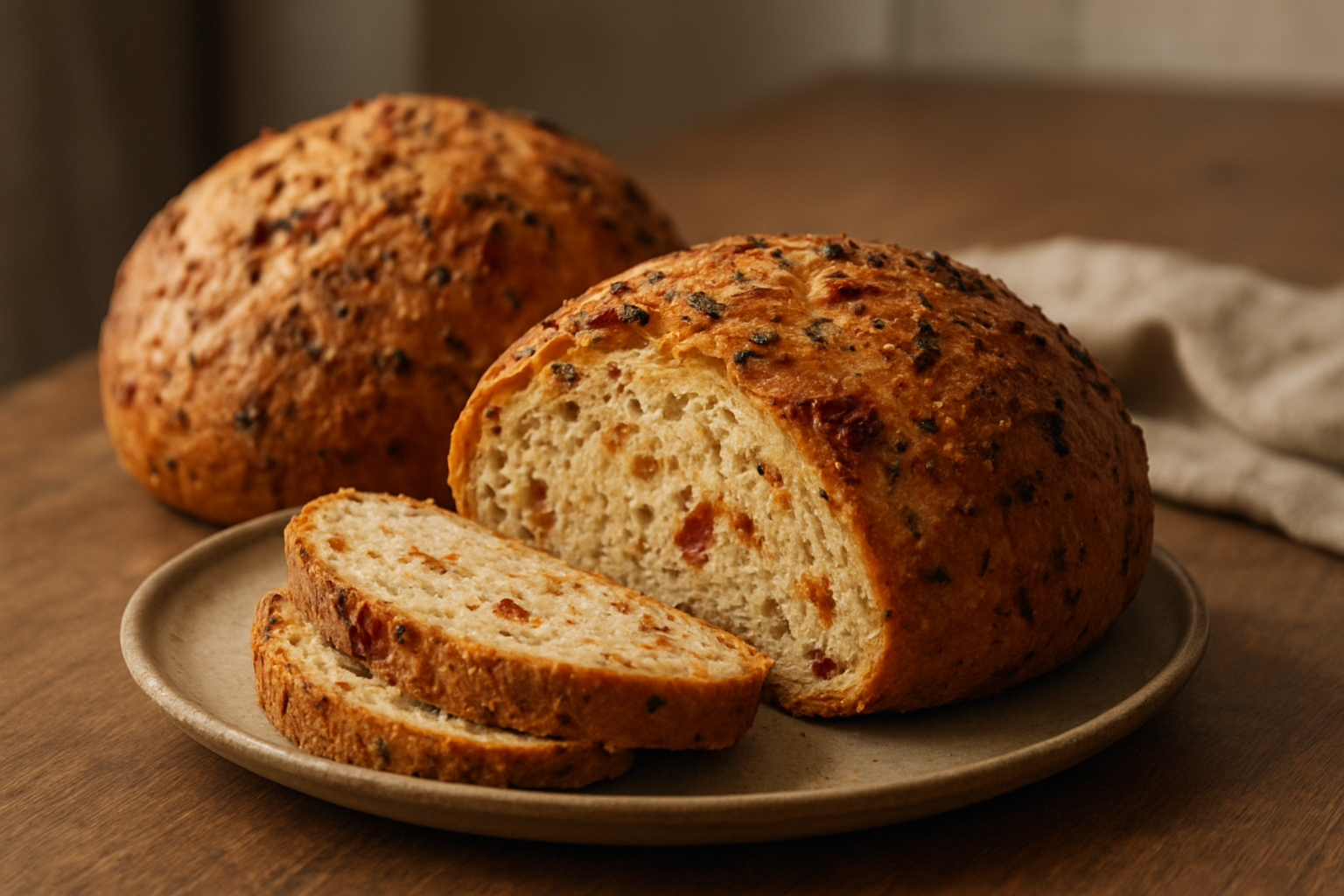
Tomato Bread Recipe with Sun-Dried Tomatoes, Herbs and Onions
🛒 Ingredients
- ✓
500 g wheat flour
- ✓
250 ml milk, lukewarm
- ✓
21 g fresh yeast
- ✓
100 g sun-dried tomatoes
- ✓
1 medium onion
- ✓
1 tbsp olive oil
- ✓
1 heaped tsp salt
- ✓
1 heaped tbsp sugar
- ✓
1 medium organic egg
- ✓
150 ml olive oil
- ✓
1 tbsp herbes de Provence
This recipe is also available in German.
📌 Overview
This tomato bread recipe makes two savoury yeast loaves with sun-dried tomatoes, herbes de Provence, softened onions and plenty of olive oil. The bread is soft, moist and aromatic, ideal with salads, soups, antipasti, grilled dishes or simply as a savoury snack with butter, cream cheese or cheese. The most important details are lukewarm milk, fresh yeast, well-drained tomatoes, cooled onions and enough proving time. This gives the loaf an airy crumb while the tomatoes, herbs and olive oil provide a clear Mediterranean flavour.
👨🍳 How to make Tomato Bread with Herbs and Onions
- 1
Warm the milk until just lukewarm. It should feel warm but not hot, so the yeast activates without being damaged.
- 2
Dissolve the fresh yeast completely in the lukewarm milk and let it stand briefly until a few small bubbles appear.
- 3
Place the flour in a large bowl and make a well in the centre. Pour in the yeasted milk and mix it with a little flour from the edges to form a soft starter.
- 4
Cover the bowl and leave the starter in a warm, draught-free place for about 20 minutes, until it has visibly risen and looks slightly bubbly.
- 5
Meanwhile, pour boiling water over the sun-dried tomatoes and leave them to soak for 5 minutes. Drain very well, pat dry with kitchen paper and dice finely.
- 6
Peel and finely dice the onion, then cook it gently in 1 tbsp olive oil over medium heat until translucent. It should become soft and aromatic but not dark. Leave it to cool completely.
- 7
Add the salt, sugar, egg, 150 ml olive oil and herbes de Provence to the starter, then knead everything for 8 to 10 minutes into a smooth, elastic dough. The dough may be soft but should not look runny.
- 8
Shape the dough into a ball, return it to the bowl, cover and leave to prove for about 40 minutes, until clearly increased in volume.
- 9
Gently knead the diced tomatoes and cooled onions into the dough. If the tomatoes make the dough very wet, add only a small amount of flour so the crumb stays moist.
- 10
Dust the surface lightly with flour, cover again and leave the dough to rest for another 30 minutes so the tomatoes, onions and herbs distribute evenly.
- 11
Divide the dough into two equal portions and shape them into two loaves. Place them on a baking tray lined with baking parchment and cover with a cloth.
- 12
Leave the loaves to prove again for about 35 to 40 minutes, until visibly risen. Meanwhile, preheat the oven to 200°C conventional.
- 13
Bake the loaves on the middle shelf for about 30 to 35 minutes, until the crust is golden. If the top colours too quickly, cover the loaves loosely with baking parchment for the final minutes.
- 14
Leave the tomato bread to cool completely on a wire rack before slicing. Cutting too early can make the crumb seem damp and compact.
🧠 Why It Works
This tomato bread works because fresh yeast, lukewarm milk and enough proving time build a light crumb. Sun-dried tomatoes add concentrated sweetness, acidity and umami, while softened onions bring mellow sweetness and depth. Olive oil keeps the dough moist and helps the bread stay soft for longer. Herbes de Provence provide the Mediterranean aroma that pairs naturally with tomatoes and onions. It is important to drain the tomatoes well and cool the onions before adding them: too much moisture weakens the dough structure, while hot onions can slow the yeast. The long proving stages create better flavour and a more open texture.
🛠️ Troubleshooting
Why is my tomato bread not rising properly?
The milk may have been too hot, the yeast may be old or the proving place may be too cool. Use lukewarm milk, check that the yeast is fresh and let the dough rise covered in a warm, draught-free place until visibly increased in volume.
Why is my tomato bread dry after baking?
Dry bread can come from overbaking, adding too much extra flour or baking with too little moisture in the dough. Add extra flour only sparingly and cover the crust if it browns too quickly.
Why is the crumb sticky or dense?
The bread may have been sliced too early, underbaked or made too wet by the tomatoes and onions. Drain the tomatoes well, bake the loaves fully and let them cool before slicing.
Why are the tomatoes not evenly distributed?
The tomatoes and onions should be diced small and added after the first prove. Knead them in gently so they distribute without overworking or tearing the dough.
How do I stop the onion flavour from becoming too strong?
Cook the onions only until translucent and let them cool fully before adding them. Darkly browned onions taste stronger and can overpower the tomato and herb flavour.
What should I do if the dough is too sticky?
Let the dough rest for 5 to 10 minutes, then knead again. Add flour only one tablespoon at a time, because too much extra flour will make the bread dry. A slightly sticky enriched dough is normal here.
Can I prepare the dough ahead and bake later?
Yes, after the first prove you can cover the dough and leave it in the fridge overnight. Let it come closer to room temperature before shaping and adding the tomatoes and onions.
How do I reheat frozen tomato bread?
Frozen slices can go straight into the toaster or oven at 150 to 170°C. Whole loaves should thaw slowly and then be refreshed briefly in the oven to improve the crust.
💡 Tips and Variations
- •
Use sun-dried tomatoes that have been soaked, drained and patted dry. Too much remaining water will make the dough heavier.
- •
Good extra virgin olive oil gives the bread more character. If the oil is very strong, however, it will become a dominant flavour.
- •
For extra savoury depth, add a little grated Parmesan, Pecorino or a small splash of balsamic vinegar to the dough. Adjust the salt carefully.
- •
If serving as barbecue bread, shape the dough into smaller loaves or sticks. They are easy to slice and toast briefly before serving.
- •
For a vegan version, replace the milk with lukewarm water or unsweetened plant milk and replace the egg with 1 tbsp ground flaxseed mixed with 3 tbsp water. The crumb will differ slightly but remain moist.
- •
For a gluten-free version, use a gluten-free bread flour blend with a binder such as psyllium husk or xanthan gum. Rice flour and potato starch alone usually will not create a stable bread structure.
- •
Roasted peppers can be used instead of sun-dried tomatoes. Drain them very well and dice them finely so the dough does not become too wet.
- •
Tomato bread tastes more balanced after it has cooled completely. For a crisper crust, toast slices briefly or warm them in the oven before serving.
📦 Storage
Tomato bread keeps for about 2 to 3 days in a bread bin, cotton bag or loosely wrapped in baking paper. Because of the olive oil, the crumb stays moist longer than a very lean loaf. For longer storage, let the bread cool completely, slice it and freeze it airtight. Individual slices can be reheated straight from frozen in a toaster or oven. Avoid storing bread in the fridge, as it tends to taste stale more quickly there.
🍷 Pairing
Tomato bread pairs well with Mosel Riesling Kabinett if you want to highlight the sweetness of sun-dried tomatoes and the freshness of the herbs. Franconian Silvaner works with onions, olive oil and a rustic bread crumb. Internationally, Vermentino is a strong match because its citrus freshness and herbal notes echo the Mediterranean flavours of tomatoes, olive oil and herbes de Provence.
❓ F.A.Q.
How long does tomato bread stay fresh?
Once fully cooled, tomato bread stays fresh for about 2 to 3 days in a bread bin or cotton bag. For longer storage, slice and freeze it.
Can I use dried yeast instead of fresh yeast?
Yes, 21 g fresh yeast is roughly equivalent to 7 g dried yeast. You can mix dried yeast with the flour or activate it in lukewarm milk.
Can I make tomato bread vegan?
Yes, replace the milk with water or unsweetened plant milk and use a flaxseed egg substitute. The bread will be slightly less rich but still moist because of the olive oil.
Why do I need to soak sun-dried tomatoes?
Soaking softens the tomatoes and prevents them from pulling too much moisture from the dough. After soaking, they must be drained well so the dough does not become too wet.
How do I make tomato bread light and airy?
Knead the dough long enough, allow each proving stage to complete and avoid adding too much extra flour. Add the tomatoes and onions gently after the first prove.
Can I make gluten-free tomato bread?
Yes, but it is best to use a gluten-free bread flour blend that contains a binder. Rice flour and potato starch alone usually do not give enough structure for an airy yeast loaf.
What can I serve with tomato bread?
Tomato bread goes well with salads, soups, antipasti, cheese, grilled vegetables, dips, herb butter and Mediterranean main courses. It also works as a savoury sandwich bread.
Can I freeze tomato bread?
Yes, freezing in slices is best. You can reheat individual portions directly in the toaster or oven without thawing the whole loaf.
🏛️ History and Tradition
Tomato bread is a modern adaptation inspired by Mediterranean influences integrated into German baking traditions. While traditional German breads focus on rye and wheat varieties, the inclusion of sun-dried tomatoes and herbs reflects the increasing popularity of Mediterranean flavours in regions like Baden-Württemberg and Bavaria. This fusion highlights Germany’s evolving culinary landscape, especially in everyday recipes that blend authenticity with innovation. Tomato bread is often enjoyed year-round but gains special appeal during warmer months and festive gatherings, reinforcing its place in contemporary German cuisine.
Tomato bread with herbs and onions is a versatile yeast bread for everyday meals, barbecues, soups, salads and Mediterranean starters. When the yeast is active, the tomatoes are well drained and the dough has enough time to prove, the result is a soft, aromatic loaf with a moist crumb. Sliced and frozen, it can be prepared ahead and refreshed whenever needed.
Rate this recipe
Click or tap the stars to rate