
Alltagsküche
Kochen, wie es zuhause schmeckt
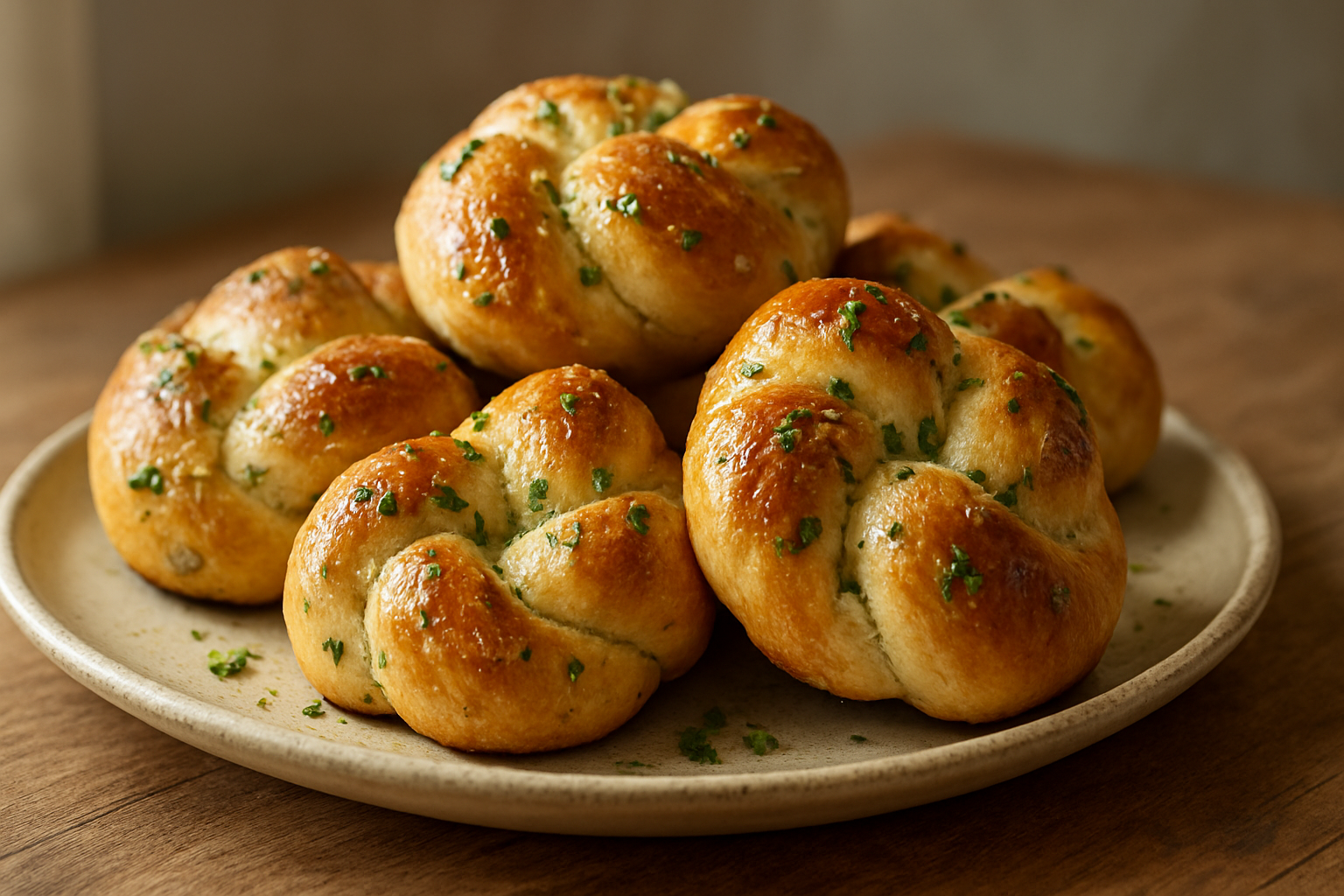
Soft Garlic Knot Rolls with Herb Butter
🛒 Ingredients
- ✓
300 ml lukewarm water
- ✓
20 g fresh yeast
- ✓
10 g granulated sugar
- ✓
500 g strong white bread flour
- ✓
10 g fine salt
- ✓
1 teaspoon garlic powder
- ✓
60 ml garlic-infused oil
- ✓
50 g unsalted butter
- ✓
3 garlic cloves
- ✓
3 tablespoons flat-leaf parsley, finely chopped
- ✓
A little flour for the work surface
📊 Nutritional Information
This recipe is also available in German.
📌 Overview
These soft garlic knot rolls are made from a yeast dough enriched with garlic oil and brushed with garlic parsley butter. A long first rise and a shorter second proof create rolls that are golden outside and light inside. Each piece of dough is rolled into a long strand, twisted and shaped into a decorative knot. The recipe makes 16 rolls that can be served with soups, salads, pasta, pizza or grilled dishes.
You may also find it useful to look at recipes Rolled Garlic Bread with Yogurt Dough, Greek White Bread with Olive Oil, and Sun-Dried Tomato Ciabatta, in addition to this one.
👨🍳 How to make Soft Garlic Knot Rolls with Herb Butter
- 1
Warm the water to approximately 35 to 38°C. It should be lukewarm rather than hot. Dissolve the fresh yeast and sugar completely in the water.
- 2
Combine the bread flour, salt and garlic powder thoroughly in a large mixing bowl.
- 3
Add the yeast mixture and garlic oil. Mix with a dough hook at low speed, then knead for 8 to 10 minutes until the dough is smooth and elastic.
- 4
Finish kneading briefly by hand. The dough should be soft and supple and may remain slightly sticky. Add only a small amount of extra flour if it is excessively wet.
- 5
Cover the dough and leave it in a warm, draught-free place for about 60 minutes, or until approximately doubled in volume.
- 6
Line a baking tray with baking paper. Gently press down the risen dough and divide it into 16 equal portions weighing approximately 55 to 60 g each.
- 7
Roll each portion on an unfloured or very lightly floured surface into a strand approximately 30 cm long.
- 8
Bring both ends of each strand together and twist the doubled strand into a spiral. Form it into a ring and push one end through the centre to create a compact knot.
- 9
Arrange the shaped knots on the prepared tray, leaving space between them.
- 10
Melt the butter over low heat. Crush or press the garlic cloves and cook them gently in the butter for about 30 seconds without allowing them to brown. Stir in the chopped parsley.
- 11
Brush the knots lightly with approximately half of the garlic butter. Cover and leave them to prove for another 20 minutes.
- 12
Meanwhile, preheat the oven to 220°C conventional or 200°C fan.
- 13
Bake the garlic knots on the middle shelf for 18 to 20 minutes, until evenly golden. Particularly large knots may require another 2 to 3 minutes.
- 14
Brush the hot rolls with the remaining garlic butter immediately after baking. Transfer them to a wire rack and allow them to cool for at least 10 minutes.
🧠 Why It Works
Strong bread flour develops enough gluten to hold the twisted shape while keeping the crumb soft. Garlic oil distributes flavour throughout the dough and contributes to its tender texture. The first rise develops volume, while the second proof restores the air lost during shaping. Brushing the rolls after baking intensifies the garlic flavour and keeps the surface soft and aromatic.
🛠️ Troubleshooting
Why is my yeast dough not rising?
The water may have been too hot or the yeast may no longer be active. Dissolve the yeast only in water at approximately 35 to 38°C and leave the covered dough in a warm, draught-free place. A cool kitchen may require a longer rise.
Why do the dough strands shrink when I roll them?
The gluten is still too tight. Cover the divided dough portions and let them rest for 5 to 10 minutes before rolling them again. The relaxed dough will stretch more easily.
Why are my garlic knots dense instead of fluffy?
Too much flour may have been added, or the shaped rolls may not have proved long enough. Keep the dough soft and allow the knots to increase visibly in size before baking.
Why does the garlic burn on top of the rolls?
Garlic becomes bitter quickly at high temperatures. Cook it only briefly over low heat and apply a thin layer of butter before baking. Use most of the garlic butter after the rolls leave the oven.
Why do the knots open during baking?
The end may not have been pushed far enough through the centre, or the dough strands may have been heavily floured. Secure the ends firmly and use very little flour so the dough surfaces adhere.
💡 Tips and Variations
- •
Add 1 teaspoon dried oregano or Italian herb seasoning to the garlic butter for a stronger herbal flavour.
- •
Sprinkle approximately 30 g finely grated Parmesan over the freshly buttered knots immediately after baking.
- •
For a milder version, halve the garlic powder and use only two fresh garlic cloves.
- •
Replace the garlic oil with mild olive oil if necessary. The garlic flavour inside the dough will be less pronounced.
- •
For especially soft rolls, replace 50 ml of the water with lukewarm milk.
- •
Weigh the dough portions before shaping so all the knots bake evenly.
📦 Storage
- •
Garlic knots are at their best on the day they are baked, while the crumb is soft and the surface is aromatic.
- •
Store completely cooled rolls in an airtight container at room temperature for up to 2 days.
- •
To reheat, lightly moisten the rolls and warm them for 5 to 7 minutes in a 170°C oven.
- •
A microwave can be used for only 10 to 15 seconds, as longer heating may make the bread chewy.
- •
Freeze completely cooled baked knots for up to 3 months. For the best result, do not apply all of the garlic butter before freezing.
- •
Thaw frozen knots at room temperature, reheat briefly in the oven and brush with fresh garlic butter before serving.
🍷 Pairing
- •
Serve the knots with tomato soup, minestrone or creamy vegetable soups.
- •
They work well with pasta in tomato, vegetable or cheese-based sauces.
- •
Offer them as a snack with tomato dip, herb cream cheese or a mild cheese sauce.
- •
They complement salads, antipasti and grilled vegetables.
- •
Serve them alongside pizza or Italian-inspired main dishes instead of conventional garlic bread.
❓ F.A.Q.
Can I prepare garlic knot dough ahead of time?
Yes. After kneading, cover the dough and leave it to rise overnight in the refrigerator. The next day, let it stand at room temperature for about 30 minutes, shape the knots and prove them for another 20 to 30 minutes.
Can I make garlic knots with dried yeast?
Yes. Replace 20 g fresh yeast with approximately 7 g dried yeast. Depending on the product, mix it directly with the flour or activate it in the lukewarm water.
How do you shape garlic knots?
Roll each piece of dough into a strand approximately 30 cm long. Bring the ends together, twist the doubled strand, form it into a ring and push one end through the centre.
Can garlic knots be frozen?
Yes. Freeze completely cooled baked knots for up to 3 months. Reheat them in the oven after thawing and brush them with fresh garlic butter.
What can I serve with garlic knot rolls?
Serve them with tomato or vegetable soup, salads, pasta, pizza, antipasti, grilled meat or grilled vegetables. They also work well with tomato, cheese or herb dips.
🏛️ History and Tradition
Garlic knots are strongly associated with Italian-American pizzeria baking. They are usually made from a pizza-style yeast dough and brushed with garlic butter and herbs before or after baking. Although inspired by Italian bread flavours, garlic knots are generally considered an Italian-American rather than a traditional Italian speciality.
- •
For light garlic knot rolls, keep the yeast dough soft, allow enough time for both rises and divide it into evenly sized portions.
- •
Apply only a thin layer of garlic butter before baking and a more generous coating afterwards so the garlic remains aromatic rather than burnt.
Rate this recipe
Click or tap the stars to rate