
Alltagsküche
Kochen, wie es zuhause schmeckt
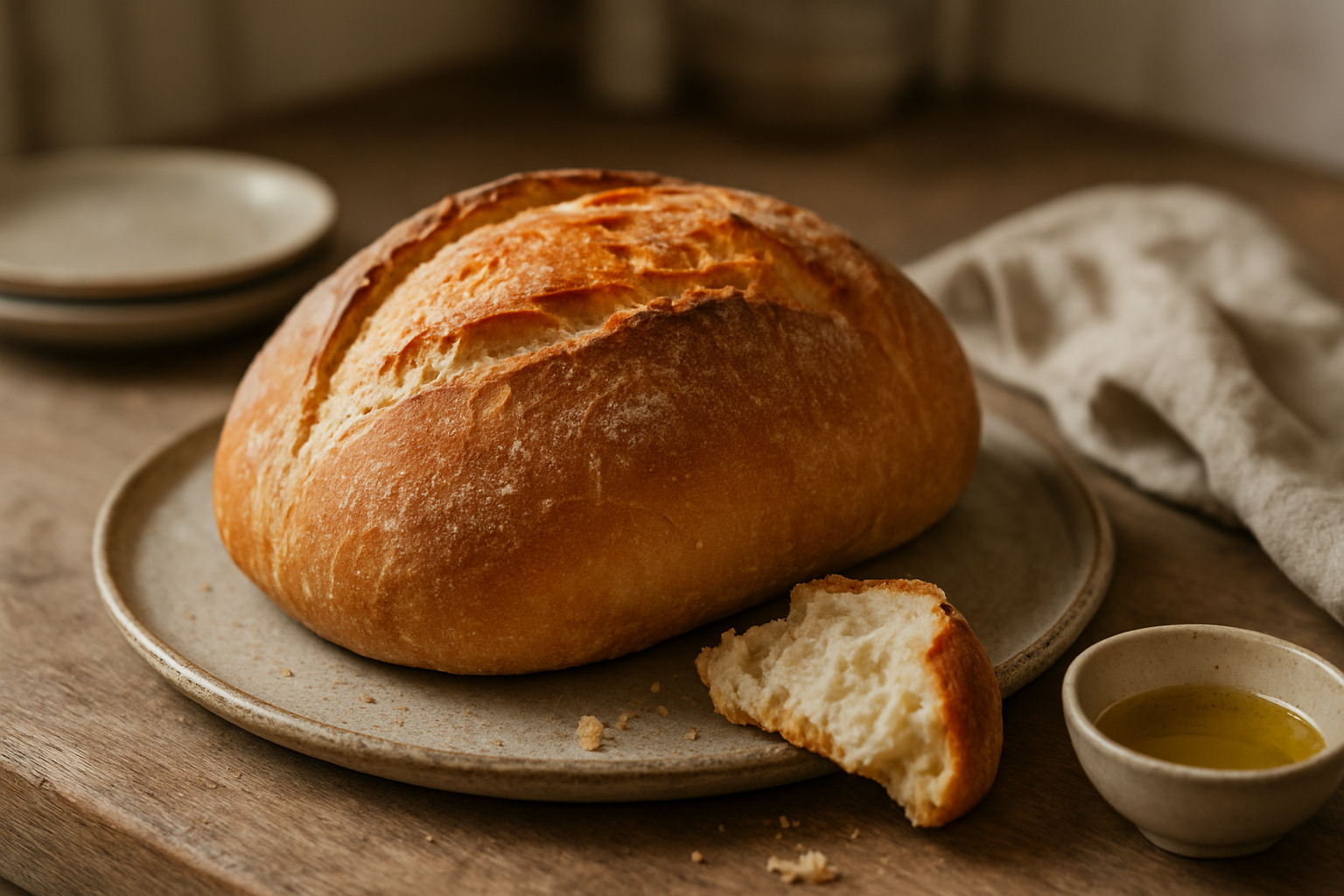
Greek White Bread with Olive Oil: Soft Homemade Loaf
🛒 Ingredients
- ✓
500 g plain flour or strong white bread flour
- ✓
20 g fresh yeast
- ✓
300 ml lukewarm water
- ✓
1 slightly heaped tsp fine salt
- ✓
2 tbsp olive oil
- ✓
Extra flour for shaping
📊 Nutritional Information
This recipe is also available in German.
📌 Overview
Greek white bread is a simple yeast bread made with wheat flour, fresh yeast, water, salt and olive oil. The loaf has a mild flavour, a soft crumb and a light crust, making it useful for everyday meals, dips, soups, grilled food and Mediterranean-style plates. This recipe uses two short rising stages: first the flour, yeast and water are developed into a basic dough, then salt and olive oil are kneaded in so the dough becomes elastic and aromatic.
You may also find it useful to look at recipes Homemade Tortillas Recipe, Homemade Arabic Flatbread Recipe, and Grissini, in addition to this one.
👨🍳 How to make Greek White Bread with Olive Oil
- 1
Dissolve the fresh yeast in the lukewarm water.
- 2
Place the flour in a large bowl and make a well in the centre.
- 3
Pour the dissolved yeast into the well and mix everything into a smooth yeast dough.
- 4
Knead for 8–10 minutes by hand or 6–7 minutes with a dough hook, until the dough is elastic and only slightly sticky.
- 5
Cover the bowl and let the dough rise in a warm place for 30 minutes, until visibly puffed.
- 6
Press a small well into the centre of the dough. Add the salt and olive oil.
- 7
Knead the dough again, preferably by hand, until the olive oil is completely absorbed and the dough becomes smooth again.
- 8
Cover and let the dough rise for another 30 minutes.
- 9
Turn the dough out onto a lightly floured work surface and shape it into one large loaf or two smaller loaves.
- 10
Place the loaf on a baking tray lined with baking paper and cover it with a clean cloth while the oven preheats.
- 11
Preheat the oven to 180°C.
- 12
Remove the cloth and bake the bread on the middle shelf for 10 minutes at 180°C.
- 13
Reduce the oven temperature to 160°C and continue baking for about 50 minutes, until the loaf is lightly golden and sounds hollow when tapped underneath.
- 14
Let the bread cool on a wire rack before slicing, so the crumb can set properly.
🧠 Why It Works
The first kneading develops gluten before the salt and olive oil are added. This helps the dough build structure, while the olive oil added later softens the crumb without weakening the initial dough too much. Two short rises give the bread enough lightness, and the lower second baking temperature allows the loaf to cook through without forming an overly dark crust.
🛠️ Troubleshooting
Why did my Greek white bread not rise properly?
The yeast may have been inactive, the water too hot or the room too cold. Use lukewarm water, not hot water, and let the covered dough rise in a warm, draft-free place.
Why is the bread dense?
The dough may not have been kneaded long enough or may not have risen sufficiently. Knead until elastic and allow both rising stages to finish before shaping and baking.
Why is the crust too hard?
The bread may have baked too long at a high temperature or cooled uncovered in a very dry room. Follow the two-stage temperature method and wrap the cooled loaf if you prefer a softer crust.
Why did the olive oil not mix into the dough?
Olive oil takes a little time to absorb when added after the first rise. Knead patiently by hand until the dough becomes smooth again and no oily streaks remain.
How do I know when the bread is fully baked?
The loaf should be lightly golden and sound hollow when tapped underneath. If it feels heavy or sounds dull, bake it for a few more minutes.
💡 Tips and Variations
- •
Use bread flour for a chewier crumb or plain flour for a softer, lighter loaf.
- •
Add a teaspoon of dried oregano or thyme if you want a more aromatic Mediterranean bread.
- •
For a rustic version, replace one quarter of the white flour with wholemeal flour.
- •
Do not add too much flour during shaping, because a drier dough gives a heavier loaf.
- •
For two smaller loaves, start checking the baking time a little earlier.
- •
Let the bread cool before slicing, otherwise the warm crumb can compress and seem doughy.
📦 Storage
- •
Store the cooled bread wrapped in a clean cloth or in a bread bag at room temperature for up to 2 days.
- •
For a softer crust, keep the loaf in an airtight bag once completely cool.
- •
Freeze sliced bread for up to 2 months.
- •
Thaw slices at room temperature or toast them directly from frozen.
- •
Refresh day-old bread for a few minutes in a warm oven before serving.
🍷 Pairing
- •
Serve with olive oil, olives, feta and fresh tomatoes.
- •
Use alongside tzatziki, hummus, grilled vegetables or Greek salad.
- •
Pair with soups, bean stews, roasted lamb, chicken or fish.
- •
Toast leftover slices and serve with garlic oil or herb butter.
❓ F.A.Q.
Can I use dry yeast instead of fresh yeast?
Yes. Replace 20 g fresh yeast with about 7 g instant dry yeast. Mix it with the flour or dissolve it in the water, depending on the type of yeast you use.
Can I make Greek white bread ahead of time?
Yes. Bake it earlier in the day and let it cool completely before wrapping. It can also be sliced and frozen for later meals.
Can I make this bread without olive oil?
You can, but the crumb will be less soft and less aromatic. Olive oil is important for the Mediterranean character of the bread.
Why is salt added after the first rise?
Adding salt and oil later lets the yeast and flour develop first. It also makes it easier for the dough to build structure before the olive oil softens it.
What do you serve with Greek white bread?
Serve it with olive oil, feta, olives, tzatziki, grilled vegetables, soups, stews or roasted meat and fish.
Can I bake the dough as two small loaves?
Yes. Shape the dough into two smaller loaves. They may bake slightly faster, so check for a hollow sound underneath before the full time has passed.
🏛️ History and Tradition
White bread with olive oil is common in many Greek and Mediterranean home kitchens, where it is served with meals rather than treated as a special occasion bread. It pairs naturally with olive oil, olives, feta, grilled vegetables, soups and stews. This version is a practical home-style loaf rather than a regional ceremonial bread, but it follows the Mediterranean habit of using olive oil to make everyday bread softer and more aromatic.
- •
Greek white bread is a practical everyday loaf with a soft crumb and mild olive oil aroma.
- •
The best result comes from proper kneading, two short rises and cooling the loaf before slicing.
Rate this recipe
Click or tap the stars to rate