
Alltagsküche
Kochen, wie es zuhause schmeckt
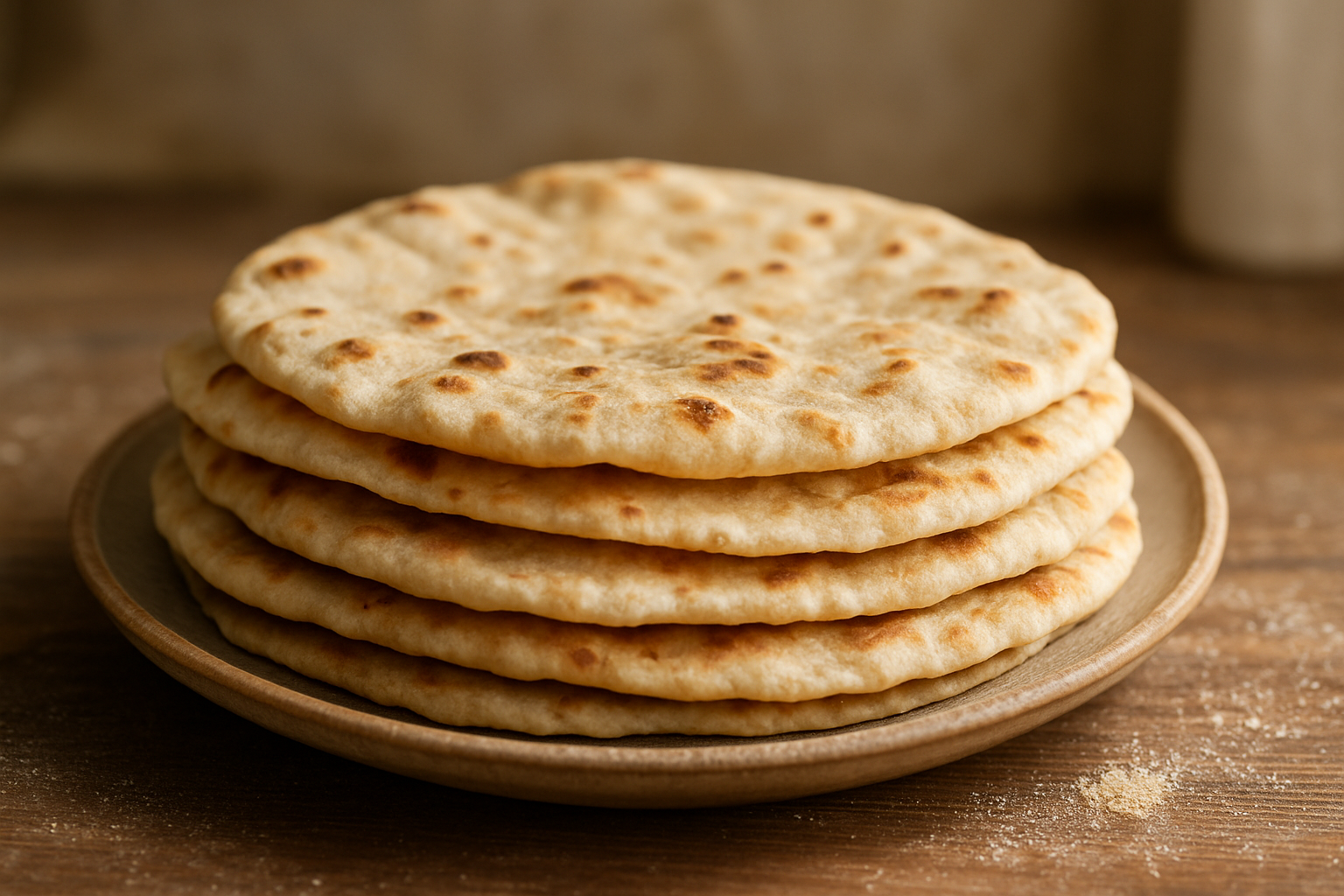
Homemade Tortillas: Soft Yeast-Free Flatbreads
🛒 Ingredients
- ✓
250 ml lukewarm water, added gradually as needed
- ✓
250 g plain wheat flour
- ✓
50 g pre-cooked maize flour, such as PAN maize flour
- ✓
1 tsp salt
- ✓
1 tbsp neutral oil, optional for softer tortillas
- ✓
A little extra maize flour or wheat flour for rolling
This recipe is also available in German.
📌 Overview
Homemade tortillas are soft, thin flatbreads that work well for wraps, tacos, quesadillas, burritos and quick pan-fried meals. This recipe combines wheat flour with a little pre-cooked maize flour, giving the tortillas flexibility and a gentle corn flavour. They are made without yeast, but they do need a short resting time so the dough relaxes and rolls out without tearing. The key steps are using lukewarm water, kneading to a smooth dough, rolling the tortillas thinly and cooking them briefly in a hot, dry pan. This keeps them soft, flexible and easy to fill or fold.
You may also find it useful to look at recipes Soft Flatbread with Feta-Style Cheese Filling, Dürüm Lahmacun Recipe, and Authentic Arepas Recipe, in addition to this one.
👨🍳 How to make Homemade Tortillas
- 1
Put the wheat flour, pre-cooked maize flour and salt into a large mixing bowl and stir well. This helps distribute the maize flour evenly and prevents dry patches in the dough.
- 2
Gradually add the lukewarm water and knead by hand or with a stand mixer. Start with about 220 ml water and add the rest only if needed, until you have a soft, smooth dough.
- 3
Work in 1 tablespoon neutral oil if desired. The oil makes the tortillas slightly more supple and helps them stay softer after cooking.
- 4
Knead the dough for about 5–7 minutes, until smooth and elastic. It can be soft, but it should not stick heavily to your hands.
- 5
Shape the dough into a ball, cover it and let it rest at room temperature for 20–30 minutes. This rest is important because it relaxes the gluten and stops the tortillas shrinking back when rolled.
- 6
Divide the dough into 6 equal portions and shape them into smooth balls. Keep the dough balls covered so they do not dry out.
- 7
Lightly dust the work surface and dough balls with maize flour or wheat flour. Roll each ball very thinly with a rolling pin to about 18–20 cm in diameter. Turn the dough regularly as you roll so the tortilla becomes evenly round and thin.
- 8
Stack the rolled tortillas only with a little flour or baking parchment between them so they do not stick together. Do not leave them uncovered for long, as they can dry out.
- 9
Heat a heavy non-stick frying pan or skillet without oil over medium-high heat. The pan is ready when a tortilla starts forming small bubbles shortly after touching the surface.
- 10
Cook each tortilla for about 45–60 seconds on the first side, until bubbles appear and light brown spots form. Flip and cook the second side for another 30–45 seconds.
- 11
Do not overcook the tortillas. If they turn dry or stiff, the heat was too low, the cooking time too long or the dough too dry.
- 12
Place the cooked tortillas immediately inside a clean tea towel and cover them. The trapped steam keeps them soft and flexible until you are ready to fill or serve them.
🧠 Why It Works
Homemade tortillas work best when the dough has enough moisture, a short rest and brief contact with high heat. Wheat flour provides gluten, which makes the flatbreads flexible enough to roll, fold and fill. Pre-cooked maize flour adds a gentle corn flavour and absorbs water, so the liquid should be added gradually. Lukewarm water helps the dough become smooth more quickly, while resting prevents tearing and shrinking during rolling. Cooking in a hot, dry pan creates the typical bubbles and light brown spots. Covering the tortillas immediately after cooking traps steam, keeping the flatbreads soft rather than brittle.
🛠️ Troubleshooting
Why are my homemade tortillas hard or dry?
They were probably cooked for too long, cooked over heat that was too low or left uncovered after cooking. Cook them briefly in a hot pan and place them straight into a clean tea towel.
Why does the dough tear when I roll it out?
The dough may not have rested long enough or may be too dry. Let it rest covered for 20–30 minutes and, if needed, knead in water a teaspoon at a time until it feels supple.
What should I do if the dough is too sticky?
Add extra flour only gradually. Too much flour will make the tortillas dry. The dough can be soft, but after kneading and resting it should be easy to handle.
Why don’t my tortillas puff up?
The pan may not be hot enough or the tortillas may be too thick. Roll them thinly and cook them in a well-preheated dry pan until bubbles appear.
Why do my tortillas get black spots instead of light brown marks?
Scorched flour in the pan can cause black marks. Wipe the pan with kitchen paper between batches and lower the heat slightly if the tortillas darken too quickly.
How do I keep tortillas soft after cooking?
Stack them immediately in a clean tea towel or covered container. The steam keeps the flatbreads soft and flexible.
Can I make tortilla dough ahead?
Yes. Keep the dough covered in the fridge for up to 24 hours. Let it sit at room temperature for 20–30 minutes before rolling so it becomes more elastic.
💡 Tips and Variations
- •
For softer tortillas, add 1 tablespoon neutral oil to the dough. It is optional, but useful if you want to use the flatbreads for wraps.
- •
Roll the tortillas very thinly. Thick tortillas become more bread-like and are harder to fill or fold.
- •
A heavy frying pan, cast-iron skillet or griddle holds heat well and gives even brown spots. A non-stick pan is also a good option for beginners.
- •
For tacos, roll the tortillas slightly smaller. For wraps or burritos, make them larger and as thin as possible.
- •
For extra flavour, add a pinch of cumin, paprika or dried herbs to the dough. For neutral tortillas, keep the dough to flour, water, salt and optional oil.
- •
For a gluten-free version, do not simply replace wheat flour with maize or rice flour, as the elasticity will be lost. Use a suitable gluten-free flour blend with a binder, or follow a dedicated corn tortilla recipe.
- •
This recipe is vegan if you use water and neutral oil. If you replace some water with buttermilk, the tortillas become softer but are no longer vegan.
- •
Fill them with beans, rice, vegetables, avocado, salad, chicken, minced meat, cheese, salsa, aioli, tofu or grilled mushrooms.
📦 Storage
Fresh tortillas are best eaten straight from the pan. If you want to prepare them ahead, let them cool completely and store them airtight in the fridge for up to 2 days. Place baking parchment between the tortillas if they stick together. To reheat, warm them briefly in a dry pan or microwave them wrapped in a slightly damp cloth. For longer storage, freeze them with baking parchment between each tortilla, packed airtight, then reheat in a pan after thawing or directly from frozen if thin enough.
🍷 Pairing
Homemade tortillas are mainly a base for fillings and sauces. They pair well with beans, rice, guacamole, salsa, grilled vegetables, tofu, chicken, minced meat, cheese, salad, aioli or spicy chilli sauce. They also work as a side for soups, stews and bowls. For drinks, choose lime water, iced tea, light beer, homemade lemonade or a fresh white wine with good acidity. For a simple meal, serve them with refried beans, avocado, tomatoes, onions and herbs; for a richer version, fill them with meat, cheese or roasted vegetables.
❓ F.A.Q.
Can you make tortillas without yeast?
Yes. Tortillas do not need yeast. The dough becomes soft and workable through flour, water, salt, optional oil, kneading, resting and brief cooking in a hot pan.
Why are my homemade tortillas not soft?
They were probably cooked too long or not covered after cooking. Cook only until bubbles and light brown spots appear, then place them immediately in a clean tea towel.
Can I make tortillas with wheat flour only?
Yes. You can replace the maize flour with more wheat flour. The tortillas will taste more neutral and closer to classic flour tortillas. You may need to adjust the water slightly.
Can I make this tortilla recipe gluten-free?
Yes, but the texture changes. For gluten-free tortillas, use a suitable gluten-free flour blend with a binder, or follow a dedicated corn tortilla recipe, because wheat gluten normally provides elasticity.
How do I roll tortillas evenly round?
Shape smooth dough balls, let them rest and roll from the centre outwards. Turn the dough regularly as you roll so it becomes thin and evenly round.
What pan is best for homemade tortillas?
A heavy non-stick pan, cast-iron skillet or griddle works well. The important point is even heat and a dry surface without oil.
How do I reheat tortillas without drying them out?
Warm them briefly in a dry pan or wrap them in a slightly damp cloth and microwave them shortly. Keep them covered afterwards so they stay soft.
🏛️ History and Tradition
Tortillas have been a fundamental element of Mexican cuisine for centuries, traditionally made from maize and serving as a staple food. Their origins trace back to indigenous Mesoamerican cultures, where corn was revered as a sacred crop. Over time, wheat flour tortillas emerged in northern Mexico and the southwestern United States, reflecting regional adaptations. Today, tortillas symbolize cultural identity and culinary heritage, enjoyed globally and adapted into diverse recipes. This recipe honours that tradition by combining maize and wheat flours, offering an authentic yet accessible homage to this iconic flatbread.
Homemade tortillas are simple, but the method matters: make a supple dough, let it rest, roll it thinly, cook it briefly and cover each tortilla straight after cooking. This gives you soft, flexible flatbreads that can be filled, folded and used in many everyday meals. The recipe is vegan, yeast-free and a practical base for quick cooking.
Rate this recipe
Click or tap the stars to rate