
Alltagsküche
Kochen, wie es zuhause schmeckt
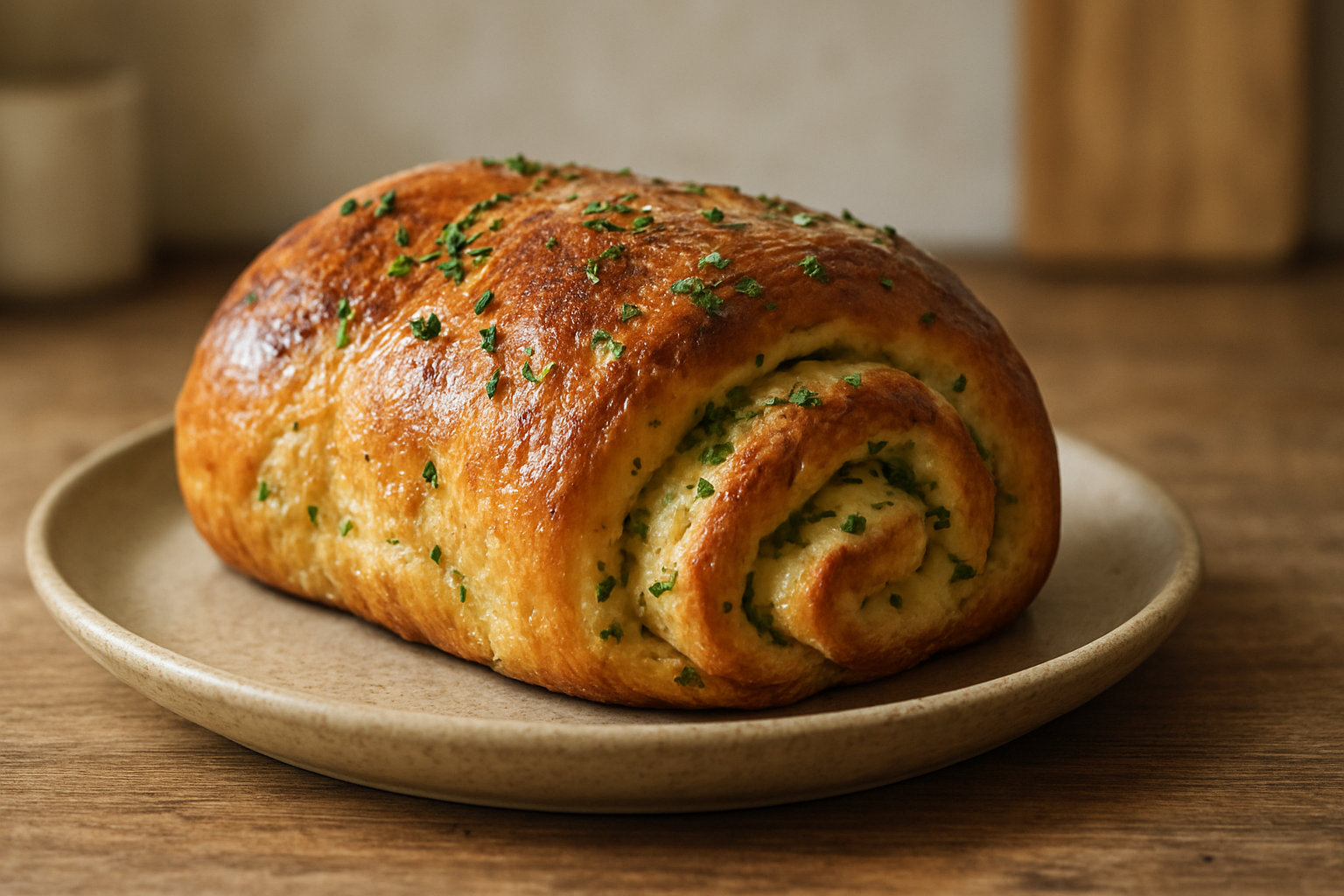
Rolled Garlic Bread with Yogurt Dough
🛒 Ingredients
- ✓
400 g strong white bread flour
- ✓
20 g fresh yeast
- ✓
10 g granulated sugar
- ✓
8 g fine salt
- ✓
1 medium egg, at room temperature
- ✓
150 g plain yogurt, at room temperature
- ✓
120 ml lukewarm water
- ✓
100 g unsalted butter, softened
- ✓
4 garlic cloves
- ✓
0.5 teaspoon fine salt for the garlic butter
- ✓
4 tablespoons flat-leaf parsley, finely chopped
- ✓
A little flour for the work surface
📊 Nutritional Information
This recipe is also available in German.
📌 Overview
This rolled garlic bread is made from a soft yogurt yeast dough filled with garlic butter and fresh parsley. Two proving stages create a light crumb, while yogurt and egg help the bread remain tender after cooling. Rolling the dough distributes the garlic butter in aromatic layers throughout the loaf. The recipe makes one large bread with approximately 20 slices and works well with soups, salads, pasta, grilled dishes or antipasti.
You may also find it useful to look at recipes Soft Garlic Knot Rolls with Herb Butter, Greek White Bread with Olive Oil, and Sun-Dried Tomato Ciabatta, in addition to this one.
👨🍳 How to make Rolled Garlic Bread with Yogurt Dough
- 1
Place the flour in a large bowl. Crumble in the fresh yeast and add the sugar.
- 2
Add the salt, egg, yogurt and lukewarm water. The water should be approximately 35 to 38°C and must not be hot.
- 3
Mix the ingredients in the bowl, then knead by hand or with a dough hook for 8 to 10 minutes until smooth and elastic.
- 4
The dough should be soft and supple and may remain slightly sticky. Add extra flour one tablespoon at a time only if it does not begin to pull away from the bowl.
- 5
Cover the dough and leave it in a warm, draught-free place for approximately 30 minutes.
- 6
Knead the dough briefly, cover it again and leave it to rise for another 30 minutes. It should increase visibly in volume.
- 7
For the filling, mash the softened butter with 0.5 teaspoon salt until creamy.
- 8
Peel and press the garlic cloves, then mix them thoroughly into the butter.
- 9
Preheat the oven to 190°C conventional or 170°C fan. Line a baking tray with baking paper.
- 10
Roll the dough on a lightly floured surface into a rectangle measuring approximately 40 x 30 cm.
- 11
Spread the garlic butter evenly over the dough, leaving a border approximately 1.5 cm wide on every side.
- 12
Scatter the chopped parsley evenly over the butter.
- 13
Fold both short ends of the dough a few centimetres over the filling. This helps prevent butter from escaping from the sides during baking.
- 14
Roll the dough evenly from one long side. Pinch the seam and both ends firmly closed.
- 15
Place the loaf seam-side down on the prepared tray and gently adjust it into an even shape if necessary.
- 16
Bake on the middle shelf for approximately 25 minutes, until golden and hollow-sounding when tapped underneath.
- 17
Transfer the bread to a wire rack and allow it to cool for at least 15 minutes before slicing so the crumb and butter layers can set.
🧠 Why It Works
Yogurt and egg make the yeast dough soft and elastic and help prevent the crumb from drying quickly. Two proving stages give the yeast enough time to aerate the dough. Folding the short sides inward keeps more garlic butter inside the loaf, while rolling creates several flavourful layers. Placing the seam underneath prevents the loaf from opening easily during baking.
🛠️ Troubleshooting
Why is my garlic bread dough not rising?
The water may have been too hot, the yeast may no longer be active or the room may be too cool. Use water at approximately 35 to 38°C and extend the rise by 15 to 30 minutes when necessary.
Why is the dough very sticky?
The dough should remain soft, and different yogurts contain different amounts of moisture. Knead it fully before adding extra flour, then add only one tablespoon at a time to avoid a dry loaf.
Why does the garlic butter leak from the loaf?
The butter may have been too soft, the border may have been covered or the ends may not have been sealed. Use creamy rather than melted butter and pinch every opening firmly closed.
Why does the rolled garlic bread open during baking?
The seam may not have been sealed properly or may not have been placed against the tray. Pinch it firmly and always bake the loaf seam-side down.
Why is the garlic bread doughy inside?
The loaf may have been rolled too thickly or removed too early. Cover the top with baking paper if it is already brown and bake for another 5 to 10 minutes.
💡 Tips and Variations
- •
Add 1 teaspoon dried oregano or thyme to the garlic butter for a stronger herb flavour.
- •
Sprinkle 40 g finely grated Parmesan or another mature hard cheese over the filling before rolling.
- •
For milder garlic bread, reduce the garlic to two or three cloves.
- •
Replace part of the parsley with chives, basil or wild garlic.
- •
Brush the loaf lightly with milk or beaten egg before baking for a more deeply golden surface.
- •
Cut the rolled dough into slices and bake them as individual garlic swirls. Reduce the baking time to approximately 18 to 20 minutes.
📦 Storage
- •
The garlic bread is best served fresh and slightly warm.
- •
Store the completely cooled loaf in an airtight container at room temperature for up to 2 days.
- •
Reheat individual slices for 4 to 6 minutes in a 170°C oven.
- •
Freeze the bread whole or in slices for up to 3 months.
- •
Reheat frozen slices directly in a toaster or oven. Allow a whole frozen loaf to thaw at room temperature first.
- •
Microwaving softens the bread initially but may make the crumb chewy after it cools.
🍷 Pairing
- •
Serve the garlic bread with tomato soup, minestrone or creamy vegetable soups.
- •
It works well with pasta in tomato, vegetable or cheese sauces.
- •
Serve it instead of baguette with salads, antipasti and grilled vegetables.
- •
Tomato dip, herb cream cheese or soft cheese spreads make suitable accompaniments.
- •
The bread also complements grilled meat, fish and vegetarian barbecue dishes.
❓ F.A.Q.
Can I prepare garlic bread dough the day before?
Yes. Cover the kneaded dough and leave it to rise overnight in the refrigerator. The next day, let it stand at room temperature for about 30 minutes before kneading briefly, filling and rolling.
Can I use dried yeast instead of fresh yeast?
Yes. Replace 20 g fresh yeast with approximately 7 g dried yeast. Follow the packet instructions for mixing it with the flour or activating it in water.
How do I stop garlic butter leaking from the bread?
Do not melt the butter. Leave a clean border, fold the short sides inward and seal the seam and ends firmly before baking.
How long does rolled garlic bread take to bake?
A large rolled loaf needs approximately 25 minutes at 190°C conventional. A particularly thick loaf may require another 5 to 10 minutes.
Can rolled garlic bread be frozen?
Yes. Freeze the completely cooled bread whole or in portions for up to 3 months. Sliced bread is particularly easy to reheat.
🏛️ History and Tradition
Filled garlic bread is a modern variation of traditional yeast bread, combining the technique of a rolled loaf with garlic butter and fresh herbs. Similar breads appear in several international cuisines and are commonly served as a savoury side dish or sharing bread.
- •
For soft, aromatic garlic bread, knead the yogurt yeast dough thoroughly and allow it to rise visibly during both proving stages.
- •
Creamy rather than melted garlic butter and carefully sealed edges keep the filling inside and create even, flavourful layers.
Rate this recipe
Click or tap the stars to rate