
Alltagsküche
Kochen, wie es zuhause schmeckt
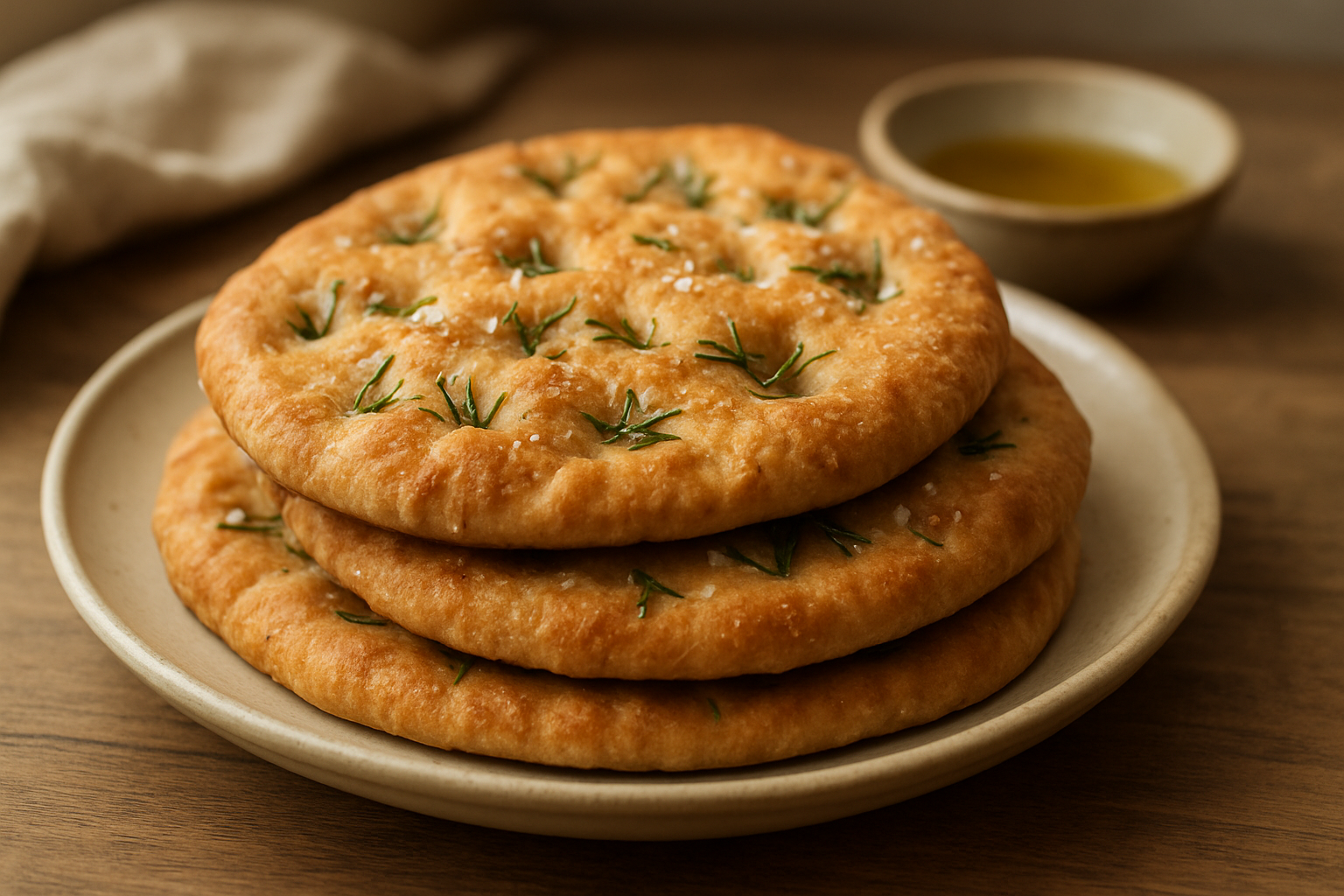
Rustic Spelt Focaccia Flatbreads – Perfect for Everyday Baking
🛒 Ingredients
- ✓
300 g wholemeal spelt flour
- ✓
200 g white spelt flour
- ✓
1 sachet dried yeast or 21 g fresh yeast
- ✓
1 tsp salt
- ✓
300 ml lukewarm water
- ✓
3 tbsp olive oil
- ✓
2 sprigs fresh rosemary, finely chopped
- ✓
fleur de sel, for sprinkling
This recipe is also available in German.
📌 Overview
Spelt focaccia flatbreads are a rustic, traditional-style bread known for their crisp crust and soft, airy interior. Popular in German and Central European home baking, these flatbreads combine wholemeal and white spelt flour to create a nutty flavour and satisfying texture. Perfect as a vegan side dish or snack, they bring authentic regional character to your table.
👨🍳 Preparation
- 1
Mix the wholemeal spelt flour, white spelt flour, yeast and salt in a large bowl.
- 2
Gradually pour in the lukewarm water, then knead everything together into a smooth, slightly sticky dough.
- 3
Dust the dough lightly with a little spelt flour, cover the bowl with a damp tea towel and leave it to rise in a warm spot for about 2 hours.
- 4
While the dough is rising, use a dough scraper every 30 minutes to loosen it from the sides of the bowl and fold it over on itself once to help build structure.
- 5
Lightly flour your work surface and turn out the dough. Divide it into 9 equal pieces.
- 6
Drizzle a little olive oil over each piece of dough and gently rub it in. Shape them into round flatbreads.
- 7
Use your fingertips to press small dimples into the surface of each one.
- 8
Place the flatbreads on a baking tray lined with baking parchment. Scatter over the chopped rosemary and a little fleur de sel.
- 9
Leave them to rest for a further 30 minutes so they can puff up slightly.
- 10
Heat the oven to 250°C conventional.
- 11
Bake on the middle shelf for about 18 minutes, until golden and crisp.
🧠 Why It Works
The combination of wholemeal and white spelt flour balances a nutty depth with lightness, while the long, gentle rise and periodic folding develop gluten structure for an airy crumb. Olive oil enriches the dough, contributing to a tender crust that crisps beautifully in a hot oven. Fresh rosemary and fleur de sel enhance aroma and flavour, creating a harmonious interplay of fat, salt, and herbaceous notes that reflect traditional German baking sensibilities.
🛠️ Troubleshooting
Why is my focaccia dense instead of airy?
Insufficient rising time or skipping the folding steps can cause a dense texture. Ensure the dough doubles in size and perform the recommended folds to build structure.
How can I prevent the crust from becoming too hard?
Brushing the dough with olive oil before baking and avoiding overbaking helps maintain a tender crust with a pleasant crispness.
What if my dough is too sticky to handle?
Lightly dust your hands and work surface with spelt flour to manage stickiness, but avoid adding too much flour which can toughen the bread.
Can I reheat focaccia without drying it out?
Warm focaccia briefly at 180°C in the oven wrapped in foil or covered with a damp cloth to retain moisture.
💡 Tips and Variations
- •
For a richer finish, add an extra splash of good olive oil to the dough and brush the flatbreads with a little more before baking for a softer, more succulent crust.
- •
For an especially crisp base, bake them on a pizza stone or a preheated baking tray.
- •
The spelt flour gives these flatbreads their distinctive nutty flavour and pleasing texture.
- •
This recipe is naturally vegan, so it suits a plant-based diet beautifully.
- •
For a softer, milder crumb, swap a portion of the wholemeal spelt flour for oat flour.
- •
A small dash of cider vinegar in the dough can deepen the flavour and help create a lighter crumb.
- •
For a gluten-free version, use a gluten-free flour blend with xanthan gum to help maintain the structure.
- •
The real secret here is the long, gentle rise and the careful folding, which give the bread its lovely airy texture.
📦 Storage
Keep the focaccia in an airtight container or a linen bread bag so it doesn’t dry out. It’s best enjoyed fresh, but will keep well for up to 2 days. To refresh it, warm it briefly in the oven at 180°C.
🍷 Pairing
These spelt focaccia flatbreads pair exquisitely with German Riesling Kabinett, whose vibrant acidity and delicate sweetness complement the bread’s nutty undertones and rosemary aroma. A Grauburgunder from Baden offers a fuller body and subtle minerality that enhances the olive oil’s richness. For an international touch, a light Italian Vermentino with crisp citrus notes and herbal nuances harmonises beautifully, elevating the rustic flavours while maintaining a refined balance.
❓ F.A.Q.
Can I use only wholemeal spelt flour for this focaccia?
Using only wholemeal spelt flour will result in a denser, heavier bread. Combining it with white spelt flour ensures a lighter, airier texture while retaining the nutty flavour.
How do I know when the dough has risen enough?
The dough should roughly double in size after about 2 hours in a warm place. It will feel soft and slightly springy when gently pressed.
Is this recipe suitable for a vegan diet?
Yes, this focaccia recipe contains no animal products, making it naturally vegan and suitable for plant-based diets.
Can I prepare the dough in advance?
You can prepare the dough the day before and let it rise slowly in the fridge overnight. Bring it to room temperature before shaping and baking.
What is the best way to store leftover focaccia?
Store focaccia in an airtight container or linen bread bag to prevent drying. It stays fresh for up to 2 days and can be refreshed by warming briefly in the oven.
🏛️ History and Tradition
Spelt focaccia flatbreads trace their roots to traditional Central European baking, where spelt was a staple grain before modern wheat varieties dominated. Historically valued for its nutritional qualities and rustic flavour, spelt bread remains a symbol of regional culinary heritage, especially in southern Germany and Austria. Often enjoyed during everyday meals and festive gatherings, this bread reflects a deep connection to local agriculture and artisanal baking traditions, reinforcing its authentic place within German cuisine.
If you’re in the mood for a simple homemade bread with plenty of character, these spelt focaccia flatbreads are well worth making. They’re rustic, fragrant and wonderfully versatile, whether you serve them at the table with supper or share them with friends over dips and nibbles. Give them a try at home and don’t be surprised if they become a regular favourite in your kitchen.
Rate this recipe
Click or tap the stars to rate