
Alltagsküche
Kochen, wie es zuhause schmeckt
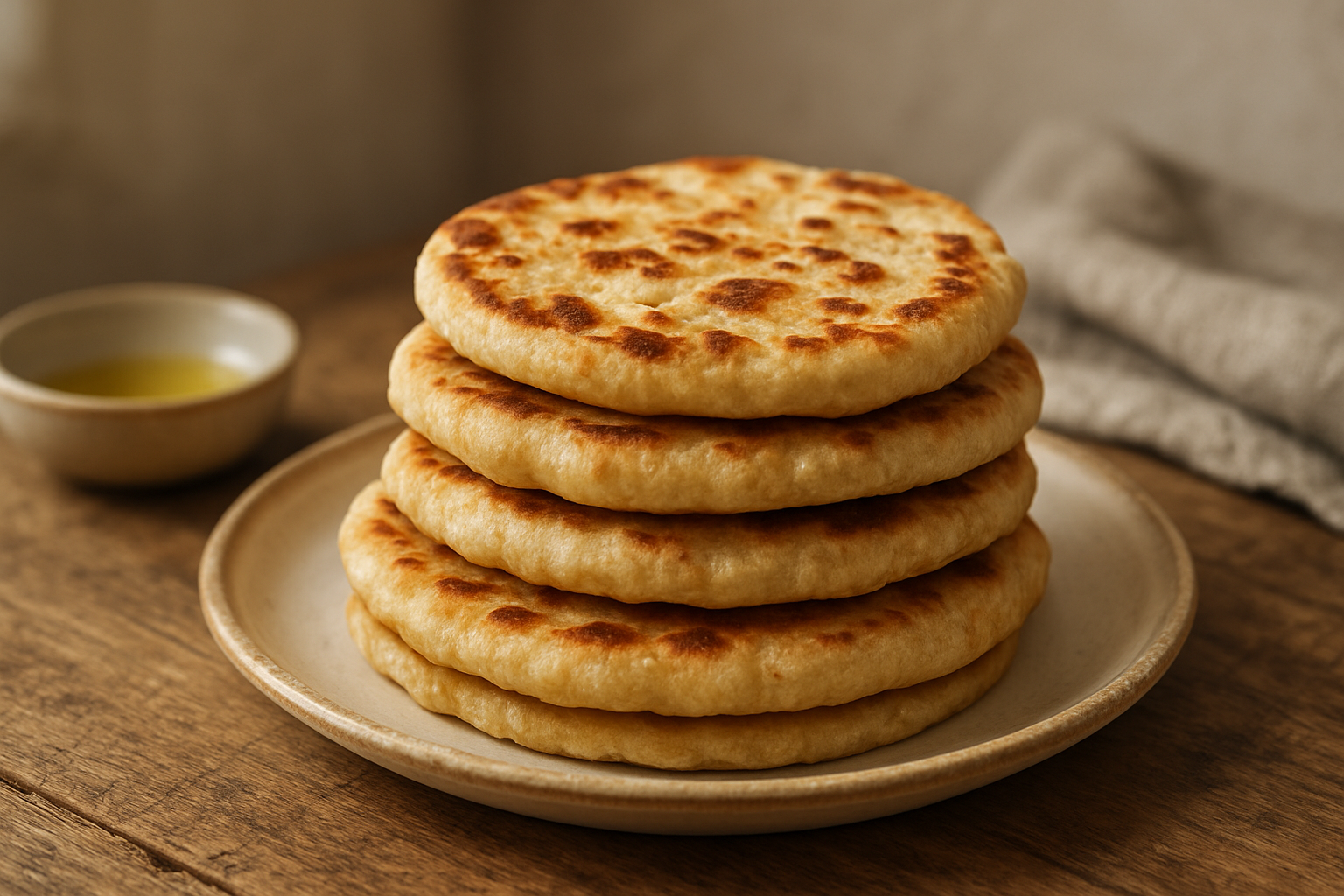
Quick Pan-Fried Flatbreads: Easy No-Oven Bread
🛒 Ingredients
- ✓
300 g plain flour
- ✓
1 level tsp dried yeast
- ✓
1 tsp salt
- ✓
2 tbsp neutral vegetable oil
- ✓
180 ml lukewarm water
This recipe is also available in German.
📌 Overview
Quick pan-fried flatbreads are ideal when you want fresh homemade bread without turning on the oven. Made with plain flour, dried yeast, salt, neutral oil and lukewarm water, the dough rests only briefly before being rolled into small rounds and cooked in a dry frying pan. The result is a simple flatbread with golden patches, a lightly crisp surface and a soft centre. These flatbreads work well with dips, soups, salads, curries, grilled vegetables or as a fast everyday bread substitute. The key is a slightly sticky dough, a short warm rest, evenly rolled rounds and medium heat so the breads cook through before the outside burns.
You may also find it useful to look at recipes Homemade Arabic Flatbread Recipe, Campfire Stick Bread Recipe, and Herby Campfire Twist Bread, in addition to this one.
👨🍳 How to make Quick Pan-Fried Flatbreads
- 1
In a large mixing bowl, thoroughly combine the flour, dried yeast and salt. Mixing the dry ingredients well helps the yeast and salt distribute evenly through the dough.
- 2
Add the oil, then gradually work in the lukewarm water while kneading. The water should feel warm but not hot, so the yeast can start working without being damaged.
- 3
Knead for 5–7 minutes until the dough is smooth, soft and slightly sticky. If it feels very dry, add water a tablespoon at a time. If it is extremely sticky, add only a small amount of flour so the flatbreads do not become tough.
- 4
Shape the dough into a ball and place it back in the bowl. Cover with a damp tea towel so the surface does not dry out.
- 5
Leave the bowl somewhere warm for about 15 minutes, for example near a warm spot or over a bowl of warm water. The dough should rise slightly and feel more relaxed, but it does not need to double in size.
- 6
Divide the dough into 9 equal pieces. If you want evenly sized flatbreads, weigh the dough portions before rolling.
- 7
On a lightly floured work surface, roll each piece into a thin round roughly 15 cm across. Try to keep the thickness even so the flatbreads cook through at the same rate.
- 8
Heat a non-stick or well-seasoned frying pan over medium heat without adding oil. The pan is ready when a tiny dusting of flour colours gently but does not burn immediately.
- 9
Cook the flatbreads one at a time for 1–2 minutes per side, until they puff in places and develop golden-brown patches. Lower the heat if they brown too quickly before the inside is cooked.
- 10
Remove from the pan and wrap briefly in a clean tea towel if you want them to stay soft. For a drier, slightly crisper surface, let them steam off uncovered. Serve warm.
🧠 Why It Works
This recipe works because the dough is soft enough to create steam in the pan, but firm enough to roll into thin rounds. Dried yeast gives the flatbreads a little lift and a mild bread flavour, even with a short resting time. Lukewarm water helps activate the yeast, while neutral vegetable oil keeps the dough flexible and stops the finished flatbreads from becoming dry or brittle. Medium heat is essential: if the pan is too hot, the outside burns before the centre cooks; if it is too cool, the bread dries out. Cooking without extra fat creates the characteristic golden patches and simple everyday flatbread texture.
🛠️ Troubleshooting
Why are my flatbreads not puffing up during cooking?
If flatbreads do not puff, the dough may be too dry, the yeast may be old or the resting time may have been too short. Use fresh dried yeast, lukewarm water and give the dough at least 15 minutes in a warm place.
How can I avoid flatbreads burning in the pan?
Cook over medium heat and reduce the temperature if the flatbreads brown too quickly. A heavy-based non-stick or cast-iron pan spreads heat more evenly and helps prevent burnt patches.
What causes flatbreads to be tough instead of soft?
Tough flatbreads usually come from too much added flour, dough that is too dry or repeated heavy kneading after resting. Keep the dough slightly sticky and use only enough flour to roll it out.
Can I prepare the dough in advance?
Yes, you can prepare the dough ahead and refrigerate it covered for up to 24 hours. Let it sit at room temperature for 20–30 minutes before shaping so it becomes easier to roll.
How should I reheat flatbreads without drying them out?
Reheat flatbreads in a dry frying pan over low heat or briefly in a toaster. Avoid long microwave reheating, which can make them chewy or dry around the edges.
Why are my flatbreads raw inside?
The flatbreads may be too thick or the heat may be too high. Roll them evenly and cook over medium heat so the centre has enough time to cook before the outside darkens.
Why do my flatbreads stick to the pan?
Sticking usually means the pan was not hot enough, not non-stick enough or had residue from previous batches. Preheat the pan properly and wipe away burnt flour between flatbreads if needed.
💡 Tips and Variations
- •
For a softer crumb, replace part of the water with unsweetened plant-based yoghurt. This keeps the recipe vegan if the yoghurt is dairy-free.
- •
A heavy-based frying pan gives the most even heat and is especially useful when cooking several flatbreads one after another.
- •
The main feature of this recipe is fresh bread without an oven. The texture depends on soft dough, a short rest and controlled pan heat.
- •
This recipe is naturally vegan because it contains no milk, butter or eggs. It works well with hummus, vegetable dips, soups and plant-based meals.
- •
For more flavour, add dried herbs, garlic powder, nigella seeds, sesame seeds or a little cumin to the dough.
- •
A small splash of cider vinegar can add subtle depth, but it is optional and should be used sparingly so the dough does not become too wet.
- •
For a gluten-free version, use a suitable gluten-free bread or flatbread flour blend. The dough will be less elastic, so roll carefully and consider resting it a little longer.
- •
To keep the flatbreads soft, stack them under a clean tea towel as soon as they come out of the pan. For a crisper finish, let them cool separately.
- •
The secret to good pan-fried flatbreads is balance: dough that is not too dry, rounds that are not too thick and a pan that browns without burning.
📦 Storage
These flatbreads are best eaten fresh and warm. Leftovers can be stored in an airtight container or sealed bag at room temperature for up to 2 days. Reheat them briefly in a dry frying pan, toaster or low oven. Avoid storing them in the fridge, as they will dry out faster. They can also be frozen once cool, separated with baking parchment, then reheated straight from frozen in a pan or toaster.
🍷 Pairing
Quick pan-fried flatbreads pair especially well with hummus, yoghurt dips, herb dips, baba ganoush, salads, soups and spicy vegetable dishes. For drinks, choose sparkling water with lemon, ayran, unsweetened iced tea or a light beer. If you want wine, a fresh Silvaner or dry Riesling works well, especially when the bread is served with dips, salads or grilled vegetables. With Mediterranean sides, a light Pinot Grigio is also a good match.
❓ F.A.Q.
Can I make these flatbreads gluten-free?
Yes, you can make them gluten-free with a suitable gluten-free bread or flatbread flour blend. The texture will usually be less elastic than wheat-based flatbread, so let the dough rest a little longer and roll it gently.
How long should I let the dough rise for best results?
A short rest of about 15 minutes in a warm place is enough for this recipe. The dough does not need to double in size, but it should feel softer and more relaxed before rolling.
What is the best way to store leftover flatbreads?
Store leftover flatbreads in an airtight container at room temperature for up to 2 days. Reheat in a dry frying pan or toaster. Avoid the fridge, as it makes the bread feel drier.
Can I add flavour variations to the dough?
Yes. You can add dried herbs, garlic powder, nigella seeds, sesame, cumin or a little cider vinegar. For a softer version, replace part of the water with plant-based yoghurt.
Is this recipe suitable for a vegan diet?
Yes, this recipe is naturally vegan because it uses only flour, yeast, salt, vegetable oil and water. Check any extra toppings or additions if you want the whole meal to remain vegan.
Can I make pan-fried flatbread without yeast?
Yes, but you need a different method using baking powder or another raising agent. This recipe uses yeast because it gives a softer, more bread-like texture.
What should I serve with pan-fried flatbreads?
They are excellent with hummus, yoghurt dips, soups, salads, curry, grilled vegetables, roasted vegetables or as a quick substitute for pita or flatbread. Serve them warm for the best texture.
🏛️ History and Tradition
Pan-fried flatbreads have a long-standing tradition in German home cooking as a quick and practical bread alternative, especially in rural areas where oven use was limited. Historically, these breads allowed families to enjoy fresh bread daily without the need for lengthy baking times. Rooted in regions like Bavaria and Swabia, they reflect the German emphasis on simple, wholesome ingredients and efficient cooking methods. Often enjoyed during everyday meals or informal gatherings, these flatbreads embody the cultural value of hearty, accessible food that supports both tradition and modern convenience, reinforcing Alltagsküche’s commitment to authentic German culinary heritage.
Quick pan-fried flatbreads are a useful, budget-friendly recipe when you want fresh bread without an oven. The best results come from a soft dough, a short warm rest and medium heat in the pan. Cooked this way, the flatbreads become golden outside, soft inside and versatile enough for dips, soups, salads or everyday meals.
Rate this recipe
Click or tap the stars to rate