
Alltagsküche
Kochen, wie es zuhause schmeckt
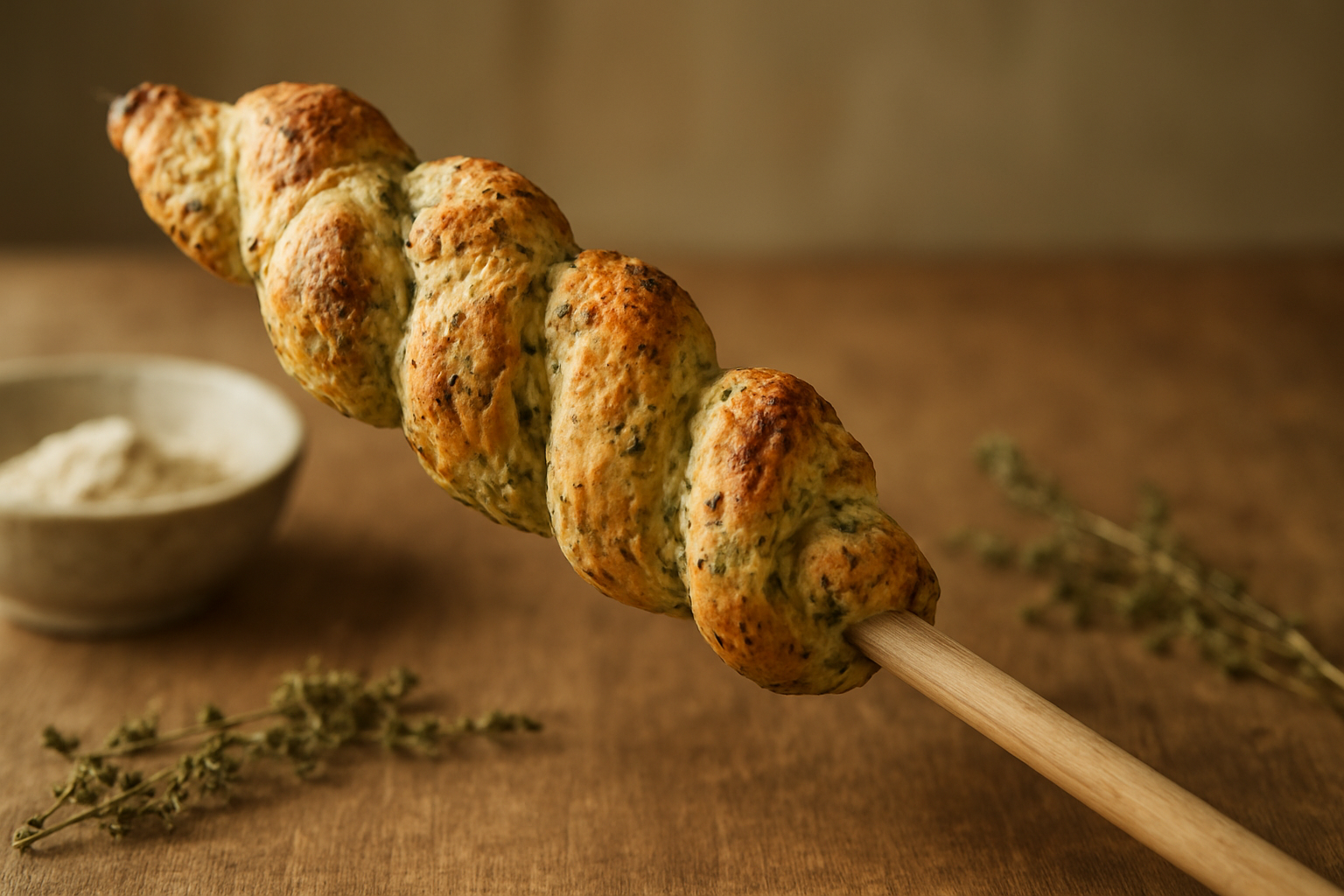
Herby Campfire Twist Bread – Easy No-Yeast Stick Bread
🛒 Ingredients
- ✓
300 g plain flour
- ✓
1 tsp salt
- ✓
1 tsp baking powder
- ✓
1 tbsp Herbes de Provence
- ✓
50 g margarine
- ✓
150 ml unsweetened plant-based milk or milk
This recipe is also available in German.
📌 Overview
Herby campfire twist bread is an easy no-yeast stick bread made with baking powder, margarine, milk or plant-based milk and Herbes de Provence. Because the dough does not need to rise, it is ideal for spontaneous barbecues, camping trips, campfires and outdoor cooking with children. The key is a smooth, pliable dough, a clean untreated wooden stick and steady heat from glowing embers rather than direct flames. This gives you a golden, crisp outside while the bread stays soft and fully cooked inside.
👨🍳 How to make Herby Campfire Twist Bread
- 1
Mix the flour, salt, baking powder and Herbes de Provence thoroughly in a large bowl so the raising agent and herbs are evenly distributed.
- 2
Add the margarine in small pieces and rub it into the flour mixture with your fingertips or a fork until the mixture looks slightly crumbly.
- 3
Pour in the plant-based milk or milk gradually while kneading. Do not add all the liquid at once, as the dough can quickly become too soft.
- 4
Knead the dough for 3 to 5 minutes until smooth, pliable and only slightly elastic. If it is sticky, add a little more flour; if it is crumbly, add milk one teaspoon at a time.
- 5
Cover the dough and let it rest for 10 minutes. This makes it easier to shape and less likely to tear when wrapped around the stick.
- 6
Divide the dough into four equal portions and roll each one into a rope about 25 to 30 cm long. Longer, thinner ropes cook more evenly than short, thick pieces of dough.
- 7
Use a sturdy, untreated wooden stick and carefully peel the end until it is smooth and free from bark. Do not use toxic, treated or very resinous wood.
- 8
Wrap each rope of dough around the stick in a spiral, pressing it on gently. Avoid making the dough layer too thick, or the outside may brown before the inside is cooked.
- 9
Bake the bread over glowing embers or at the edge of the fire rather than directly in the flames. Turn the stick slowly and regularly so the bread browns evenly all around.
- 10
Cook for about 8 to 12 minutes, depending on the heat, until the bread is golden outside and feels lightly firm when tapped. If it darkens too quickly, move it further away from the embers.
- 11
Let the bread cool briefly, then slide it carefully from the stick. It is best eaten warm, while the crust is crisp and the inside is still soft.
🧠 Why It Works
This herby campfire twist bread works because baking powder lightens the dough without the rising time required for yeast, making it practical for outdoor cooking. Margarine adds fat and prevents the dough from becoming dry, while milk or plant-based milk makes it smooth and easy to shape. Herbes de Provence are mixed directly into the dough, giving the bread a savoury aroma that matches the light smokiness of the fire. The cooking method matters most: baking over embers gives slower, more even heat than direct flames, creating a crisp crust without leaving the centre raw.
🛠️ Troubleshooting
Why is my campfire twist bread burnt outside but raw inside?
The bread was too close to direct flames or the dough was wrapped too thickly around the stick. Cook it over glowing embers, turn it regularly and shape the dough into longer, thinner ropes so the heat reaches the centre evenly.
What should I do if the dough is too sticky?
Sticky dough usually contains too much liquid. Knead in flour one tablespoon at a time until the dough is pliable and only slightly tacky. Next time, add the milk or plant-based milk gradually.
What should I do if the dough is too dry or crumbly?
Add milk or plant-based milk one teaspoon at a time and continue kneading until the dough becomes smooth. Dry dough is difficult to wrap around the stick and may crack while cooking.
How do I stop the dough sliding off the stick?
Use a smooth peeled stick that is dry, not wet. Press the dough gently onto the stick as you wrap it and avoid very thick ropes. If the dough is too soft, stabilise it with a little extra flour.
Why is my stick bread hard instead of soft?
It was probably cooked for too long or too close to strong heat. Bake it slowly over embers and eat it soon after cooking. Adding too much extra flour can also make the dough firm.
Can I prepare the campfire bread dough in advance?
Yes. Keep the dough covered in the fridge for up to 24 hours. Before shaping, let it sit at room temperature for 20 to 30 minutes so it becomes pliable again.
How do I reheat leftover campfire twist bread?
Reheat leftovers in a preheated oven at 180°C for 5 to 7 minutes. This helps restore some crispness. The microwave tends to make the bread soft and chewy.
💡 Tips and Variations
- •
For vegan herby campfire bread, use plant-based margarine and unsweetened plant-based milk. Oat or soy milk keeps the dough smooth without adding a strong flavour.
- •
For a richer vegetarian version, replace the margarine with butter and add finely chopped garlic or grated cheese to the dough.
- •
Always cook stick bread over embers or at the edge of the fire. Direct flames burn the outside before the centre has time to cook.
- •
For children or groups, divide the dough into portions at home and carry it in an airtight container. This makes it quicker to wrap around sticks at the campfire.
- •
If you do not have Herbes de Provence, use thyme, rosemary, oregano, marjoram, parsley or chives. Dried herbs should be fairly fine so they spread evenly through the dough.
- •
A small drizzle of olive oil in the dough makes the crust more tender and reinforces the herbal flavour. If you add it, be slightly more careful with the liquid.
- •
For a gluten-free version, use a suitable gluten-free bread or all-purpose flour blend. The liquid amount may change, so adjust the dough by texture rather than adding all the milk at once.
- •
Use only clean, untreated sticks and avoid toxic or strongly resinous wood. Stainless steel stick-bread skewers are a reliable alternative.
📦 Storage
Herby campfire twist bread is best eaten fresh from the fire. Let leftovers cool completely, then store them in an airtight container at room temperature for up to one day. To refresh, reheat the bread at 180°C for 5 to 7 minutes. Raw dough can be kept covered in the fridge for up to 24 hours; let it come closer to room temperature before shaping.
🍷 Pairing
Herby campfire twist bread pairs well with a dry Riesling from the Pfalz, whose acidity refreshes the herbal flavour and light smokiness from the fire. A Franconian Silvaner is a quieter but very suitable match, with mild fruit and gentle minerality that work well with rustic bread and herbs. For an international option, Italian Vermentino adds citrus freshness and a lightly herbal note, especially if the bread is served with grilled vegetables, dips or salads.
❓ F.A.Q.
How long does campfire twist bread take to cook?
It usually takes 8 to 12 minutes, depending on the heat. Cook it over glowing embers rather than direct flames. If the outside darkens too quickly, the bread is too close to the fire.
Can I make campfire twist bread without yeast?
Yes. This recipe uses baking powder instead of yeast, so the dough does not need a long rise. That makes it practical for barbecues, camping and spontaneous campfire cooking.
Can I make the stick bread dough ahead of time?
Yes, the dough can be stored covered in the fridge for up to 24 hours. Let it sit at room temperature for 20 to 30 minutes before shaping so it is easier to wrap around the stick.
What herbs work best in herby campfire bread?
Herbes de Provence work well because they usually include thyme, rosemary, oregano and savory or marjoram. You can also use single herbs such as rosemary, parsley, chives or oregano.
Is this campfire twist bread vegan?
It is vegan if you use plant-based margarine and unsweetened plant-based milk. If you use dairy milk, the recipe is vegetarian but not vegan. Check the margarine label if you need a fully vegan version.
What kind of stick should I use for campfire bread?
Use a long, sturdy, untreated wooden stick with a smooth peeled end. Avoid painted, treated, toxic or very resinous wood. Stainless steel skewers designed for campfire cooking are a safe alternative.
Can I cook stick bread on a barbecue?
Yes. Cook it over hot charcoal or embers, not directly in strong flames. Turn the stick slowly until the bread is evenly browned and cooked through.
Can I make herby campfire twist bread gluten-free?
Yes, use a suitable gluten-free flour blend. Gluten-free flours absorb liquid differently, so add the milk gradually and adjust the dough until it is pliable enough to wrap around the stick.
🏛️ History and Tradition
Campfire twist bread, a traditional outdoor baking method, has roots in German and Central European camping culture where simple, portable foods were essential. Historically, this bread was made during forest outings and communal gatherings, embodying rustic simplicity and conviviality. The use of herbs like Herbes de Provence reflects regional adaptations, while the method of baking on sticks over open flames connects to centuries-old traditions of outdoor cooking. This recipe reinforces the identity of everyday German cuisine, celebrating its connection to nature and seasonal outdoor festivities.
Herby campfire twist bread is an easy outdoor recipe for barbecues, camping and shared evenings around the fire. Baking powder makes the dough quick because it needs no rising time, the herbs add savoury aroma and steady heat over embers gives the best texture. If you wrap the dough thinly and turn it slowly, a few simple ingredients become warm, crisp and fragrant bread cooked directly over the fire.
Rate this recipe
Click or tap the stars to rate