
Alltagsküche
Kochen, wie es zuhause schmeckt
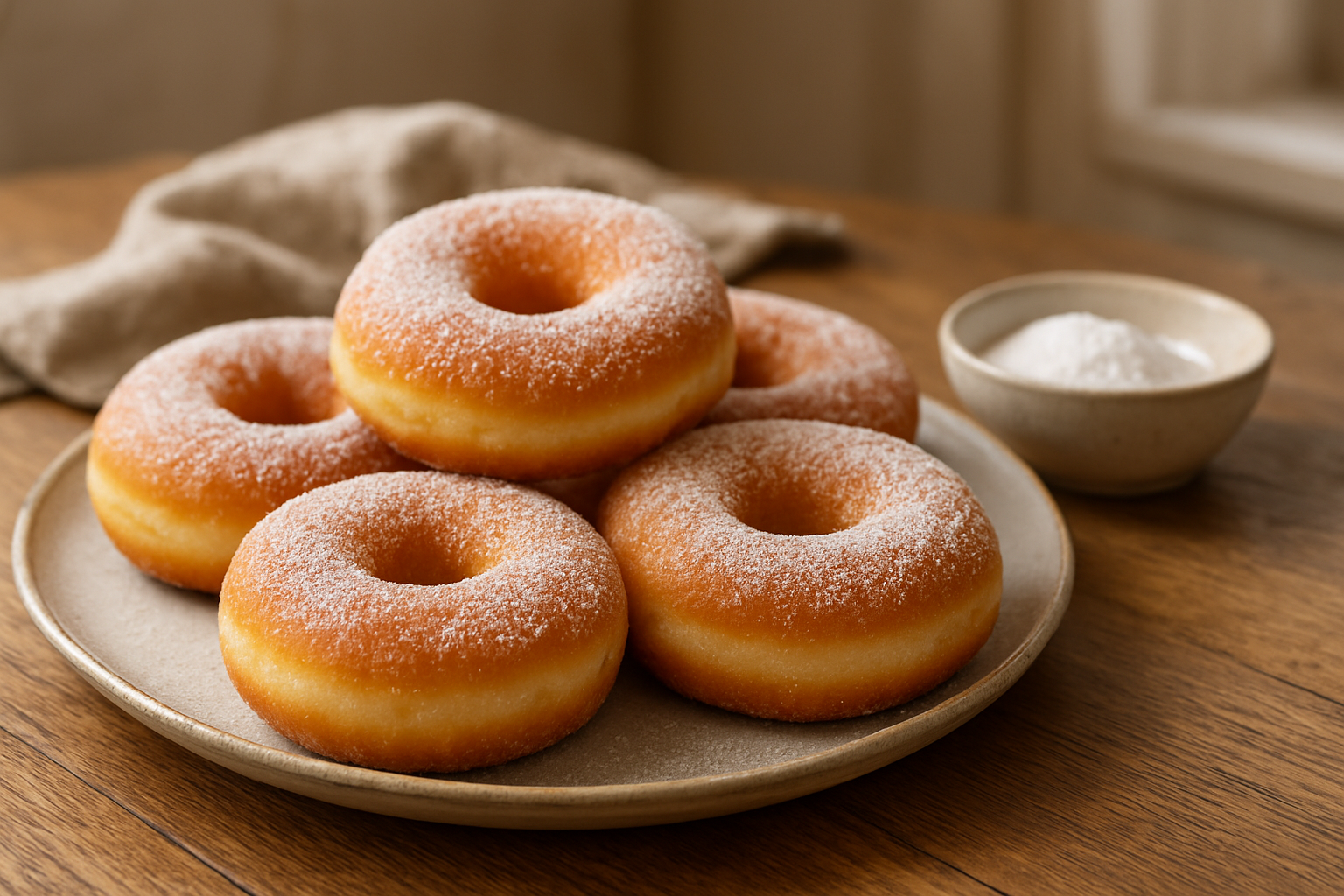
Classic Yeast Doughnuts: Light, Fried and Glazed
🛒 Ingredients
- ✓
250 ml milk
- ✓
40 g butter
- ✓
1 sachet vanilla sugar
- ✓
a few drops of lemon flavouring
- ✓
500 g flour
- ✓
21 g fresh yeast
- ✓
1/2 tsp sugar
- ✓
50 ml lukewarm water
- ✓
1 tsp salt
- ✓
65 g sugar
- ✓
1 medium organic egg
- ✓
neutral oil for frying
- ✓
icing sugar and a little water for the icing
This recipe is also available in German.
📌 Overview
Classic yeast doughnuts are soft, airy fried doughnuts made with fresh yeast, milk, butter, egg and vanilla sugar. Unlike quick baking-powder doughnuts, yeast doughnuts need enough rising time, but the result is softer, lighter and more elastic. The key steps are active yeast, lukewarm liquid, a smooth dough, a second short rest after cutting and a steady frying temperature of about 175°C. This gives the doughnuts a lightly crisp golden exterior and a soft centre without absorbing too much oil. The simple icing sugar glaze is added while the doughnuts are still warm, giving them their classic sweet finish.
You may also find it useful to look at recipes Classic Sugar-Coated Doughnuts Recipe for Everyday Baking, Classic Iced Sugar Donuts Recipe for Everyday Baking, and Oven-Baked Lemon Donuts, in addition to this one.
👨🍳 How to make Classic Yeast Doughnuts
- 1
Warm the milk in a small saucepan with the butter, vanilla sugar and a few drops of lemon flavouring until the butter has melted. Let the mixture cool until lukewarm. It must not be hot, or it may weaken the yeast later.
- 2
Place the flour in a large mixing bowl and make a well in the centre.
- 3
Dissolve the fresh yeast with the 1/2 teaspoon of sugar in the lukewarm water until fully dissolved. The water should feel warm but not hot.
- 4
Pour the yeast mixture into the well and mix it with a little of the flour from the edges to make a thick starter.
- 5
Cover the bowl and leave the starter in a warm place for about 10 minutes, until it begins to bubble. If there is no visible activity, the yeast may be too old or the liquid too hot or too cold.
- 6
Add the salt, sugar, egg and lukewarm milk-butter mixture to the starter. Knead everything for 8–10 minutes until you have a smooth, elastic dough. It should be soft but not extremely sticky.
- 7
Cover the dough again and leave it to rise in a warm, draught-free spot for about 60 minutes, until it has noticeably increased in size.
- 8
Knead the dough only briefly, then roll it out on a lightly floured work surface to about 2–2.5 cm thick. Do not roll it too thin, or the doughnuts will be flat.
- 9
Cut out nine rounds using a large cutter or glass, then remove the centres with a smaller cutter to create the classic doughnut shape. Re-roll scraps gently, as overworked dough can become tough.
- 10
Place the shaped doughnuts on a tray lined with baking parchment, cover loosely and leave to rest for another 15–20 minutes, until slightly puffed.
- 11
Meanwhile, heat neutral oil in a deep-fat fryer or deep, heavy saucepan to about 175°C. A kitchen thermometer is very helpful, as oil that is too cool makes greasy doughnuts and oil that is too hot browns the outside before the centre is cooked.
- 12
Fry the doughnuts in batches for about 1.5–2 minutes on each side, until golden brown. Do not add too many at once, or the oil temperature will drop.
- 13
Lift the doughnuts out with a slotted spoon and drain on kitchen paper. Let them cool briefly, but glaze them while still warm for the best finish.
- 14
For the icing, stir the icing sugar with very little water until smooth. The glaze should be thick but spreadable. Brush or dip the warm doughnuts and let the icing set briefly.
🧠 Why It Works
Yeast doughnuts become light and airy because the dough combines fresh yeast with milk, butter and egg. The starter shows whether the yeast is active and improves the dough’s rise. The milk and butter mixture gives a softer crumb, while vanilla sugar and a little lemon flavouring make the sweetness taste rounder and fresher. The second short rest after cutting is important because it lets the doughnuts relax and puff before frying. The oil temperature of about 175°C controls the final texture: at the right heat, the outside turns golden quickly while the inside stays soft and the doughnuts do not absorb excess oil.
🛠️ Troubleshooting
My doughnuts are dense and heavy. What went wrong?
Dense doughnuts are usually caused by inactive yeast, not enough rising time, too much flour or overworking the scraps. The dough should be soft and elastic, and the shaped doughnuts should look slightly puffed before frying.
The doughnuts absorbed too much oil during frying. How can I fix this?
Keep the oil as close as possible to 175°C and fry only a few doughnuts at a time. If the oil is too cool, the dough absorbs fat. If it is too hot, the outside browns before the centre is cooked.
How do I prevent the icing sugar glaze from becoming too runny?
Add the water to the icing sugar very gradually. If the glaze is too runny, stir in more icing sugar until it is thick but still spreadable. A thin glaze will slide off the warm doughnuts.
Can I prepare the doughnuts dough the day before frying?
Yes, the dough can be refrigerated overnight after kneading. Let it come back towards room temperature, then roll, cut, allow the shaped doughnuts to puff and fry as usual.
Why are my doughnuts dark outside but raw inside?
The oil was probably too hot, or the doughnuts were cut too thick. Fry at about 175°C and give each side enough time without letting the outside become too dark.
Why did my doughnuts collapse after frying?
Doughnuts may collapse if they are over-proofed or handled roughly straight after frying. The shaped doughnuts should be puffy but still stable. Lift them gently from the oil.
Why is my yeast dough not rising?
If the dough does not rise, check the yeast and the temperature of the liquids. Water and milk should be lukewarm, not hot. If the starter does not bubble after 10–15 minutes, start again with fresh yeast.
💡 Tips and Variations
- •
For a deeper flavour, add Bourbon vanilla extract to the icing, or replace some of the water in the glaze with lemon juice for a brighter finish.
- •
A thermometer is very useful for fried yeast doughnuts. Try to keep the oil close to 175°C, even after adding fresh doughnuts.
- •
The yeasted dough is the defining feature of this recipe. It gives the doughnuts their soft, light texture and sets them apart from denser baking-powder doughnuts.
- •
For a vegan version, replace butter with plant-based margarine, milk with plant-based milk and the egg with apple purée or a suitable egg replacer. Keep the dough soft and elastic.
- •
Baking powder is not a true substitute for yeast here. It makes quicker doughnuts, but they will be more cake-like, denser and less elastic.
- •
For a gluten-free version, use a suitable gluten-free enriched dough flour blend. The structure will differ from wheat dough, so adjust liquid and resting time according to the dough consistency.
- •
The cut-out doughnut holes can also be fried and rolled in sugar or covered with glaze.
- •
Always fry in batches. If too many doughnuts go into the oil at once, the temperature drops and the doughnuts absorb more fat.
- •
The secret to good yeast doughnuts is active yeast, soft dough, enough rising time and precise frying heat.
📦 Storage
These yeast doughnuts are best on the day they are made, ideally freshly glazed and still slightly warm. Stored airtight at room temperature, they keep for 1–2 days but gradually lose lightness. Unglazed doughnuts can be refreshed briefly in the oven at 150°C. Glazed doughnuts should be warmed very carefully, as the icing will soften. Freezing works best before glazing; thaw, warm briefly and glaze fresh.
🍷 Pairing
Classic yeast doughnuts pair especially well with coffee, cappuccino, black tea, milky coffee or hot chocolate. For festive occasions, Moscato d’Asti complements the sweetness and light lemon note. Riesling Kabinett can also work if you want acidity to balance the icing. For alcohol-free options, try apple spritzer, vanilla milk or a mild fruit tea.
❓ F.A.Q.
What is the best way to ensure my yeast doughnuts are light and fluffy?
Use fresh active yeast, knead the dough until smooth and elastic, and give it enough time to rise. The shaped doughnuts should rest again before frying, so they puff properly in the oil.
Can I prepare the doughnuts in advance and store them?
They are best fresh, but you can store them airtight at room temperature for 1–2 days. Unglazed doughnuts can be warmed briefly in the oven; glazed ones are better eaten fresh because the icing softens when reheated.
How can I adapt this recipe for vegan or gluten-free diets?
For vegan doughnuts, replace butter with plant-based margarine, milk with plant-based milk and the egg with apple purée or an egg replacer. For gluten-free doughnuts, use a suitable gluten-free flour blend and adjust liquid as needed.
Why is controlling the oil temperature important when frying doughnuts?
Oil temperature controls browning, fat absorption and the cooked centre. At about 175°C, the doughnuts brown evenly while the inside cooks through. Oil that is too cool makes them greasy; oil that is too hot leaves the centre undercooked.
What role does lemon flavouring play in this doughnut recipe?
Lemon flavouring gives a subtle fresh note that balances the sweetness and makes the vanilla taste brighter. It should support the dough, not dominate it.
Can I make yeast doughnut dough overnight?
Yes, the dough can rise slowly in the fridge overnight. Let it warm slightly the next day, then roll, cut, prove the shaped doughnuts briefly and fry.
What oil is best for frying yeast doughnuts?
Use a neutral, high-heat oil such as sunflower oil or rapeseed oil. It should have a mild flavour and be suitable for deep frying.
🏛️ History and Tradition
Yeast doughnuts, or 'Berliner' as they are known in many parts of Germany, have a rich history dating back to the 16th century. Traditionally enjoyed during carnival seasons and festive occasions like New Year’s Eve, these doughnuts symbolize celebration and indulgence. Rooted in German baking culture, especially in regions like Berlin and Bavaria, the recipe reflects centuries of culinary refinement. Their enduring popularity underscores their role as a cultural icon in German everyday and festive cuisine, reinforcing Alltagsküche’s commitment to authentic, traditional recipes.
This classic yeast doughnuts recipe gives you light, golden fried doughnuts with gentle vanilla and lemon notes. Success depends on fresh yeast, lukewarm liquid, enough rising time and a steady frying temperature. When the dough stays soft and elastic and the doughnuts are fried in batches, you get a tender crumb, a light crust and a sweet icing glaze.
Rate this recipe
Click or tap the stars to rate