
Alltagsküche
Kochen, wie es zuhause schmeckt
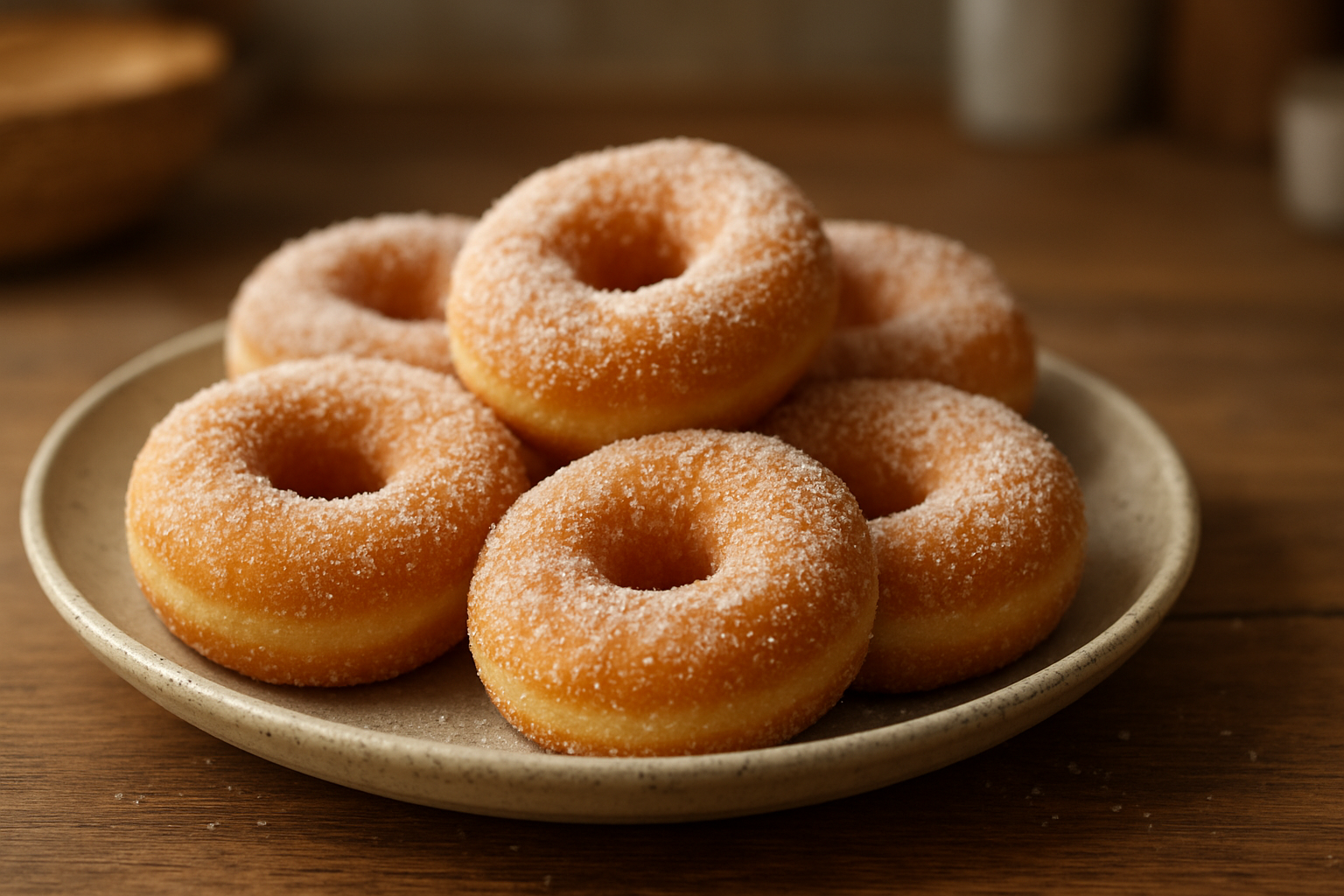
Classic Sugar-Coated Doughnuts: Light Yeasted Recipe
🛒 Ingredients
- ✓
500 g plain flour
- ✓
42 g fresh yeast
- ✓
50 g sugar for the starter
- ✓
250 ml lukewarm milk
- ✓
1 egg
- ✓
1 pinch of salt
- ✓
65 g sugar for the main dough
- ✓
50 g sugar for coating
- ✓
oil for deep-frying (such as sunflower oil)
This recipe is also available in German.
📌 Overview
Classic sugar-coated doughnuts are light yeasted rings fried until golden, then coated in sugar while still warm. If you want to make homemade doughnuts, the key details are a well-risen yeast dough, an even dough thickness and a stable frying temperature of about 175°C. If the oil is too cool, the doughnuts absorb too much fat; if it is too hot, they brown before the centre cooks properly. This recipe uses fresh yeast, lukewarm milk, egg and a simple sugar coating to give you doughnuts that are soft and airy inside, golden outside and lightly crisp around the edges.
You may also find it useful to look at recipes Classic Iced Sugar Donuts Recipe for Everyday Baking, Apple Doughnuts with Cinnamon, and Apple Berliners Recipe, in addition to this one.
👨🍳 How to make Classic Sugar-Coated Doughnuts
- 1
Put the flour into a large mixing bowl and make a well in the centre. The flour should be at room temperature so the yeast can work properly.
- 2
Crumble the fresh yeast into the well, add the 50 g sugar and the lukewarm milk, then gently stir only the centre section to make a starter. The milk should be warm, not hot, or it can damage the yeast.
- 3
Cover the bowl and leave the starter in a warm place for about 10 minutes, until it looks frothy. If no bubbles appear, the yeast may not be active enough.
- 4
Add the egg, salt and the 65 g sugar for the main dough. Knead for 8 to 10 minutes until the dough is smooth and elastic. If it feels too dry, add lukewarm milk a teaspoon at a time; if it is very sticky, add only a little extra flour.
- 5
Shape the dough into a ball, cover it and leave it in a warm, draught-free place for about 60 minutes, until it has risen noticeably and roughly doubled in size.
- 6
Briefly knead the dough again, then roll it out on a lightly floured surface to about 1.5 to 2 cm thick. Dough that is rolled too thickly takes longer to fry and can remain heavy inside.
- 7
Cut out rounds with a large cutter or glass, then remove the centres with a smaller cutter to create the classic doughnut rings. Press scraps together gently before rolling again.
- 8
Place the doughnuts on a tray lined with baking parchment, cover loosely and leave to rest for another 15 to 20 minutes, until they look slightly puffed and soft.
- 9
Heat the oil in a deep-fat fryer or a deep heavy saucepan to 175°C. Use a thermometer if possible, as oil that is too cool makes greasy doughnuts and oil that is too hot makes them dark before the centre is cooked.
- 10
Fry the doughnuts in batches for about 1.5 to 2 minutes on each side, until golden brown. Do not add too many at once, or the oil temperature will drop sharply.
- 11
Lift the doughnuts out with a slotted spoon and drain briefly on kitchen paper. Do not wait too long before coating them, as the sugar sticks best while they are still warm.
- 12
Coat the warm doughnuts generously in sugar or sprinkle them evenly all over. Serve fresh while the outside is lightly crisp and the inside is soft.
🧠 Why It Works
Classic sugar-coated doughnuts work when fermentation, dough structure and frying temperature are properly balanced. Fresh yeast, lukewarm milk and sugar activate fermentation and help the dough develop volume. The egg enriches the dough and gives the crumb softness and structure, while salt balances the sweetness and deepens the flavour. Proper kneading matters because it develops gluten, helping the doughnuts rise light rather than dense. The short second proof after cutting relaxes the dough and makes the rings puff better in the oil. Frying at about 175°C creates a golden exterior quickly while the inside cooks through and stays soft. Sugar adheres best while the doughnuts are still warm, giving the classic sweet, lightly crisp finish.
🛠️ Troubleshooting
Why are my doughnuts not fluffy?
The dough may not have risen long enough, the yeast may have been inactive, or the milk may have been too hot or too cold. The dough should rise noticeably after the first proof. It also needs enough kneading to develop structure before frying.
What can I do if the doughnut dough is too sticky?
Yeast dough for doughnuts can be slightly soft, but it should still be workable. Add flour only a tablespoon at a time and keep kneading. Too much flour will make the doughnuts dry and heavy.
What can I do if the dough is too dry?
Add lukewarm milk one teaspoon at a time and keep kneading until the dough becomes smooth and elastic. Water can work in a pinch, but milk gives a softer and richer result.
Why are my doughnuts greasy?
The oil was probably too cool or too many doughnuts were fried at once. Keep the oil at about 175°C and fry in small batches. Let the oil return to temperature between batches.
Why are my doughnuts dark outside but undercooked inside?
The oil was too hot or the dough was rolled too thickly. Keep the oil at 175°C and roll the dough to about 1.5 to 2 cm thick so the centre cooks before the outside over-browns.
Why does the sugar not stick to the doughnuts?
Sugar sticks best while the doughnuts are still warm and have just been drained. If they have cooled, brush them very lightly with melted butter and coat them in sugar again.
Can I prepare doughnuts ahead and fry them later?
Yes, shaped doughnuts can be covered and left to rise slowly in the fridge. Before frying, let them stand at room temperature for 20 to 30 minutes so they are not too cold when they go into the oil.
💡 Tips and Variations
- •
For extra aroma, add vanilla extract or finely grated lemon zest to the main dough. Both work well with the simple sugar coating.
- •
A kitchen thermometer is extremely helpful for fried doughnuts. Small changes in oil temperature can decide whether the doughnuts turn out fluffy or greasy.
- •
If you do not have doughnut cutters, use a large glass for the outer ring and a small bottle cap or mini cutter for the centre hole.
- •
For a richer version, replace part of the milk with cream. The dough will taste fuller and softer, though it may need a little extra flour.
- •
This recipe is vegetarian. For a vegan version, replace the milk with oat or soya drink and replace the egg with apple purée or a flax egg; the texture will be slightly different.
- •
For a gluten-free version, use a suitable gluten-free flour blend made for yeasted dough. Gluten-free dough behaves differently and is usually less elastic than wheat dough.
- •
Baking powder is not a direct substitute for yeast. A quick baking-powder version is possible, but it will be less airy and closer to fried cake batter than classic doughnuts.
- •
Doughnuts taste best fresh. If serving them later, store them without the sugar coating if possible, then warm briefly and coat again before serving.
📦 Storage
Classic sugar-coated doughnuts are best on the day they are fried, when the outside is lightly crisp and the inside is soft. Stored in an airtight container at room temperature, they keep for about 1 to 2 days, though they lose freshness. To refresh them, warm briefly in a 150°C oven and coat again with sugar if needed. Do not store them in the fridge, as yeasted dough can taste dry more quickly there. Freezing is possible, preferably without the sugar coating; reheat after thawing and coat while warm.
🍷 Pairing
Classic sugar-coated doughnuts pair especially well with coffee because its bitterness balances the sweet coating. Black tea, latte or hot chocolate are also easy everyday matches. If you want to serve wine, choose a fruity Riesling with lively acidity to keep the sweetness fresh. German Sekt or French Crémant de Loire works well for a more festive pairing, as the bubbles make the fried dough feel lighter. Non-alcoholic options include apple spritzer or cold milk.
❓ F.A.Q.
How do you make classic sugar-coated doughnuts?
Classic doughnuts are made from yeasted dough. You start with a yeast starter, knead the main dough, let it rise, cut out rings and fry them at about 175°C. Once drained, the warm doughnuts are coated in sugar.
How long should doughnut dough rise?
The yeast starter should froth for about 10 minutes. The main dough then needs about 60 minutes to rise noticeably. After cutting, the doughnuts should rest for another 15 to 20 minutes so they fry up light and airy.
What temperature should I fry doughnuts at?
About 175°C is ideal. Cooler oil makes the doughnuts absorb too much fat, while hotter oil browns them too quickly and can leave the centre undercooked or heavy.
Can I bake these doughnuts instead of frying them?
You can bake doughnuts, but the result will be different. Baked doughnuts are less crisp and taste more like sweet bread rolls. For classic sugar-coated doughnuts, frying gives the best texture.
Why are my doughnuts greasy?
Greasy doughnuts are usually caused by oil that is too cool, frying for too long or adding too many doughnuts at once. Keep the temperature steady and fry in batches.
Can I make these doughnuts vegan?
Yes, replace the milk with oat or soya drink and the egg with apple purée or a flax egg. The doughnuts will be slightly less traditional, but they can still be soft and flavourful.
How should I store homemade doughnuts?
They are best eaten fresh. If you have leftovers, store them airtight at room temperature and eat within 1 to 2 days. Warm them briefly in the oven to make them softer and fresher again.
🏛️ History and Tradition
Sugar-coated doughnuts have a long-standing tradition in German baking, especially popular during festive seasons like Carnival and Christmas. Originating from yeasted fried dough recipes common in Bavaria and other southern regions, these doughnuts reflect centuries-old techniques of combining simple ingredients to create comforting treats. Their cultural significance is tied to celebrations and everyday enjoyment, reinforcing their place in German culinary identity. This recipe preserves authentic methods, contributing to the enduring legacy and EEAT authority of traditional German desserts.
Classic sugar-coated doughnuts depend on a well-kneaded yeast dough, enough rising time and the right frying temperature. When the dough rises properly, the rings are fried at about 175°C and the warm doughnuts are coated in sugar, you get the contrast of a soft interior and a lightly crisp sugar crust. Served fresh, they are ideal with coffee, as a sweet snack or for relaxed afternoon baking.
Rate this recipe
Click or tap the stars to rate