
Alltagsküche
Kochen, wie es zuhause schmeckt
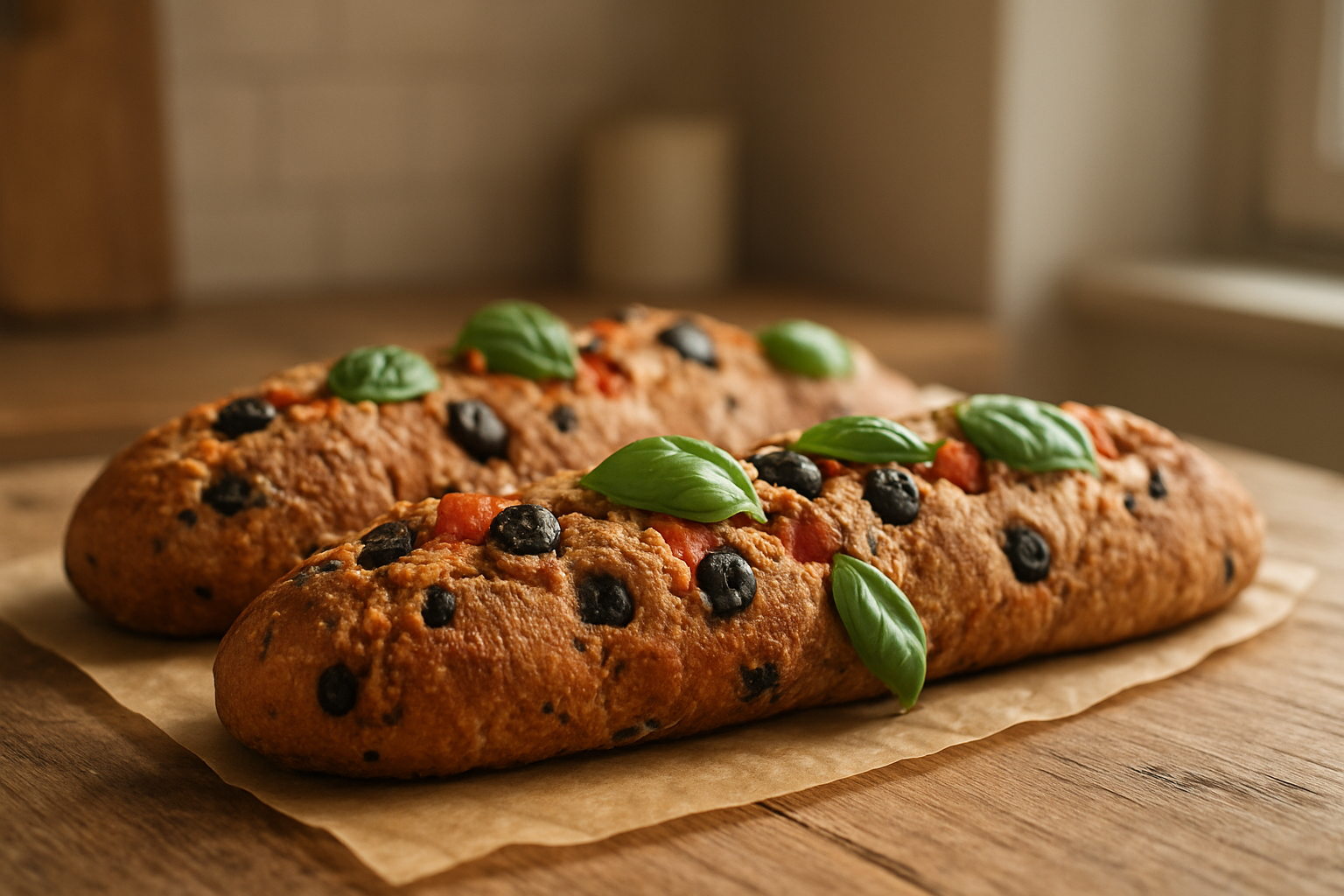
Wholemeal Baguettes with Olives and Tomatoes – Perfect for Everyday Baking
Discover how to bake wholemeal baguettes with olives and tomatoes. This vegetarian recipe blends Mediterranean flavours with wholesome spelt and wheat flour.
📖 What is it
Discover how to bake wholemeal baguettes with olives and tomatoes. This vegetarian recipe blends Mediterranean flavours with wholesome spelt and wheat flour.
🛒 Ingredients
- ✓ 150 g wholemeal spelt flour
- ✓ 150 g wholemeal wheat flour
- ✓ 1 tsp salt
- ✓ 1/2 cube fresh yeast (about 21 g)
- ✓ 100 g ripe tomatoes
- ✓ 80 g pitted black olives
- ✓ 1 handful fresh basil leaves
This recipe is also available in German .
Wholemeal baguettes with olives and tomatoes are a rustic, savoury bread combining the nutty depth of spelt and wholemeal wheat flour with vibrant Mediterranean ingredients like black olives, ripe tomatoes, and fresh basil. Rooted in everyday German baking traditions, this recipe offers a wholesome loaf ideal for pairing with soups, salads, or enjoyed warm on its own, reflecting a balanced blend of regional authenticity and seasonal freshness.
👨🍳 Preparation
- 1
Mix the wholemeal spelt flour and wholemeal wheat flour with the salt in a large bowl.
- 2
Finely chop the tomatoes, olives and basil leaves.
- 3
Crumble the yeast into a small bowl, dissolve it in 100 ml lukewarm water and leave it briefly until it turns foamy.
- 4
Add the yeast mixture to the flour along with the chopped tomatoes, olives and basil, then knead everything into a smooth, supple dough.
- 5
Cover the bowl with a damp tea towel and leave the dough to rise in a warm place for about 1 hour, or until noticeably puffed up.
- 6
Knead the dough again, divide it into 2 equal portions and shape each one into a long baguette.
- 7
Gently twist each piece of dough slightly to give it that classic baguette shape with a subtle spiral.
- 8
Place the baguettes on a baking tray lined with baking parchment, cover again and leave to rest for a further 15 minutes.
- 9
Heat the oven to 240°C conventional.
- 10
Bake the baguettes on the middle shelf for 12 minutes at 240°C, then lower the temperature to 180°C and bake for another 15 minutes until golden and crisp.
- 11
Leave the baguettes to cool on a wire rack before slicing.
🧠 Why It Works
This recipe balances the robust nuttiness of wholemeal spelt and wheat flours with the bright, juicy acidity of ripe tomatoes and the salty, umami-rich flavour of black olives. The fresh basil adds aromatic herbal notes, enhancing the Mediterranean profile. The yeast fermentation and proving times develop a supple dough texture with a crisp crust, while the fat–acid–salt interplay ensures a deeply savoury and well-rounded flavour. The gentle twisting of the dough creates a traditional baguette shape that promotes even baking and an appealing crumb structure, aligning with German artisanal bread-making techniques.
🛠️ Troubleshooting
Why is my wholemeal baguette dough too sticky or dry?
Wholemeal flours absorb more water; adjust hydration by adding water gradually during mixing. If dough is sticky, dust with flour sparingly; if dry, add small amounts of water to achieve a supple texture.
How can I fix a dense or heavy crumb in wholemeal baguettes?
Ensure adequate kneading to develop gluten and allow the dough to rise fully in a warm place. Over-proofing or under-proofing can cause density, so monitor dough volume carefully.
What if my baguettes don’t develop a crisp crust?
Bake initially at a high temperature (240°C) to promote crust formation, and consider adding steam to the oven during the first baking phase to enhance crust crispness.
Can I prepare the dough in advance and bake later?
Yes, after the first rise, you can refrigerate the dough overnight. Bring it to room temperature before shaping and final proving to ensure proper rise and texture.
How do I reheat frozen wholemeal baguettes without drying them out?
Reheat frozen slices in a preheated oven at 180°C for 5–7 minutes wrapped in foil or placed on a wire rack to retain moisture while restoring crispness.
💡 Tips and Variations
- •
For a richer version, use Kalamata olives instead of standard olives and add a little olive oil to the dough for extra softness and flavour.
- •
A proving basket can help give the dough a neater shape and a more even rise.
- •
The wholemeal flour gives this bread its distinctive robust, nutty flavour.
- •
This recipe is already vegetarian and can easily be made vegan by making sure only plant-based ingredients are used.
- •
Instead of olives, you could use sun-dried tomatoes or roasted peppers for a different flavour profile.
- •
A small splash of cider vinegar in the dough can deepen the flavour and help create a better crust.
- •
For a gluten-free version, try buckwheat or rice flour and use psyllium husk as a binder.
- •
The real charm of this bread lies in the generous proving time and the balanced mix of spelt and wholemeal wheat flour, which gives a lovely balance of flavour and texture.
📦 Storage
This baguette keeps best in a bread bin or a cotton bag. For longer storage, slice it and freeze it. To refresh, simply warm it briefly in the oven.
🍷 Pairing
This savoury wholemeal baguette pairs exquisitely with dry white wines that complement its nutty and Mediterranean flavours. A German Riesling Kabinett, with its bright acidity and subtle sweetness, harmonises beautifully with the ripe tomatoes. The light, mineral-driven Grauburgunder from Baden enhances the bread’s wholemeal depth and herbal notes, while a crisp Loire Sauvignon Blanc offers a refreshing contrast that accentuates the olives’ briny complexity, creating a refined and regionally coherent tasting experience.
❓ F.A.Q.
Can I use dried yeast instead of fresh yeast for this wholemeal baguette recipe?
Yes, you can substitute fresh yeast with dried yeast. Use about one-third of the fresh yeast amount, dissolve it in lukewarm water, and allow it to activate until foamy before mixing into the dough.
How do I ensure my wholemeal baguettes rise properly with wholemeal flour?
Wholemeal flours absorb more water and have less gluten than white flour, so knead the dough thoroughly and allow sufficient proving time in a warm environment to achieve a good rise and light crumb.
What seasonal variations can I try with this wholemeal baguette recipe?
In summer, fresh tomatoes and basil highlight Mediterranean freshness, while in autumn, roasted peppers or sun-dried tomatoes can add depth. Adjust herbs seasonally to maintain vibrant flavours.
Is this recipe suitable for vegans?
Yes, this recipe is naturally vegetarian and can be made vegan by ensuring all ingredients, including yeast, are plant-based and by omitting any optional dairy or honey additions.
How should I store leftover wholemeal baguettes to maintain freshness?
Store the baguettes in a bread bin or cotton bag at room temperature for short-term freshness. For longer storage, slice and freeze them, then refresh by warming briefly in the oven.
🏛️ History and Tradition
Wholemeal baguettes with olives and tomatoes reflect a fusion of traditional German bread-making and Mediterranean influences, popularised in southern Germany and Austria. Historically, wholemeal breads have been a staple in German households, prized for their robust flavour and nutritional value. The addition of olives and tomatoes introduces a seasonal, sun-kissed element reminiscent of southern European culinary traditions, embraced in contemporary German baking for everyday enjoyment and festive occasions, reinforcing the cultural identity and evolving heritage of German artisanal breads.
If you are after a loaf that feels both wholesome and full of character, these wholemeal baguettes are well worth making. The combination of olives, tomatoes and basil gives them a wonderfully sunny flavour, and they are just the sort of bread that disappears quickly once set on the table. Give them a try at home and do share them with family and friends — they are made for tearing, passing around and enjoying together.
Rate this recipe
Click or tap the stars to rate