
Alltagsküche
Kochen, wie es zuhause schmeckt
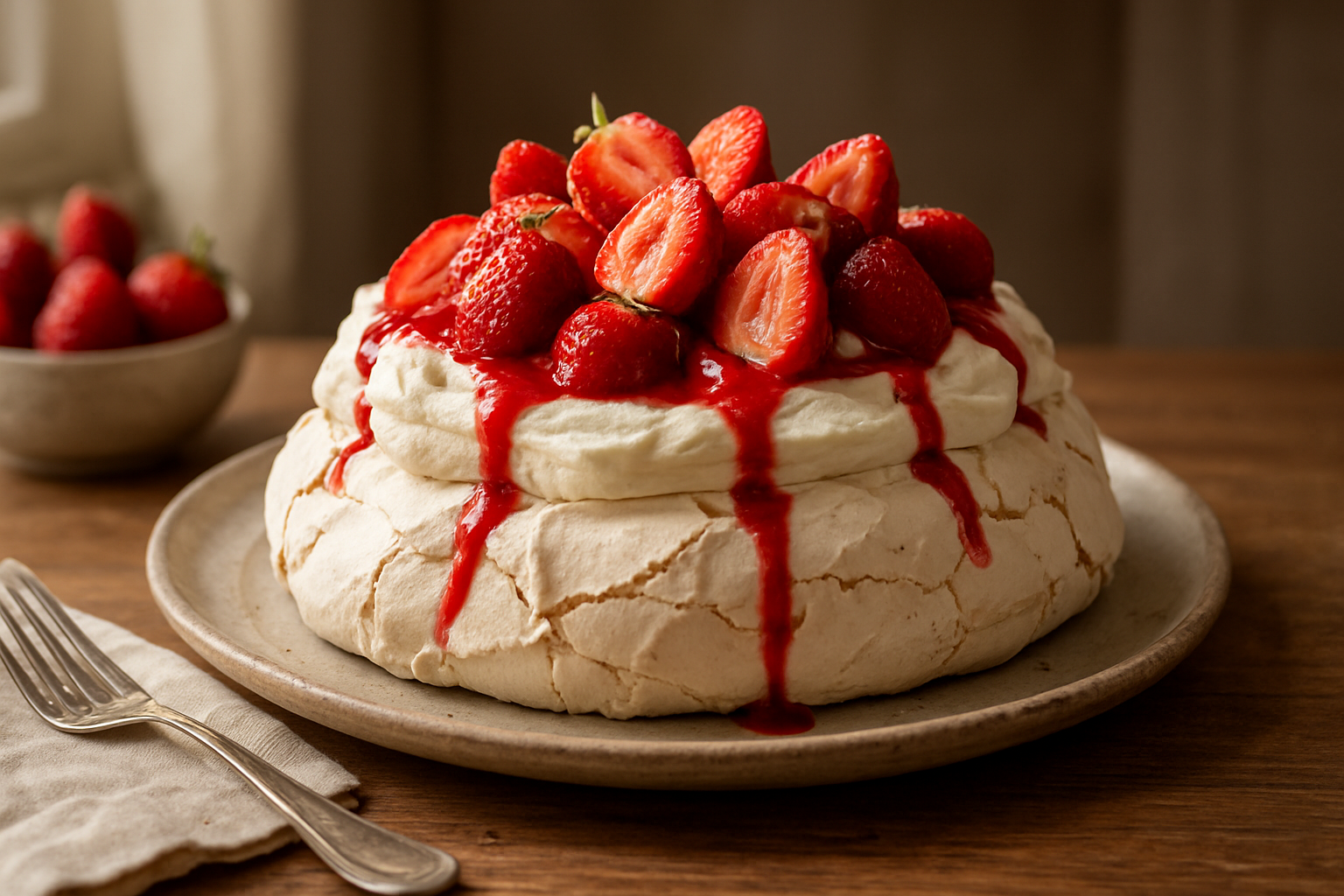
Strawberry Pavlova Cake: Crisp Meringue, Cream and Fresh Berries
🛒 Ingredients
- ✓
3 egg whites
- ✓
1 sachet vanilla sugar
- ✓
150 g caster sugar or granulated sugar
- ✓
70 g icing sugar
- ✓
1 tbsp cornflour
- ✓
1 tsp lemon juice or white wine vinegar
- ✓
350 g fresh strawberries
- ✓
40 g icing sugar
- ✓
200 ml double cream
- ✓
1 tbsp kirsch, optional
This recipe is also available in German.
Explore these articles
📌 Overview
Strawberry pavlova cake is a summer dessert made with slowly dried meringue, whipped cream and fresh strawberries. The goal is a crisp outer shell, a soft marshmallow-like centre and a topping that is added only just before serving so the meringue does not soften. The important details are a grease-free mixing bowl, a stable egg white mixture, low oven temperature and slow cooling in the oven. This recipe is ideal for spring and summer, when strawberries are at their best, and works beautifully for celebrations, garden meals, birthdays or an elegant dessert after a light menu.
👨🍳 How to make Strawberry Pavlova Cake
- 1
Heat the oven to 110°C conventional and line a baking tray with baking parchment. Draw a 22–24 cm circle on the parchment as a guide, then turn the paper over so no pencil marks touch the meringue.
- 2
Place the egg whites in a completely clean, grease-free bowl. Whisk until foamy, then until softly stiff. Add the lemon juice or white wine vinegar to help stabilise the meringue.
- 3
Mix the sugar with the 70 g icing sugar. Add the mixture to the egg whites one tablespoon at a time, whisking well after each addition, until the meringue is glossy and firm. The sugar should be mostly dissolved; the mixture should feel only slightly grainy between your fingers.
- 4
Sprinkle over the cornflour and fold it in gently. Do not beat hard at this stage, as you want to keep the air in the meringue so the pavlova becomes crisp outside and tender inside.
- 5
Spread about two thirds of the meringue inside the marked circle and form a shallow dip in the centre. Spoon the remaining meringue into a piping bag or use a spoon to create large dollops around the edge, so the cream and strawberries have a raised border to sit in.
- 6
Bake on the middle shelf for 30 minutes at 110°C. Lower the temperature to 100°C and leave the pavlova to dry for a further 60 minutes. It should stay pale rather than brown deeply.
- 7
Turn off the oven and leave the pavlova inside with the door slightly open for at least 30 minutes. Then let it cool completely on the tray. Slow cooling reduces cracking and helps prevent the meringue from collapsing through sudden temperature change.
- 8
Wash and hull the strawberries. Blend about 150 g strawberries with 40 g icing sugar to make a sauce and chill it. Halve or quarter the remaining strawberries, depending on size.
- 9
Whip the cold double cream with the vanilla sugar until it holds firm peaks. If using kirsch, fold it in gently at the end. The cream should hold its shape but should not be overwhipped.
- 10
Spoon the cream into the centre of the fully cooled pavlova just before serving. Top with the strawberries and drizzle over a little strawberry sauce. Serve immediately so the meringue stays crisp.
🧠 Why It Works
This strawberry pavlova cake works because sugar, egg whites, cornflour and acid create a stable meringue structure. The sugar gives shine, volume and crispness, while cornflour supports the structure and helps create the soft centre. Lemon juice or white wine vinegar stabilises the egg whites and encourages the classic pavlova texture: dry and crisp outside, tender and slightly marshmallow-like inside. Low oven temperature dries the meringue slowly without browning it too much. The cream is added only just before serving because moisture is the main enemy of crisp meringue. Strawberries bring acidity, juiciness and freshness, balancing the sweetness of the pavlova.
🛠️ Troubleshooting
Why is my pavlova sticky or chewy instead of crisp?
Sticky or chewy meringue is usually caused by too little drying time, high humidity or sugar that has not dissolved properly. Bake the pavlova slowly at 100–110°C and let it cool in the turned-off oven. On very humid days, meringue softens more quickly.
Why does my pavlova crack?
Some cracking is normal, but large cracks are often caused by too high a temperature, cooling too quickly or overbeating the egg whites. Let the pavlova cool slowly in the switched-off oven with the door slightly open.
Why did my pavlova collapse after baking?
A pavlova can collapse if it is still too wet inside, removed from the oven too early or made with an unstable meringue. Use a grease-free bowl, add the sugar gradually and give the pavlova enough time to dry.
How do I stop pavlova from going soggy?
Add the cream, strawberries and sauce only just before serving. The meringue can be stored dry, but once filled it softens quickly because cream and fruit release moisture.
What should I do if my whipped cream is too runny?
The cream must be very cold and should be whipped only until firm peaks form. If it is too soft, whip it briefly a little longer. For extra stability, use a mixture of double cream and a little mascarpone, but still fill the pavlova close to serving time.
Can I make strawberry pavlova cake ahead of time?
You can bake the meringue 1–2 days in advance and store it dry in an airtight container. Add the cream, strawberries and sauce only shortly before serving. A filled pavlova is best eaten straight away.
Can I make pavlova without kirsch?
Kirsch is optional. For an alcohol-free version, simply leave it out or flavour the cream with vanilla, lemon zest or a spoonful of strawberry sauce.
💡 Tips and Variations
- •
For the most stable meringue, make sure the bowl and whisk are completely grease-free. Even small traces of fat or egg yolk can stop the egg whites from whipping properly.
- •
Use fine sugar or add the sugar very slowly. The better it dissolves, the smoother and more stable the meringue will be.
- •
For a creamier filling, fold 100 g mascarpone into the whipped cream. This makes the topping firmer and useful if the pavlova needs to stand on the table a little longer.
- •
For extra freshness, add a little lemon zest to the cream. It works especially well with strawberries and balances the sweetness.
- •
Instead of strawberries, use raspberries, blueberries, redcurrants, blackberries or a mix of summer berries. Slightly tart fruit is especially good because it balances the sweet meringue.
- •
For an alcohol-free version, omit the kirsch. If you want extra aroma, use vanilla, lemon juice or a little strawberry sauce in the cream.
- •
For a vegan version, use aquafaba instead of egg whites and plant-based whipping cream. The technique is more delicate and drying time may vary, but the principle is similar.
- •
Do not add all the strawberry sauce too early. Serve some on the side so the meringue stays crisp for longer and guests can add more if they like.
📦 Storage
Unfilled pavlova meringue keeps for 1–2 days in an airtight container in a dry place. Do not store it in the fridge, as the moisture will soften the meringue. Keep the cream and strawberries chilled separately and add them only just before serving. Filled pavlova is best eaten immediately; leftovers can be refrigerated for a few hours, but the crisp texture will soften quickly. Freezing is not recommended.
🍷 Pairing
Strawberry pavlova cake pairs well with a late-harvest Riesling because its acidity balances the sweetness of the meringue and supports the fruitiness of the strawberries. Moscato d’Asti is a lighter sparkling option with moderate sweetness and floral notes that work beautifully with cream and berries. For a more festive pairing, choose Prosecco or a medium-dry sparkling wine, but avoid very dry sparkling wines because they can taste sharp next to sweet meringue. For a non-alcoholic option, elderflower spritz, strawberry mint water or iced fruit tea all keep the dessert feeling fresh.
❓ F.A.Q.
How do I make pavlova meringue crisp?
The meringue becomes crisp when it dries slowly at a low temperature and then cools gradually in the turned-off oven. A stable egg white mixture, slow sugar addition and dry storage are also important.
Can I make strawberry pavlova the day before?
Yes. You can bake the meringue 1–2 days ahead and store it in an airtight container in a dry place. Add the cream, strawberries and strawberry sauce only just before serving.
Should pavlova be soft in the middle?
Pavlova should be crisp and dry on the outside but soft, tender and slightly marshmallow-like inside. It is not meant to be completely dry like a small meringue cookie.
What strawberries are best for pavlova?
Use ripe, fragrant strawberries that are sweet but not watery. Small to medium strawberries are especially good because they are easy to halve and arrange neatly on top.
Can I make pavlova with other fruit?
Yes. Raspberries, blueberries, redcurrants, blackberries or passion fruit all work well. Slightly tart fruit is especially useful because it balances the sweetness of the meringue.
Can I make vegan pavlova?
Yes. For a vegan pavlova, use aquafaba instead of egg whites and plant-based whipping cream. The meringue is more delicate, so slow whipping and enough drying time are especially important.
How do I keep pavlova stable in humid weather?
Humidity softens pavlova quickly. Bake it until fully dry, store it in an airtight container and fill it only at the last moment. Serve the strawberry sauce separately if the weather is very humid.
🏛️ History and Tradition
Pavlova is a meringue-based dessert named after the Russian ballerina Anna Pavlova, created in the 1920s in Australia or New Zealand. It has since become a summer staple in both countries, celebrated for its light texture and fresh fruit toppings. Traditionally served during festive occasions and summer gatherings, pavlova reflects the region’s love for airy desserts and seasonal berries. Its enduring popularity underscores its cultural significance and culinary heritage, reinforcing its place in the global dessert canon with a distinctly Australasian identity.
Strawberry pavlova cake is best when the meringue is dried slowly, cooled completely and topped with cream and strawberries only just before serving. That keeps the contrast intact: crisp shell, soft centre, creamy topping and fresh fruit. With ripe strawberries, properly whipped cream and a little patience during baking, you get an elegant summer dessert that feels light but delivers plenty of flavour.
Rate this recipe
Click or tap the stars to rate
Explore these guides
- Strawberry Desserts: 35 Sweet Recipes with Fresh Strawberries
Discover 35 delicious strawberry desserts, from easy cakes and creamy puddings to fruity tarts, quick treats and fresh summer dessert ideas.