
Alltagsküche
Kochen, wie es zuhause schmeckt
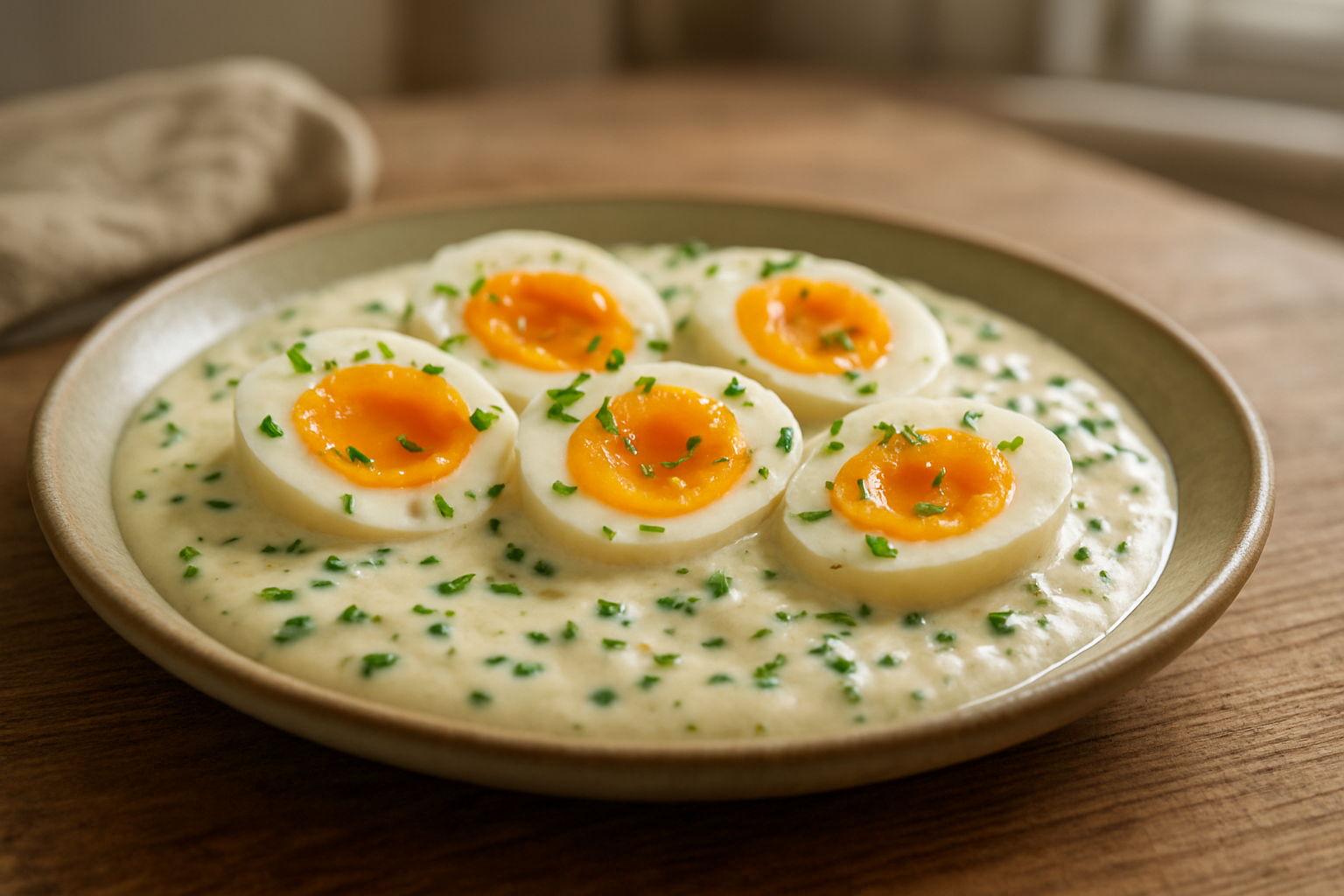
Soft-Boiled Eggs in Creamy Chive Sauce – A Classic German Everyday Dish
🛒 Ingredients
- ✓
4 eggs
- ✓
30 g butter
- ✓
2 tbsp plain flour
- ✓
250 ml milk
- ✓
100 ml double cream
- ✓
100 ml vegetable stock
- ✓
1/2 tsp sweet paprika
- ✓
Salt and black pepper, to taste
- ✓
1 bunch chives
This recipe is also available in German.
Explore these articles
📌 Overview
Soft-boiled eggs in creamy chive sauce is a beloved German everyday dish combining gently cooked eggs with a luscious, herb-infused cream sauce. Rooted in traditional German home cooking, especially popular in regions like Bavaria and Swabia, this recipe offers a quick, comforting meal that highlights seasonal freshness and authentic flavours.
👨🍳 Preparation
- 1
Cook the eggs in boiling water for 9 minutes until softly set in the middle. Transfer them straight to cold water, then peel and halve them.
- 2
To make the sauce, melt the butter in a saucepan over a medium heat. Stir in the flour and cook briefly until it turns lightly golden.
- 3
Gradually pour in the milk, stirring all the while so the sauce stays smooth and lump-free. Let it simmer gently over a low heat until it thickens.
- 4
Add the cream and let it reduce slightly, then stir in the vegetable stock. Season with the paprika, salt and black pepper.
- 5
Turn the heat down as low as possible and quickly stir in the egg yolks to enrich and thicken the sauce without letting it curdle.
- 6
Wash the chives, pat them dry and snip them into fine lengths. Set a little aside for serving and stir the rest into the sauce.
- 7
Carefully place the halved eggs into the sauce and warm them through gently without letting the sauce boil.
- 8
To serve, spoon the eggs and sauce onto plates and scatter over the remaining chives.
🧠 Why It Works
This dish balances the silky texture of soft-boiled eggs with a velvety cream sauce enriched by butter, cream, and egg yolks, creating a harmonious fat-acid-salt interplay. The gentle simmering prevents curdling, preserving smoothness, while the fresh chives add a delicate herbal brightness that cuts through the richness. The paprika introduces subtle warmth, enhancing the sauce’s aromatic depth. This combination reflects German culinary traditions emphasizing simple, quality ingredients and comforting textures.
🛠️ Troubleshooting
Why did my sauce curdle when adding the egg yolks?
Adding yolks over too high heat can cause curdling. Reduce heat to very low and stir quickly while incorporating yolks to keep the sauce smooth and glossy.
My sauce is too thick or too thin; how can I fix it?
If too thick, gently whisk in a little warm milk or vegetable stock to loosen. If too thin, simmer gently to reduce until desired consistency is reached.
How to avoid rubbery or overcooked eggs?
Strictly time the boiling to 9 minutes and cool eggs immediately in cold water to halt cooking, preserving a tender white and creamy yolk.
Can I make this dish vegan?
Replace eggs with poached tofu and use plant-based cream and butter alternatives. Adjust seasoning to maintain richness and texture.
How should I store leftovers to maintain quality?
Store sauce in an airtight container in the fridge for up to 2 days. Eggs are best eaten fresh as reheating affects texture.
💡 Tips and Variations
- •
For an even richer finish, swap the cream for crème fraîche, which gives the sauce extra body and a gentle tang.
- •
To help prevent lumps, warm the milk slightly before adding it to the pan.
- •
The real charm of this dish lies in the combination of butter, cream and egg yolk, which gives the sauce its silky texture and full, rounded flavour.
- •
This dish is already vegetarian. For a plant-based version, you could replace the eggs with poached tofu and use an oat- or soya-based cream alternative.
- •
If you do not have chives to hand, finely chopped spring onions make a good substitute and bring a similar fresh note.
- •
A small squeeze of lemon juice in the sauce brightens the flavours and balances the richness beautifully.
- •
For a quick gluten-free and dairy-free adaptation, use gluten-free flour and a plant-based cream. A pinch of kala namak can lend a gently eggy flavour.
- •
The secret to getting this dish just right is to keep the heat gentle and stir in the yolks carefully, so the sauce stays smooth, glossy and velvety.
📦 Storage
Any leftover sauce can be kept in an airtight container in the fridge for up to 2 days. The eggs are best cooked fresh, as they tend to lose their lovely texture when reheated.
🍷 Pairing
A dry German Riesling from the Mosel region complements this dish beautifully, its crisp acidity cutting through the creamy richness while enhancing the subtle herbaceous notes of the chives. Alternatively, a Silvaner from Franconia offers a gentle minerality and soft fruitiness that harmonises with the sauce’s delicate flavours. For an international touch, a light-bodied Italian Pinot Grigio with fresh citrus and floral aromas echoes the freshness of the herbs and balances the dish’s creamy texture, creating a refined and coherent tasting experience.
❓ F.A.Q.
How do I achieve perfectly soft-boiled eggs for this recipe?
Boil eggs for exactly 9 minutes, then immediately transfer them to cold water to stop cooking. This ensures a tender white and a creamy, softly set yolk ideal for the sauce.
Can I prepare the creamy chive sauce in advance?
Yes, the sauce can be made ahead and stored in the fridge for up to 2 days in an airtight container. Reheat gently without boiling to maintain its smooth texture.
What can I use if I don’t have chives?
Finely chopped spring onions are an excellent substitute, offering a similar fresh, mild onion flavour that complements the creamy sauce.
Is there a gluten-free or dairy-free version of this dish?
For gluten-free, use a suitable gluten-free flour. For dairy-free, replace cream with oat or soya-based alternatives and consider adding kala namak to mimic the eggy flavour.
How do I prevent lumps in the sauce?
Warm the milk slightly before adding it to the roux and stir continuously over low heat to keep the sauce smooth and lump-free.
What is the best way to reheat leftovers?
Reheat the sauce gently over low heat, stirring frequently. It’s best to consume the eggs fresh, as reheating can alter their delicate texture.
🏛️ History and Tradition
Soft-boiled eggs in creamy chive sauce is a traditional German comfort food, often enjoyed in home kitchens across Bavaria and Swabia. Historically, this dish reflects the German culinary emphasis on simple, seasonal ingredients and hearty yet elegant preparations. It is commonly served during spring when fresh herbs like chives are abundant, linking it to regional seasonal eating habits. This recipe embodies the essence of German everyday cooking, reinforcing cultural identity through its authentic flavour profile and preparation techniques.
If you are in the mood for something comforting yet quietly elegant, this is well worth making. It is the sort of dish that feels a little special without asking much of you in the kitchen, and it is perfect for sharing with family or serving to friends over a relaxed lunch or supper. Do give it a try at home – it may well become one of those simple recipes you return to again and again.
Rate this recipe
Click or tap the stars to rate
Explore these guides
-
 Easy Egg Recipes: 30 Classic Dishes for Every Day
Discover 30 delicious and easy egg recipes perfect for busy weeknights, hearty breakfasts, and classic German-inspired family meals.
-
 50 Egg Recipes: Easy, Quick and Delicious Egg Dishes for Every Meal
Discover 50 easy, quick, and delicious egg recipes for every meal. From breakfast to dinner, find simple egg dishes you can cook at home in minutes.