
Alltagsküche
Kochen, wie es zuhause schmeckt
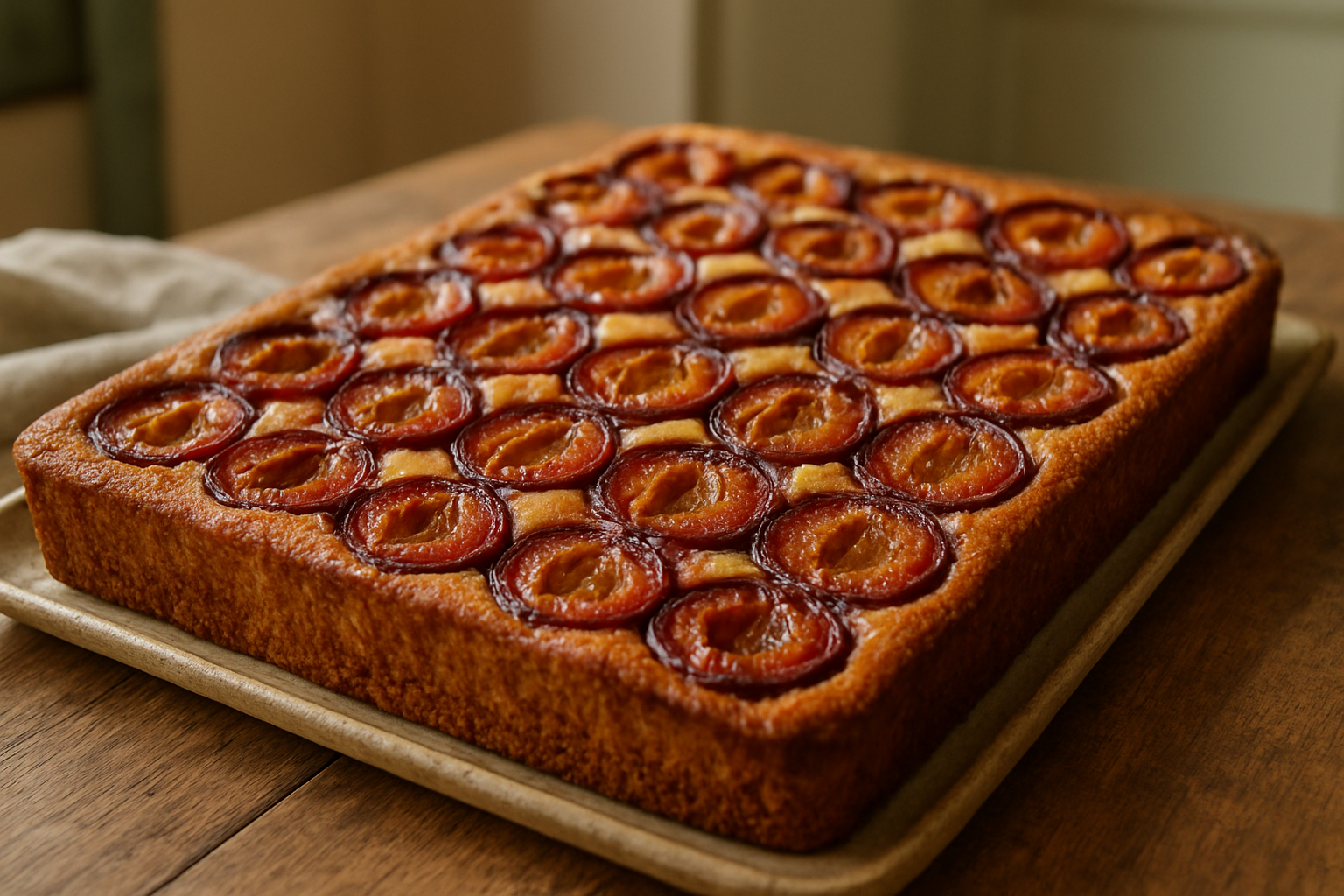
Juicy Plum Traybake with Buttery Sponge: Easy German Recipe
🛒 Ingredients
- ✓
250 g softened butter
- ✓
200 g sugar
- ✓
1 sachet vanilla sugar
- ✓
finely grated zest of 1 unwaxed lemon
- ✓
1 pinch of salt
- ✓
4 medium eggs
- ✓
300 g plain flour
- ✓
1 sachet baking powder
- ✓
150 ml milk
- ✓
800 g plums
This recipe is also available in German.
📌 Overview
A juicy plum traybake is a simple German-style fruit cake made with a soft buttery sponge and a generous layer of fresh plums. It is a good choice when you want the flavour of a traditional autumn plum cake without making yeast dough. The vanilla and lemon zest in the sponge give the cake freshness, similar to the moist lemon traybake cake and the lemon traybake with almond twist.
The aim of this recipe is a moist but stable traybake: the plums should release enough juice to flavour the sponge, but not so much that the centre becomes soggy. For a more traditional variation, the old-fashioned plum cake with quark crumble gives a richer crumble-style result, while the traybake plum cake with crispy cinnamon crumble adds a spiced topping.
For the best result here, use ripe but firm plums, spread the batter evenly across the tray and bake the cake until the sponge is set but not dry. It works well for coffee, afternoon tea, brunch or any late-summer and autumn baking occasion.
👨🍳 How to make Juicy Plum Traybake with Buttery Sponge
- 1
Heat the oven to 170°C conventional or 150°C fan and line a baking tray with baking parchment. If using a baking frame, place it on the tray so the sponge bakes to an even height.
- 2
Wash the plums, dry them well, halve them and remove the stones. Very large plums can be quartered. They should be ripe but still firm, so they do not release too much juice while baking.
- 3
Beat the softened butter with the sugar, vanilla sugar, lemon zest and salt for 3–4 minutes until pale and creamy. This step adds air and helps the sponge bake up lighter.
- 4
Add the eggs one at a time, beating well after each addition. If the mixture curdles slightly, do not worry; it will come back together once the flour is added.
- 5
In a separate bowl, mix the plain flour with the baking powder so the raising agent is evenly distributed.
- 6
Add the flour mixture and milk to the butter mixture in turns, beginning and ending with the flour. Mix only until smooth, as overmixing can make the cake firmer.
- 7
Spread the batter evenly over the prepared tray and smooth the surface. Pay attention to the corners so the traybake bakes to an even thickness.
- 8
Arrange the plums closely over the batter, preferably cut-side up or slightly angled. Press them in only lightly; pushing them too deeply can make the sponge too wet.
- 9
Bake on the middle shelf for about 45–55 minutes, until the surface is golden and a skewer inserted into the sponge area comes out clean or with a few moist crumbs.
- 10
If the top browns too quickly while the sponge is not yet baked through, cover the cake loosely with baking parchment and continue baking for a few more minutes.
- 11
Leave the cake to cool in the tray until at least lukewarm before slicing. This allows the fruit juices to settle and gives cleaner pieces.
🧠 Why It Works
This juicy plum traybake works because a classic butter sponge can absorb the flavour of the plums while staying more stable than a very thin batter. Beating the butter, sugar and eggs properly traps air in the mixture and, together with baking powder, gives the cake a lighter texture. Milk loosens the batter so it spreads evenly and does not bake up dry. Lemon zest adds freshness and highlights the natural tartness of the plums, while vanilla rounds out the buttery sweetness. The fruit choice is important: ripe but firm plums stay juicy without flooding the sponge. Arranging them closely, but not pressing them too deeply into the batter, gives a balanced result with a soft cake base and a generous fruit topping.
🛠️ Troubleshooting
Why is my plum traybake dry?
Dry plum traybake is usually caused by overbaking or overmixing after the flour has been added. Start checking from about 45 minutes. If a skewer comes out with a few moist crumbs but no raw batter, the cake is done.
Why is my plum traybake soggy in the middle?
A soggy base often comes from very soft or overripe plums, too much fruit juice or underbaked sponge. Use firm plums, dry them well after washing and avoid pressing them deeply into the batter.
How should I arrange plums on a traybake?
Arrange the plums cut-side up or slightly angled and place them close together. This lets them flavour the cake without releasing too much juice straight into the batter. Very juicy fruit should not be sprinkled with extra sugar before baking.
How do I stop the edges from burning?
If the edges are browning too quickly, the tray may be too low in the oven or the temperature may be too high. Bake on the middle shelf and cover the top loosely with baking parchment once it has enough colour.
Why has my sponge batter curdled?
Curdling usually happens when the butter, eggs or milk are at very different temperatures. Use room-temperature ingredients where possible. If the mixture curdles, do not keep beating for too long; add the flour mixture and continue briefly.
Can I prepare plum traybake in advance?
You can bake the finished cake a day ahead, but the raw batter should not be left for hours because the baking powder starts reacting as soon as it is mixed. For the best rise, bake the batter soon after preparing it.
How should I store plum traybake?
Keep the cake covered in the fridge if storing it for more than a day. For longer storage, freeze it in portions. Before serving, a short time in a low oven makes the sponge taste softer and more aromatic again.
How do I reheat plum traybake without drying it out?
Reheat slices at 140–150°C for a few minutes or very briefly in the microwave. Heating for too long can dry the sponge and make the fruit overly soft.
💡 Tips and Variations
- •
For the juiciest plum traybake, use ripe but firm plums. Very soft fruit releases more liquid and can make the sponge underneath wet.
- •
A baking frame helps create neat edges and an even height. Without one, spread the batter carefully into the corners so the cake bakes evenly.
- •
For extra autumn flavour, add a little cinnamon or a small pinch of cardamom to the batter. Both work well with plums and lemon zest.
- •
For a subtle nutty note, stir 2–3 tablespoons of ground almonds into the batter. A single teaspoon would be too little to make a clear difference.
- •
Instead of plums, you can use firm dessert plums, apricots, mirabelles or other stone fruit. Very juicy fruit should be dried or drained well before use.
- •
For a vegan version, use plant-based butter or baking margarine, plant-based milk and a suitable egg replacer for sponge cakes. The texture will change slightly but can still remain moist.
- •
For a gluten-free version, use a gluten-free cake flour blend and gluten-free baking powder. Check the cake early, as gluten-free sponge can seem dry more quickly.
- •
If baking for guests, let the cake cool fully before slicing. The fruit layer will settle and the pieces will look much neater.
📦 Storage
- •
On the day it is baked, plum traybake can be kept well covered at room temperature. If you want to keep it longer, store it in the fridge for about 2–3 days. Cover it only once fully cooled, otherwise condensation can make the surface wet.
- •
For longer storage, freeze the cake in portions. Let the pieces cool completely, wrap them airtight and thaw at room temperature. A few minutes in a 140–150°C oven will make the sponge softer and more fragrant again.
🍷 Pairing
Plum traybake pairs well with coffee, cappuccino, black tea or a mild spiced tea because these drinks balance the fruit acidity and buttery sweetness. Classically, it can be served with whipped cream or a little vanilla sauce. For wine, a Mosel Riesling Kabinett works well because its acidity refreshes the plums and complements the lemon zest. A light Baden Spätburgunder is a good choice if you want to highlight the fruit. For an alcohol-free pairing, try sparkling apple juice, grape spritzer or a not-too-sweet fruit tea.
❓ F.A.Q.
How long does plum traybake last?
Plum traybake keeps for about 2–3 days in the fridge when well covered. On the day of baking, it can be kept at room temperature. Let it cool fully before covering it so the top does not become damp.
Can I make plum traybake gluten-free?
Yes. Use a gluten-free cake flour blend and make sure the baking powder is gluten-free. Check the cake early because gluten-free sponge can dry out more quickly.
How do I stop the batter from spreading unevenly on the tray?
A baking frame helps keep neat edges and an even height. Also spread the batter evenly into the corners and avoid tilting the tray too much before it goes into the oven.
What can I use instead of plums?
Firm dessert plums, apricots, mirabelles or other stone fruit can be used instead. Very juicy fruit should be dried or drained well so the cake base does not become too wet.
How do I make this plum traybake vegan?
Replace the butter with plant-based butter or baking margarine, the milk with a plant-based alternative and the eggs with an egg replacer suitable for sponge cakes. The texture will be slightly different but can still be moist.
How do I keep plum sponge cake moist?
Use room-temperature butter and eggs, beat the butter and sugar mixture well, and mix the flour in only briefly. Overbaking is the most common reason a sponge traybake becomes dry.
Can I bake plum traybake the day before?
Yes, the finished cake can be baked a day ahead. Do not leave the raw batter standing for a long time, because the baking powder starts reacting once mixed and the cake may rise less well.
Can you freeze plum traybake?
Yes, plum traybake freezes well in portions. Thaw at room temperature and warm briefly in the oven if you want the sponge to taste softer and fresher.
🏛️ History and Tradition
The plum traybake is a traditional German cake with roots in regional home baking, especially in Bavaria and Swabia, where stone fruits are abundant in late summer and autumn. Historically, such traybakes were practical for feeding families and guests during harvest festivals and seasonal celebrations. This cake embodies the German ethos of simple, hearty desserts that highlight local, seasonal produce. Its enduring popularity reflects the cultural importance of fruit-based cakes in German culinary heritage and festive occasions like Erntedankfest (harvest thanksgiving).
This juicy plum traybake is an easy autumn cake for anyone who wants a fruit traybake without yeast dough. The buttery sponge stays soft, the plums add tartness and moisture, and the vanilla and lemon zest keep the flavour bright. Use firm plums, mix the batter briefly once the flour is added and avoid overbaking, and you will get a moist traybake for coffee, brunch or relaxed family baking.
Rate this recipe
Click or tap the stars to rate