
Alltagsküche
Kochen, wie es zuhause schmeckt
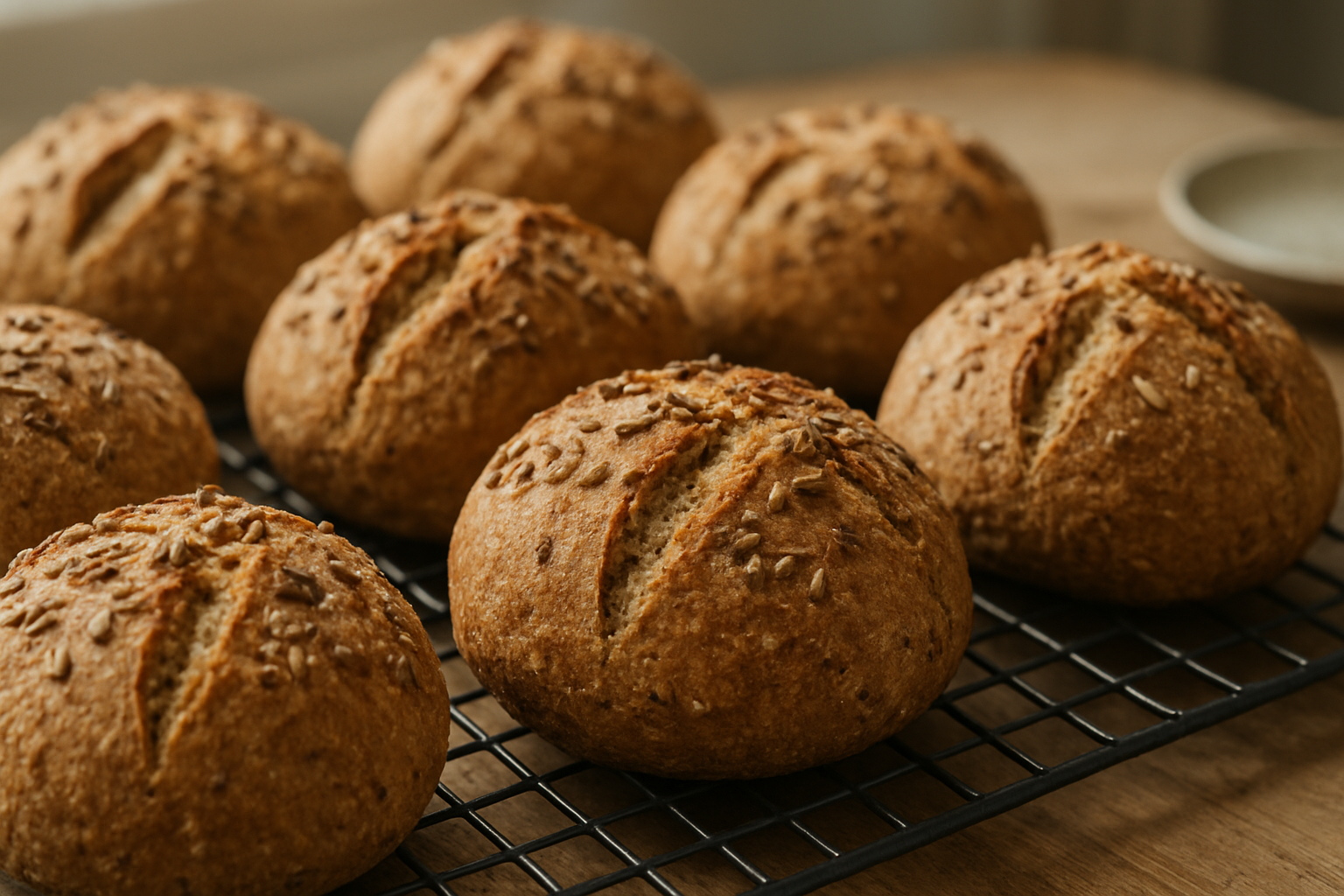
Rustic Wholemeal Rolls Recipe – Perfect for Everyday Baking
Learn how to bake rustic wholemeal rolls at home with this easy recipe. Enjoy hearty, fibre-rich rolls ideal for wholesome everyday meals.
📖 What is it
Learn how to bake rustic wholemeal rolls at home with this easy recipe. Enjoy hearty, fibre-rich rolls ideal for wholesome everyday meals.
🛒 Ingredients
- ✓ 500 g wholemeal wheat flour
- ✓ 1 tsp salt
- ✓ 1 cube fresh yeast (42 g)
- ✓ 175 ml lukewarm water
- ✓ water, for brushing
- ✓ caraway seeds or sunflower seeds, for sprinkling
This recipe is also available in German .
Rustic wholemeal rolls are traditional German-style bread rolls made from wholemeal wheat flour, prized for their hearty texture and rich, nutty flavour. Commonly enjoyed across Bavaria and other regions, these rolls offer a wholesome, fibre-rich option perfect for everyday meals and seasonal baking. Their simple ingredients and authentic preparation make them a staple in German home baking.
👨🍳 Preparation
- 1
Mix the wholemeal flour and salt together in a large bowl.
- 2
Crumble the fresh yeast into the lukewarm water and stir until it has completely dissolved.
- 3
Pour the yeast mixture into the flour and knead thoroughly until you have a smooth dough. If the dough feels too firm, add a little more water a tablespoon at a time until it starts to come away from the sides of the bowl.
- 4
Cover the bowl with a damp tea towel and leave the dough to rise in a warm place for about 45 minutes, or until noticeably puffed up.
- 5
Turn the dough out onto a lightly floured work surface and shape it into a loose log.
- 6
Cut the log into seven equal pieces and shape each one into a small roll.
- 7
Place the rolls on a baking tray lined with baking parchment, flatten them slightly and score the tops lengthways with a sharp knife.
- 8
Cover the rolls again with a tea towel and leave to rest for a further 30 minutes.
- 9
Preheat the oven to 220°C conventional.
- 10
Brush the rolls with cold water and sprinkle with caraway seeds or sunflower seeds, if you like.
- 11
Bake on the middle shelf for about 20 minutes, until golden brown and crisp.
- 12
Remove from the oven and leave to cool completely on a wire rack.
🧠 Why It Works
This recipe balances wholemeal flour’s natural earthiness with the gentle fermentation of fresh yeast, creating a dough that rises well and develops complex flavours. The interplay of salt, moisture, and slow proofing ensures a tender crumb with a crisp crust. Brushing with water before baking enhances crust crispness, while optional caraway or sunflower seeds add aromatic depth and regional authenticity. The method respects traditional German baking techniques, delivering a satisfying texture and flavour profile that complements everyday meals.
🛠️ Troubleshooting
Why is my dough too sticky or too firm?
Wholemeal flour absorbs more water than white flour. If your dough is too sticky, add flour sparingly during kneading. If too firm, add lukewarm water a tablespoon at a time until the dough becomes smooth and elastic.
How do I avoid dense rolls with a heavy crumb?
Ensure the dough rises in a warm place until visibly puffed to allow yeast fermentation. Kneading thoroughly and not rushing the proofing stages prevents dense texture and promotes a light crumb.
Can I prepare the dough in advance and bake later?
Yes, you can refrigerate the shaped rolls after the first rise for up to 12 hours. Allow them to come to room temperature and complete the second rise before baking to maintain texture and flavour.
How should I reheat leftover rolls without drying them out?
Reheat rolls in a preheated oven at 180°C for 5–7 minutes wrapped loosely in foil to retain moisture while restoring crust crispness.
💡 Tips and Variations
- •
For a richer version, add 50 g ground nuts or linseeds to the dough for extra flavour and goodness.
- •
A baking stone will help give the rolls an especially crisp crust.
- •
Wholemeal flour gives these rolls their deep, nutty flavour and makes them particularly satisfying.
- •
If you prefer, you can use dried yeast instead of fresh yeast.
- •
Wholemeal spelt flour works well in place of wholemeal wheat flour and gives the rolls a slightly gentler flavour.
- •
A teaspoon of cider vinegar in the dough can help deepen the flavour and improve the dough's structure.
- •
For a gluten-free version, use a suitable gluten-free flour blend with xanthan gum for binding.
- •
The secret to these rolls is giving the dough enough time to rise and keeping the moisture level just right, which helps create a lovely crumb.
📦 Storage
Keep the rolls in an airtight container or a linen bread bag so they do not dry out. They are best eaten fresh, but they also freeze well and can be thawed as needed.
🍷 Pairing
These rustic wholemeal rolls pair exquisitely with a fresh, dry German Riesling from the Mosel region, whose vibrant acidity and mineral notes cut through the nutty richness of the bread. A Silvaner from Franconia offers a delicate fruitiness and subtle earthiness that complements the wholesome flavour profile. For an international touch, an Italian Verdicchio with its crisp acidity and herbal undertones harmonises beautifully, enhancing the rustic character while maintaining a refined balance.
❓ F.A.Q.
Can I use dried yeast instead of fresh yeast for wholemeal rolls?
Yes, dried yeast can replace fresh yeast in this recipe. Use about one-third of the amount of fresh yeast and dissolve it in lukewarm water before mixing with the flour. This substitution works well and is convenient for longer storage.
How long should I let the dough rise for the best texture?
Allow the dough to rise for about 45 minutes until it noticeably puffs up, then shape and let it rest for another 30 minutes. This two-stage proofing develops flavour and ensures a light, airy crumb typical of traditional German rolls.
What is the best way to store wholemeal rolls to keep them fresh?
Store the rolls in an airtight container or a linen bread bag to maintain moisture without making the crust soggy. They freeze well and can be thawed as needed, preserving their texture and flavour.
Can I make these rolls gluten-free?
Yes, by using a gluten-free flour blend with xanthan gum for binding, you can adapt this recipe. However, the texture and rise may differ from the traditional wholemeal wheat version.
What seeds can I use to top the rolls for authentic flavour?
Caraway seeds are traditional in many German wholemeal breads, adding a distinctive aromatic note. Sunflower seeds offer a milder, nutty flavour and a pleasant crunch, both enhancing the rustic character.
🏛️ History and Tradition
Rustic wholemeal rolls have deep roots in German baking traditions, especially in Bavaria and Swabia, where hearty breads were essential staples. Historically, wholemeal breads provided vital nutrients and energy for everyday life, reflecting regional agricultural practices. These rolls often appear in seasonal festivities and daily meals, symbolising wholesome, natural food culture. Their enduring popularity underscores a commitment to traditional methods and authentic flavours, reinforcing their place in Germany’s culinary heritage and everyday kitchen.
These homemade wholemeal rolls are a wonderful reminder that the simplest bakes are often the most rewarding. With their wholesome texture and deep, nutty flavour, they are a lovely addition to the table at any time of day. Give them a try at home and enjoy them warm from the oven with the people you love.
Rate this recipe
Click or tap the stars to rate