
Alltagsküche
Kochen, wie es zuhause schmeckt
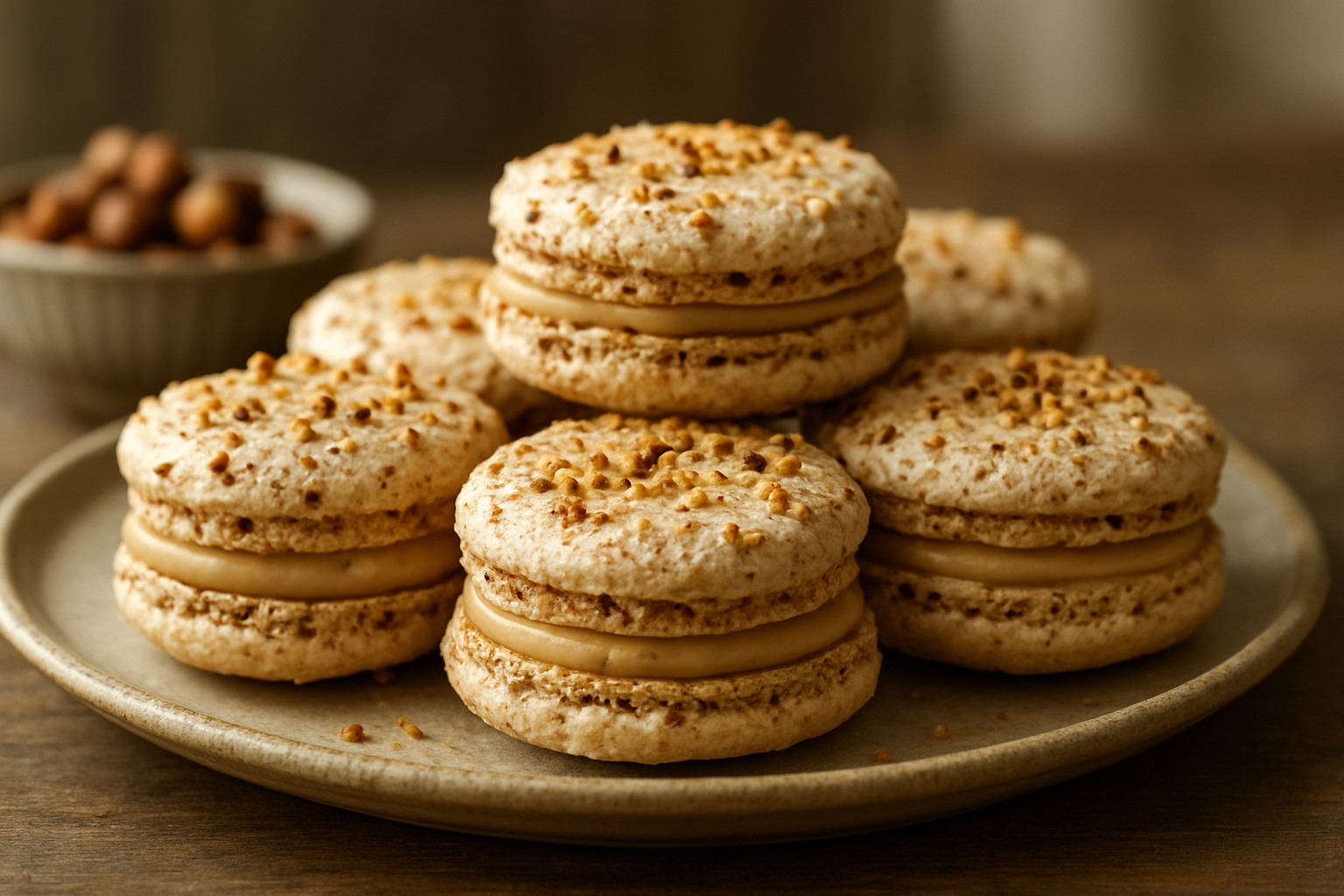
Hazelnut Japonais Cookies with Nougat Filling
🛒 Ingredients
- ✓
4 egg whites, at room temperature
- ✓
120 g caster sugar
- ✓
150 g ground hazelnuts
- ✓
80 g icing sugar
- ✓
20 g plain flour
- ✓
150 g soft nougat or hazelnut nougat, chopped
- ✓
1 pinch of salt
📊 Nutritional Information
This recipe is also available in German.
📌 Overview
Hazelnut Japonais cookies are crisp, light hazelnut meringue biscuits filled in pairs with soft melted nougat. The key to this recipe is not high heat but slow drying: the shells are baked at 120°C fan until they feel dry, lift easily from the paper and stay pale rather than browned. Toasting the ground hazelnuts first gives the cookies a deeper nutty aroma, while a little flour helps the meringue hold its shape. This recipe is useful when you want delicate filled cookies that can be prepared ahead and stored in a tin without losing their texture too quickly.
👨🍳 How to make Hazelnut Japonais Cookies with Nougat Filling
- 1
Preheat the oven to 120°C fan and line three baking trays with baking paper. Use clean, dry bowls and beaters because any fat residue can stop the egg whites from whipping properly.
- 2
Toast the ground hazelnuts in a dry pan over medium heat for 3 to 4 minutes, stirring constantly, until they smell nutty. Spread them on a plate and let them cool completely before adding them to the meringue.
- 3
Beat the egg whites with a pinch of salt until foamy, then continue beating until soft peaks form. Add the caster sugar slowly, one spoonful at a time, and keep beating until the meringue is glossy and forms firm peaks.
- 4
Mix the cooled hazelnuts with the icing sugar and flour. Fold this mixture gently into the meringue with a spatula, using broad movements so the mixture keeps as much air as possible.
- 5
Transfer the mixture to a piping bag fitted with a large plain nozzle. Pipe small, even rounds onto the lined trays, leaving a little space between them. Try to keep them similar in size so they dry evenly and match well for sandwiching.
- 6
Dry the Japonais shells in the oven for about 90 minutes. They should remain light in colour, feel dry on the surface and release easily from the paper. If they still feel sticky underneath, leave them in the oven for another 10 minutes with the temperature unchanged.
- 7
Let the shells cool completely on the trays. Melt the nougat gently in a heatproof bowl over a pan of barely simmering water, then let it cool until spreadable but not runny.
- 8
Spread a thin layer of nougat on the flat side of half the shells and sandwich with the remaining shells. Leave the filled cookies at room temperature until the filling has set before storing them in an airtight tin.
🧠 Why It Works
The cookies work because the egg-white foam provides lift, while the slow low-temperature bake dries the meringue instead of browning it. Toasted hazelnuts add flavour without extra moisture, and the small amount of flour absorbs part of the nut oils, helping the shells keep their shape. Cooling the nougat before filling is also important: if it is too hot, it softens the meringue; if it is too firm, it breaks the delicate shells.
🛠️ Troubleshooting
Why does the meringue not become stiff?
Make sure the bowl is completely grease-free, use room-temperature egg whites and add the sugar gradually only after the whites are already foamy.
Why do the Japonais shells spread too much?
The hazelnuts may still be warm, the meringue may have been overmixed, or the batter may have stood too long before piping.
Why are the cookies soft after baking?
They usually need more drying time. Return them to the oven at 120°C fan for 10 to 15 minutes and let them cool fully on the tray.
Why do the shells brown before they dry?
The oven is probably too hot or the trays are too close to the heating element. Lower the temperature slightly and rotate the trays halfway through drying.
Why does the nougat filling leak out?
The nougat was too warm or too much filling was used. Let it cool until spreadable and apply only a thin, even layer.
💡 Tips and Variations
- •
Use finely ground hazelnuts for smoother shells; coarser nuts give a more rustic texture but can make piping less even.
- •
For a deeper flavour, replace 20 g of the ground hazelnuts with ground almonds or add a small pinch of cinnamon to the dry mixture.
- •
Pipe the shells in identical sizes by drawing circles on the underside of the baking paper as a guide.
- •
Fill the cookies only when the shells are completely cold, otherwise the nougat can soften the meringue.
- •
For a chocolate version, replace the nougat with a firm dark chocolate ganache, but keep the filling thin so the biscuits stay crisp.
- •
Bake on dry days when possible; high humidity can soften meringue-based cookies more quickly.
📦 Storage
- •
Store the filled Hazelnut Japonais cookies in an airtight tin at cool room temperature for up to 7 days.
- •
Place baking paper between layers to protect the delicate shells and prevent the nougat from sticking.
- •
Do not store them in the fridge unless your kitchen is very warm, because condensation can soften the meringue.
- •
Unfilled shells can be baked 2 to 3 days ahead and filled shortly before serving for the crispest texture.
- •
Freezing is not ideal for filled cookies because the meringue can become sticky after thawing.
🍷 Pairing
- •
Serve with espresso, black coffee or unsweetened tea to balance the sweetness of the meringue and nougat.
- •
For a dessert plate, pair the cookies with poached pears, orange segments or a small scoop of vanilla ice cream.
- •
During the Christmas season, they work well with spiced tea, hot chocolate or a small glass of dessert wine.
❓ F.A.Q.
How do you make Hazelnut Japonais cookies crisp?
Dry them slowly at 120°C fan and let them cool completely on the trays. If they still stick to the paper, they need more time in the oven.
Can I make Japonais cookies without a piping bag?
Yes. Use two teaspoons to form small mounds, then flatten them slightly. The shape will be less regular but the texture will still work.
Why are my meringue shells chewy instead of crisp?
They may be underbaked, stored in a humid room or filled while still warm. Dry them longer and store them in an airtight tin.
Can I prepare Hazelnut Japonais ahead of time?
Yes. The unfilled shells keep well for 2 to 3 days, and the filled cookies keep for about 1 week if stored cool and dry.
Can I freeze Hazelnut Japonais cookies?
Freezing is not recommended for the filled cookies because thawing can make the meringue sticky. If necessary, freeze only the unfilled shells and dry them briefly in a low oven after thawing.
What can I use instead of nougat?
A firm chocolate ganache, praline cream or hazelnut chocolate spread can be used, but the filling should be thick and applied sparingly.
🏛️ History and Tradition
Japonais belongs to the European pastry tradition of nut-based meringue layers and small confectionery biscuits. In many bakeries the same idea appears as thin hazelnut or almond meringue discs used for layered cakes, petits fours or filled cookies. The name is French in origin, but the preparation is especially common in Central European home baking, where crisp nut meringues are often paired with nougat, chocolate or buttercream for the winter and Christmas season.
Hazelnut Japonais cookies are best when treated as a drying recipe rather than a fast bake. Keep the oven low, cool the toasted nuts fully, pipe even rounds and fill them only once the shells are cold. These details make the difference between soft meringues and crisp, delicate nougat-filled biscuits that hold well for several days.
Rate this recipe
Click or tap the stars to rate