
Alltagsküche
Kochen, wie es zuhause schmeckt
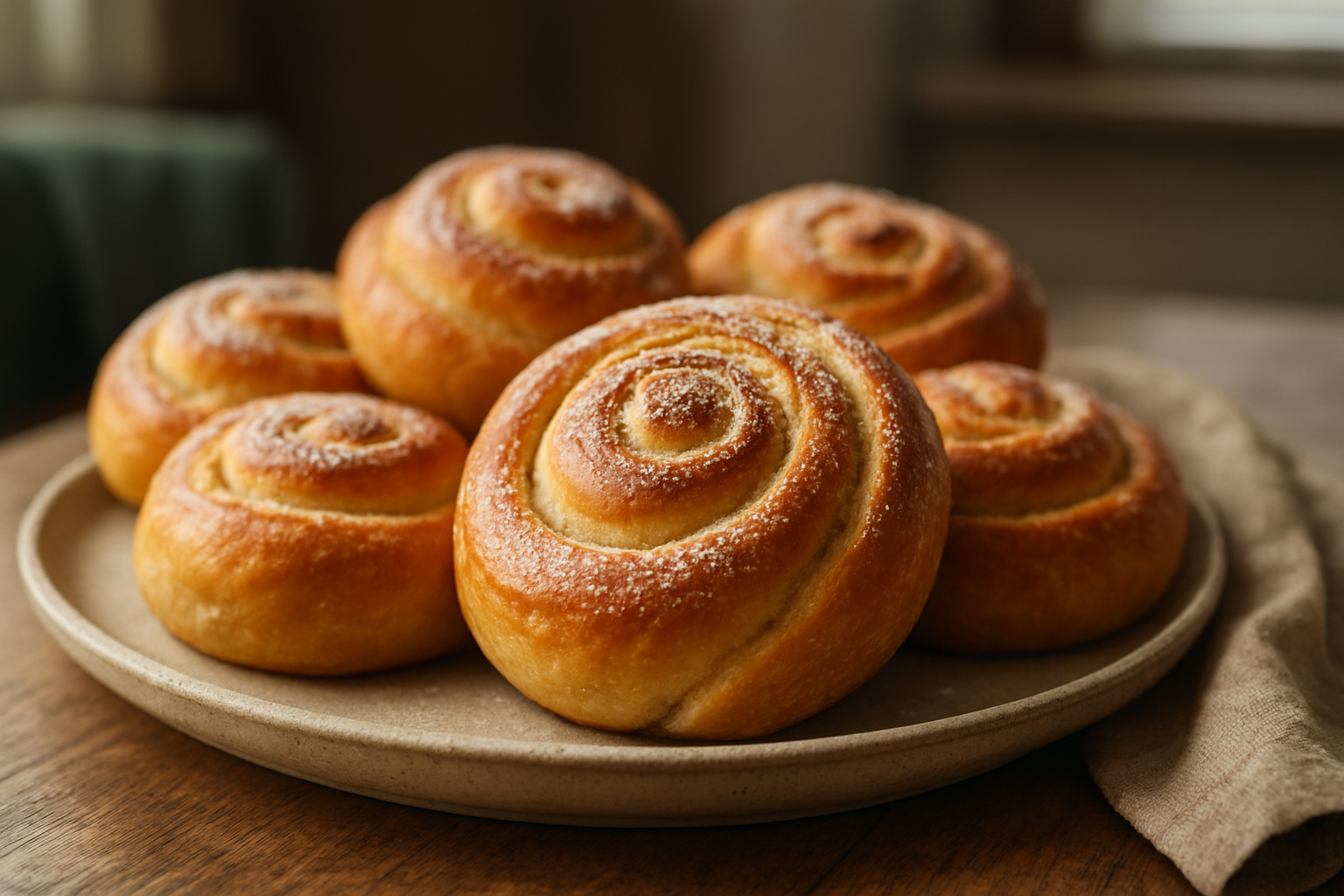
German Yeast Swirls with Icing Sugar
🛒 Ingredients
- ✓
350 g plain flour or Type 550 wheat flour
- ✓
40 g sugar
- ✓
1 pinch of salt
- ✓
20 g fresh yeast
- ✓
150 ml lukewarm milk
- ✓
1 medium egg
- ✓
25 g soft goose fat for the dough
- ✓
10 g soft goose fat for brushing
- ✓
A little flour for dusting and rolling
- ✓
A little water for brushing before baking
- ✓
Icing sugar for dusting
📊 Nutritional Information
This recipe is also available in German.
📌 Overview
German yeast swirls, known as Hefe Schnecken, are simple rolled yeast pastries made from a soft milk dough. The dough is enriched with egg and a small amount of goose fat, then rolled into a rectangle, brushed with more fat, rolled up and cut into 9 spiral pieces. They taste best fresh from the oven while still warm, finished with a light dusting of icing sugar. The most important points are using lukewarm milk, kneading until the dough pulls away from the bowl and allowing enough rising time before baking.
👨🍳 How to make German Yeast Swirls with Icing Sugar
- 1
Place the flour in a mixing bowl, add the sugar and season with a pinch of salt.
- 2
Make a well in the centre of the flour. Add 25 g soft goose fat and the egg to the well.
- 3
Dissolve the fresh yeast in the lukewarm milk. The milk should be warm but not hot, otherwise the yeast may rise poorly.
- 4
Pour the yeast milk into the bowl and knead everything with dough hooks until the dough is smooth, elastic and pulls away from the sides of the bowl.
- 5
If the dough is too dry, add a few drops of milk. If it is very sticky, add only a little flour. The dough should stay soft, not firm.
- 6
Dust the dough lightly with flour, cover the bowl with a clean cloth and let it rise in a warm place for 30 to 40 minutes, until visibly puffed.
- 7
Roll the dough out on a lightly floured work surface into a rectangle of about 20 x 30 cm.
- 8
Brush the dough thinly with 10 g soft goose fat.
- 9
Roll up the dough from the long 30 cm side and cut the roll into 9 even slices.
- 10
Place the yeast swirls on a baking tray lined with baking paper, leaving a little space between them.
- 11
Brush the swirls lightly with water, cover with a clean tea towel and let them rise for another 15 minutes.
- 12
Preheat the oven to 200°C conventional heat.
- 13
Bake the yeast swirls on the middle shelf for about 15 minutes, until golden brown.
- 14
Dust with icing sugar and serve as warm as possible.
🧠 Why It Works
The recipe works because lukewarm milk activates the fresh yeast without damaging it, while egg and goose fat make the dough softer and richer than a plain bread dough. The first rise gives the dough volume, and the short second rise after shaping makes the swirls lighter. Brushing the rolled dough with fat helps create a softer layered texture, while baking at 200°C gives the pastries a golden surface without drying them out too much.
🛠️ Troubleshooting
Why does my yeast dough not rise?
The milk may have been too hot, the yeast may be old, or the dough may be standing in a cold place. Use lukewarm milk, fresh yeast and let the covered dough rise somewhere warm and draft-free.
Why is the dough too sticky?
A soft yeast dough can be slightly tacky. Knead it well before adding flour. If needed, add flour only a spoonful at a time so the finished swirls do not become dry.
Why are the yeast swirls dry after baking?
They may have been baked too long or too much flour was added during kneading and rolling. Bake only until golden and keep the dough soft.
Why do the swirls open during baking?
The dough may have been rolled too loosely or the slices may have been placed with the seam facing upward. Roll firmly but gently and place each swirl with the seam tucked underneath or to the side.
Why are the swirls dense instead of fluffy?
The dough may not have been kneaded long enough or did not rise sufficiently. Knead until elastic and allow both rising stages before baking.
💡 Tips and Variations
- •
Serve the swirls warm from the oven, because this is when the dough is softest and most aromatic.
- •
If you prefer not to use goose fat, replace it with the same amount of soft butter for a milder flavour.
- •
For a sweeter version, sprinkle a little cinnamon sugar over the dough before rolling it up.
- •
For cleaner slices, use a sharp knife or unflavoured dental floss to cut the roll without squashing it.
- •
Do not overfill the dough if adding jam or nuts, because the swirls may open during baking.
- •
Warm leftovers briefly in the oven before serving to refresh the texture.
📦 Storage
- •
German yeast swirls taste best fresh and warm on the day they are baked.
- •
Leftovers can be kept in an airtight container at room temperature until the next day.
- •
To refresh them, warm briefly in the oven at 160°C for 5 to 8 minutes.
- •
Freezing is possible after baking. Let the swirls cool completely, freeze airtight and reheat in the oven after thawing.
- •
Dust with fresh icing sugar only after reheating, because stored icing sugar can dissolve into the surface.
🍷 Pairing
- •
Serve warm with coffee, black tea, milk or hot chocolate.
- •
For breakfast or brunch, pair with butter, jam, honey or fruit compote.
- •
For an afternoon coffee table, serve with fresh fruit, vanilla sauce or a simple yoghurt cream.
❓ F.A.Q.
Can I make German yeast swirls with butter instead of goose fat?
Yes. Butter can replace goose fat in the same amount. The flavour will be milder and more familiar, while the texture remains soft.
How long do Hefe Schnecken need to rise?
The dough needs 30 to 40 minutes for the first rise and about 15 minutes after shaping. It should look visibly puffed before baking.
Can I prepare the dough in advance?
Yes. You can let the dough rise slowly in the refrigerator, then bring it back to room temperature before rolling and shaping.
Can I freeze yeast swirls?
Yes. Freeze them after baking and cooling. Thaw at room temperature and warm briefly in the oven before serving.
Why should the milk be lukewarm?
Lukewarm milk helps activate fresh yeast. If the milk is too hot, it can weaken or kill the yeast and the dough will not rise properly.
What can I serve with German yeast swirls?
They go well with coffee, tea, milk, hot chocolate, jam, honey or a simple fruit compote.
🏛️ History and Tradition
Hefe Schnecken belong to the broad Central European tradition of small yeast pastries served fresh for breakfast, afternoon coffee or simple family baking. The word Schnecken refers to the spiral shape rather than the ingredients. Many versions are filled with cinnamon, nuts, poppy seeds or custard, but this simple version focuses on a lightly enriched yeast dough brushed with fat and finished with icing sugar after baking.
German yeast swirls are best when served fresh from the oven, lightly dusted with icing sugar. The recipe is simple, but the texture depends on proper kneading, lukewarm milk and enough rising time. Once shaped and baked, the swirls are soft, mildly sweet and easy to adapt with butter, cinnamon sugar or other simple fillings.
Rate this recipe
Click or tap the stars to rate