
Alltagsküche
Kochen, wie es zuhause schmeckt
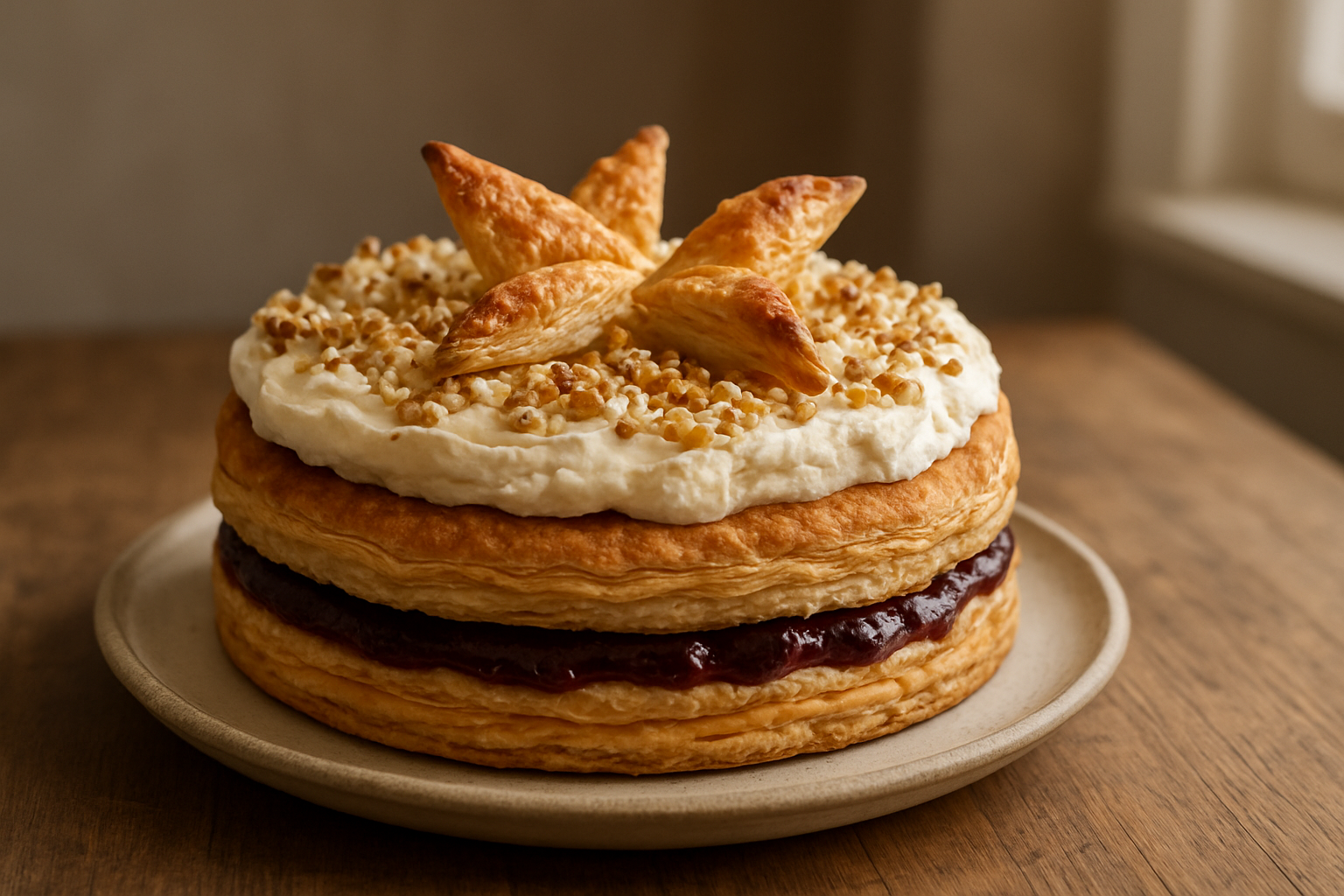
Friesentorte with Plum Preserve and Puff Pastry
🛒 Ingredients
- ✓
250 g plain flour
- ✓
100 g icing sugar
- ✓
1 tsp vanilla sugar
- ✓
a pinch of salt
- ✓
1 egg yolk
- ✓
125 g cold butter, diced
- ✓
3 sheets puff pastry (about 150 g each)
- ✓
500 g plum preserve
- ✓
100 g walnut halves, roughly chopped
- ✓
400 ml double cream
- ✓
2 tsp vanilla sugar
- ✓
6 gelatine leaves
This recipe is also available in German.
📌 Overview
Friesentorte with plum preserve is a northern German layered cake made with crisp puff pastry, a stable shortcrust base, fruity plum preserve, vanilla cream and walnuts. It is especially suited to autumn and winter coffee tables because plum preserve, nuts and cream create a rich, cosy filling. The most important points are fully cooled pastry layers, stable whipped cream and careful assembly so the puff pastry does not soften too quickly. The traditional puff pastry triangles on top make the torte look festive and also make it easier to slice.
You may also find it useful to look at recipes Classic Apple Tart with Vanilla Cream, Winter Apple Cake with Marzipan Stars, and Plum, Damson and Fig Tart, in addition to this one.
👨🍳 How to make Friesentorte with Plum Preserve and Puff Pastry
- 1
To make the shortcrust pastry, mix the flour, icing sugar, vanilla sugar and salt in a bowl. Add the egg yolk and cold butter, then rub and knead everything together quickly until you have a smooth dough. Do not overwork it, or the base may become tough rather than tender.
- 2
Shape the dough into a flat ball, wrap it in cling film and chill for at least 1 hour. Chilling firms the butter and helps the pastry hold its shape during baking.
- 3
Preheat the oven to 225°C conventional. Line a baking tray with baking parchment.
- 4
Leave the puff pastry sheets to thaw slightly for about 10 minutes. Stack 1½ sheets at a time, fold once, then roll out on a lightly floured surface to make four circles, each 24 cm across. Avoid pressing too hard, as this can damage the puff pastry layers.
- 5
Cut one of the circles into 12 even triangles. Place them on a lined baking tray, prick several times with a fork and bake for 6–7 minutes until golden brown and crisp. Leave to cool completely on a wire rack.
- 6
Prick the remaining three puff pastry circles all over with a fork and bake them one at a time for 6–7 minutes each. Each layer should be golden and fully cooled before assembly, otherwise the cream will soften.
- 7
Roll out the shortcrust pastry on a lightly floured surface into a 24 cm circle. Place it on a lined baking tray and bake for about 15 minutes, until pale golden. Transfer to a wire rack and leave to cool completely.
- 8
Soak the gelatine leaves in cold water for 10 minutes. Squeeze out the excess water, then melt them gently in a small saucepan over very low heat. Do not let the gelatine boil, as this can weaken its setting power.
- 9
Whip the cream with the vanilla sugar until firm. Stir 5 tablespoons of the whipped cream into the dissolved gelatine to temper it, then gently fold this mixture into the remaining cream so no gelatine lumps form.
- 10
Place the shortcrust base on a cake stand or serving plate and spread with a thin layer of plum preserve. Scatter the chopped walnuts evenly over the top. This base gives the torte stability and supports the moist layers better than puff pastry alone.
- 11
Set one baked puff pastry round on top and press down only very lightly. Spread with more plum preserve, keeping the layer thin so the pastry does not soften too quickly or slide.
- 12
Place a 24 cm springform ring or cake ring around the layers to keep the torte neat and stable while assembling.
- 13
Spread one third of the cream over the plum preserve. Continue layering the remaining puff pastry rounds, plum preserve and cream. Finish with a layer of cream on top.
- 14
Arrange the baked puff pastry triangles at an angle in the top layer of cream so they look like little windmill sails. Add them only after the top cream layer has been smoothed.
- 15
Chill the torte for at least 2 hours, preferably 3–4 hours, so the cream sets and the layers come together. Do not leave it uncovered for too long before serving, as puff pastry softens over time.
🧠 Why It Works
Friesentorte works because it contrasts a stable shortcrust base, crisp puff pastry, fruity plum preserve and creamy filling. The shortcrust base gives structure and helps stop the lower layers from softening immediately. Puff pastry brings height, lightness and crispness, but it must be fully baked and cooled before it touches the cream and preserve. Plum preserve adds sweetness, fruit acidity and autumnal depth, while walnuts bring crunch and a slightly bitter nutty note. Gelatine stabilises the vanilla cream so the torte does not collapse when sliced. The pre-cut puff pastry triangles on top solve a classic serving problem: you do not need to press a knife through a hard sheet of puff pastry.
🛠️ Troubleshooting
Why is my puff pastry not crisp after assembling the torte?
Puff pastry softens when it absorbs moisture from cream and plum preserve. Bake it until fully golden, let it cool completely and keep the preserve layers thin. Assemble the torte as close to serving as practical, as the pastry will naturally soften over time.
How can I fix a runny cream filling in Friesentorte?
Make sure the gelatine is fully soaked, gently dissolved and tempered with a few tablespoons of whipped cream before being folded into the rest. The cream should be cold and whipped firmly. The assembled torte then needs enough chilling time to set.
What should I do if the shortcrust pastry is too crumbly?
Use cold butter, handle the dough briefly and chill it for at least 1 hour before rolling. If it cracks while rolling, let it soften for a few minutes and gently press the cracks together.
Can Friesentorte be frozen for later consumption?
Freezing is not recommended. The cream can become watery and the puff pastry loses its crispness after thawing. Friesentorte is best eaten fresh or stored covered in the fridge for up to 2 days.
Why do the layers of my Friesentorte slide apart?
The layers may slide if the plum preserve or cream is applied too thickly, or if no cake ring is used. Keep the layers even and moderate, and assemble the torte inside a springform or cake ring for support.
Why are there gelatine lumps in the cream?
This usually happens when gelatine is added directly to cold cream. Temper it first by stirring a few tablespoons of cream into the melted gelatine, then fold that mixture into the remaining cream.
What can I do if the torte tastes too sweet?
If the torte tastes too sweet, use a less sweet plum preserve, spread it more thinly or fold a little crème fraîche into the cream. Walnuts and a hint of cinnamon can also make the sweetness feel more balanced.
💡 Tips and Variations
- •
For a richer version, replace part of the cream with mascarpone or crème fraîche. This makes the filling more stable and less sweet, but also heavier.
- •
When rolling shortcrust and puff pastry, use only light flouring. Too much flour can dry out the shortcrust, while heavy pressure can damage the puff pastry layers.
- •
The real character of this torte comes from the contrast between crisp puff pastry and fruity plum preserve. The preserve should be aromatic but not too runny.
- •
For a vegan version, use vegan puff pastry, vegan butter in the shortcrust, plant-based whipping cream and agar-agar instead of gelatine. Agar-agar sets differently and usually needs to be boiled.
- •
If you like, replace walnuts with chopped hazelnuts or almonds. Walnuts are especially good with plum preserve because they add a slightly bitter note.
- •
A little ground cinnamon stirred into the plum preserve adds warmth and depth. Lemon zest can help if you want a fresher-tasting filling.
- •
For a gluten-free version, use gluten-free flour for the shortcrust and specialist gluten-free puff pastry. Gluten-free pastry can be more delicate, so let every layer cool fully before assembling.
- •
For cleaner slices, always bake the top puff pastry layer as individual triangles. This makes the finished torte much easier to portion.
- •
The secret to a good Friesentorte is patience: cool every layer completely, stabilise the cream, spread the fillings thinly and chill the torte well.
📦 Storage
Keep the Friesentorte well covered in the fridge for up to 2 days. It is best on the day it is assembled or the following day, while the puff pastry still has some texture. Do not freeze it, as the cream and puff pastry lose quality after thawing. A cake dome is better than cling film pressed onto the surface, as it protects the puff pastry triangles without softening or crushing them.
🍷 Pairing
Friesentorte with plum preserve pairs well with medium-dry Mosel Riesling because its acidity balances the sweet plum preserve and makes the cream feel lighter. A Grauburgunder from Baden complements the walnuts and buttery pastry with mild fruit and a little body. For an alcohol-free pairing, serve strong black tea, coffee, apple spritzer or a gentle spiced tea. Internationally, a light Pinot Grigio or a not-too-sweet Moscato d’Asti works well if the torte is served as dessert.
❓ F.A.Q.
What is Friesentorte and where does it originate?
Friesentorte is a northern German layered cake that typically combines puff pastry, whipped cream and plum preserve. Many versions also use a shortcrust base and nuts for stability and texture.
Can I prepare Friesentorte in advance and how should I store it?
Yes, you can make it the day before and store it covered in the fridge. It keeps for up to 2 days, but it is best fresh because the puff pastry gradually softens.
How do I prevent the puff pastry from becoming soggy in Friesentorte?
Bake the puff pastry until fully golden, cool it completely and keep the plum preserve and cream layers thin. Puff pastry will soften over time, so assemble the torte as close to serving as practical.
Are there vegan or gluten-free alternatives for Friesentorte?
For a vegan version, use vegan puff pastry, plant-based cream, vegan butter and agar-agar instead of gelatine. For a gluten-free version, use gluten-free shortcrust flour and specialist gluten-free puff pastry.
What nuts can I use besides walnuts in Friesentorte?
Walnuts are classic because their slightly bitter flavour balances the sweet plum preserve. Almonds are milder, while hazelnuts give a stronger roasted note.
How long should Friesentorte chill before serving?
Chill the torte for at least 2 hours, preferably 3–4 hours. This gives the gelatine enough time to set the cream and helps the layers slice more cleanly.
Can I freeze Friesentorte?
Freezing is not recommended because the whipped cream can become watery and the puff pastry loses its crisp texture after thawing.
🏛️ History and Tradition
Friesentorte is a historic dessert rooted in the Friesland region of northern Germany, traditionally enjoyed during festive occasions and family gatherings. This layered cake reflects the region's baking heritage, combining local plum preserves with rich cream and nuts to create a distinctive texture contrast. Celebrated for its balance of crisp pastry and luscious filling, Friesentorte embodies northern German culinary identity and seasonal fruit preservation practices, reinforcing its status as a cherished classic in German dessert culture.
Friesentorte with plum preserve is a festive northern German classic for coffee tables, autumn afternoons and winter desserts. Success depends on crisp puff pastry layers, a stable shortcrust base, well-set vanilla cream and aromatic plum preserve. When every pastry layer is fully cooled and the fillings are spread thinly but evenly, the result is a torte with clear layers, fruity depth and creamy lightness.
Rate this recipe
Click or tap the stars to rate