
Alltagsküche
Kochen, wie es zuhause schmeckt
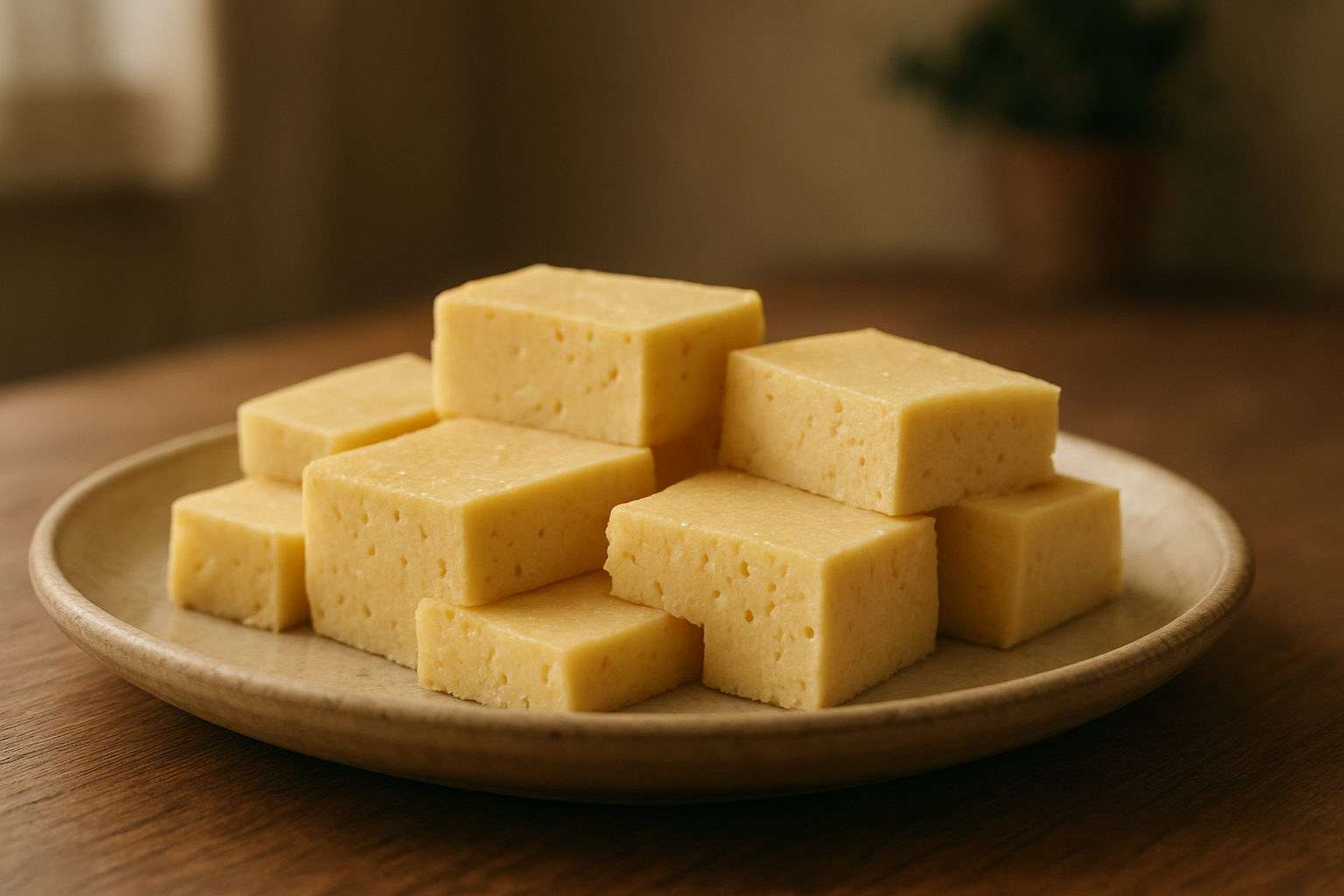
Eierstich Recipe: Classic German Egg Custard for Soups and More
🛒 Ingredients
- ✓
4 eggs
- ✓
200 ml milk
- ✓
1 pinch of salt
- ✓
1 pinch of freshly grated nutmeg
- ✓
butter, for greasing the dish
This recipe is also available in German.
Explore these articles
📌 Overview
Eierstich is a traditional German egg custard known for its tender, lightly springy texture that enhances clear soups such as the Bavarian Hochzeitssuppe. This simple yet elegant dish is a staple in German home cooking, celebrated for its subtle savoury flavour and cultural significance in everyday and festive meals.
👨🍳 Preparation
- 1
Grease a small heatproof porcelain bowl well with butter so the Eierstich turns out easily once cooked.
- 2
Whisk the eggs and milk together in a bowl until fully combined.
- 3
Season the egg mixture with salt and freshly grated nutmeg, then stir well.
- 4
Pour the mixture into the prepared bowl.
- 5
Place the bowl in a saucepan and add enough water for it to come about halfway up the sides of the bowl. Take care not to let any water get into the egg mixture.
- 6
Cover the pan with a lid and heat the water gently, making sure it does not come to the boil.
- 7
If bubbles begin to form on the surface, lower the heat so the Eierstich cooks evenly and keeps its fine, delicate texture.
- 8
Leave the Eierstich to cook gently for about 15 to 20 minutes. It is ready when the surface springs back lightly when pressed with a fingertip.
- 9
Carefully lift the bowl out of the water bath and leave the Eierstich to cool slightly before turning it out and cutting it into cubes or slices.
🧠 Why It Works
The success of Eierstich lies in its precise balance of eggs and milk, gently cooked to create a silky, softly set custard. The mild seasoning with salt and freshly grated nutmeg adds depth without overpowering the delicate egg flavour. Cooking it in a water bath ensures even heat distribution, preventing curdling and preserving the custard’s fine texture. This method reflects traditional German culinary techniques that prioritise gentle cooking to achieve harmonious textures and flavours, making Eierstich a refined complement to soups and stews.
🛠️ Troubleshooting
Why is my Eierstich rubbery or tough?
Overcooking or using too high heat causes the proteins to tighten excessively, resulting in a rubbery texture. Use gentle heat and monitor cooking time closely to maintain tenderness.
How can I prevent bubbles forming in my Eierstich?
Cook the custard in a water bath with a lid on the pan to ensure even, gentle heat. Avoid boiling water and reduce heat if bubbles appear on the surface.
What if my Eierstich is too bland?
Ensure you season the egg mixture with salt and freshly grated nutmeg before cooking. Nutmeg enhances the subtle egg flavour and adds aromatic depth.
Can I prepare Eierstich in advance?
Yes, Eierstich can be made ahead and refrigerated for up to two days. Reheat gently before serving to preserve its delicate texture and flavour.
How do I reheat Eierstich without drying it out?
Warm Eierstich gently in a water bath or microwave at low power, covered to retain moisture and prevent drying or toughening.
💡 Tips and Variations
- •
For a richer version, use cream instead of milk, or a mixture of milk and cream, for an especially silky result.
- •
A steamer insert over a water bath gives particularly even heat and helps prevent bubbles from forming.
- •
The hallmark of a good Eierstich is its delicate texture and gentle egg flavour.
- •
This recipe is already vegetarian, but if you would like to experiment with a vegan version, a plant-based egg substitute can be used, though the texture will be quite different.
- •
For a meat-free alternative garnish, try finely puréed mushrooms or chickpea purée instead.
- •
A little freshly grated nutmeg is the secret touch here, deepening the flavour and bringing out its subtle character.
- •
For a quick vegan or gluten-free adaptation, use plant milk and agar-agar to create a similar set texture.
- •
The secret to perfect Eierstich is gentle heat and a patient hand — that is what keeps it tender and finely textured.
📦 Storage
Once made, Eierstich can be kept covered in the fridge for up to 2 days. It is best served gently warmed through, though it can also be used cold as a soup garnish.
🍷 Pairing
Eierstich’s delicate, creamy texture and subtle savoury notes pair exquisitely with German white wines such as a Silvaner from Franconia, whose moderate acidity and mineral undertones complement the custard’s softness. A dry Riesling from the Mosel region offers bright acidity and crispness that balance the richness, enhancing the dish’s gentle flavours. For an international touch, an Italian Pinot Grigio with its light body and fresh fruitiness harmonises well, providing a clean contrast without overpowering the subtlety of Eierstich.
❓ F.A.Q.
What is Eierstich and how is it used in German cuisine?
Eierstich is a gently cooked egg custard traditionally used as a garnish in clear German soups like Hochzeitssuppe. Its tender texture and subtle flavour add elegance and richness without heaviness.
How do I achieve the perfect texture for Eierstich?
Cooking Eierstich in a water bath over gentle heat prevents bubbles and curdling, resulting in a smooth, springy custard. Avoid boiling water and cook slowly for 15–20 minutes until the surface springs back when pressed.
Can Eierstich be made vegan or dairy-free?
Yes, by using plant-based egg substitutes and milk alternatives, along with setting agents like agar-agar, you can create a vegan version, though the texture will differ from the traditional custard.
How should I store and reheat Eierstich?
Store Eierstich covered in the refrigerator for up to two days. Reheat gently to preserve its delicate texture, or serve cold as a soup garnish.
What variations can enhance the flavour of Eierstich?
Using cream instead of milk enriches the custard’s silkiness. Adding freshly grated nutmeg deepens its subtle savoury notes, while experimenting with mushroom or chickpea purées offers vegetarian garnishing alternatives.
🏛️ History and Tradition
Eierstich is a traditional German egg custard dating back to the 19th century, commonly used as a garnish in festive soups like Hochzeitssuppe. Originating in southern Germany, especially Bavaria, it reflects the region’s culinary emphasis on refined, comforting dishes. Historically, Eierstich symbolised elegance in everyday meals and special occasions, reinforcing its cultural identity. Its preparation technique showcases German culinary precision and respect for ingredient harmony, strengthening its role as a classic in German cuisine.
If you have never made Eierstich at home, this is a lovely place to start. It is simple, comforting and quietly elegant, and it brings a wonderfully traditional touch to soups and broths. Do give it a try and share it round the table with family or friends — sometimes the simplest additions are the ones that make a meal feel truly special.
Rate this recipe
Click or tap the stars to rate
Explore these guides
-
 Easy Egg Recipes: 30 Classic Dishes for Every Day
Discover 30 delicious and easy egg recipes perfect for busy weeknights, hearty breakfasts, and classic German-inspired family meals.
-
 50 Egg Recipes: Easy, Quick and Delicious Egg Dishes for Every Meal
Discover 50 easy, quick, and delicious egg recipes for every meal. From breakfast to dinner, find simple egg dishes you can cook at home in minutes.