
Alltagsküche
Kochen, wie es zuhause schmeckt
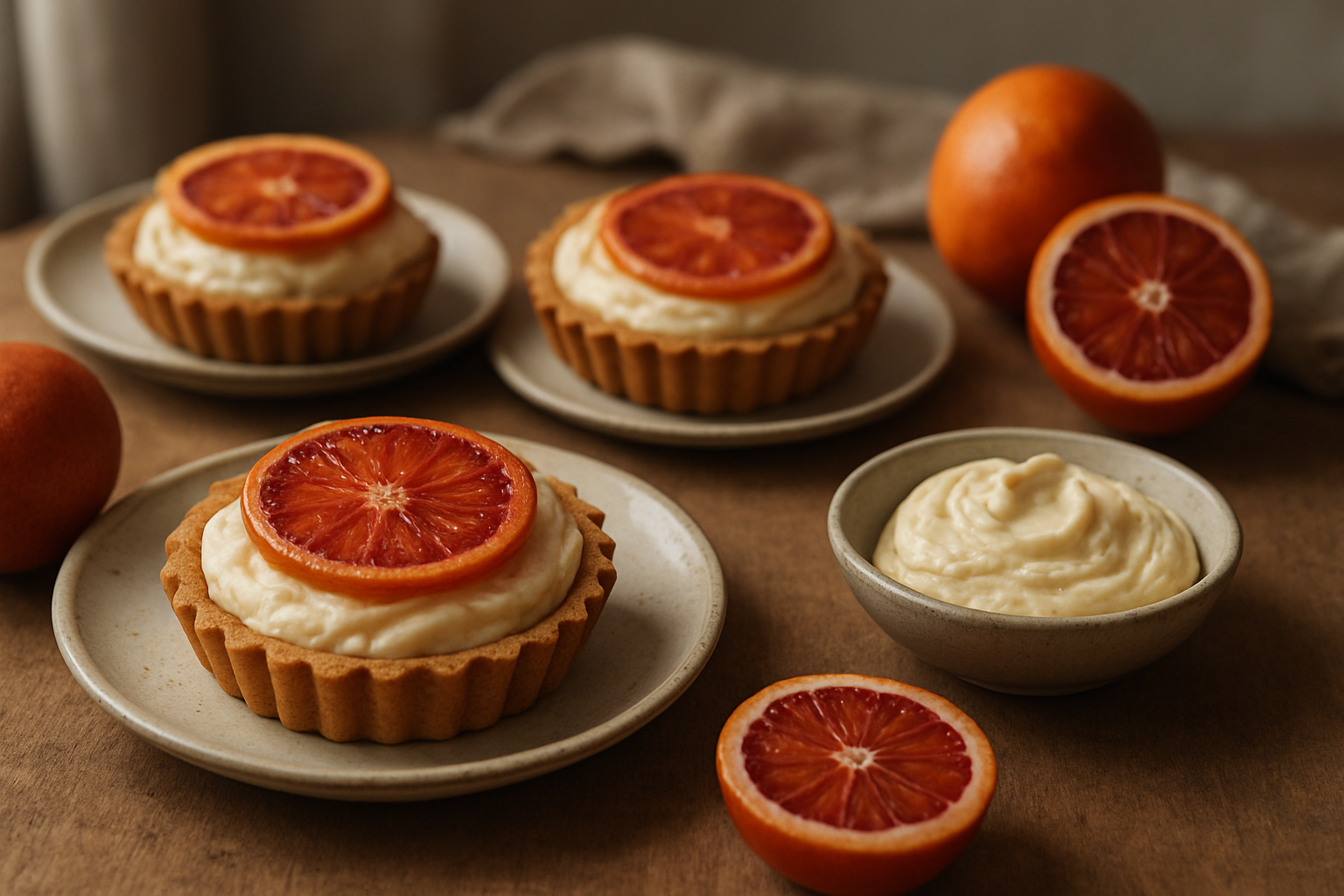
Delicate Orange Cream Tartlets – Perfect Spring Dessert Recipe
🛒 Ingredients
- ✓
200 g plain flour
- ✓
1 tsp baking powder
- ✓
100 g sugar
- ✓
1 pinch of salt
- ✓
100 g cold margarine, cut into small pieces
- ✓
1 egg
- ✓
3 blood oranges
- ✓
2 tbsp orange liqueur
- ✓
2 egg whites
- ✓
2 egg yolks
- ✓
250 g low-fat quark
- ✓
1 sachet vanilla custard powder
- ✓
2 tbsp sugar
This recipe is also available in German.
📌 Overview
Orange cream tartlets are a refined German-inspired dessert featuring a crisp shortcrust pastry filled with a light, airy quark cream infused with fresh blood orange juice and a hint of orange liqueur. Popular in regions like Baden-Württemberg and Bavaria, these tartlets combine seasonal citrus freshness with traditional dairy ingredients, making them a perfect spring or summer treat that balances texture and flavour authentically.
👨🍳 Preparation
- 1
Mix the flour, baking powder, sugar and salt in a bowl. Add the cold margarine in small pieces and rub it in with your fingertips until the mixture resembles fine crumbs.
- 2
Add the egg and quickly bring everything together into a smooth shortcrust pastry. Wrap the dough and chill it in the fridge for about 15 minutes.
- 3
Heat the oven to 180°C. Lightly grease a baking tray or tartlet tins with margarine and dust with a little flour.
- 4
Roll out the pastry on a lightly floured surface to about 3 mm thick. Cut out rounds using an 11 cm cutter and line the prepared tartlet tins or moulds, pressing the pastry in gently.
- 5
Bake on the middle shelf for about 25 minutes until pale golden. Leave to cool on a wire rack, then carefully remove from the tins.
- 6
Meanwhile, squeeze the blood oranges. Peel 2 of the oranges and slice them thinly. Drizzle the slices with the orange liqueur and set aside.
- 7
For the filling, whisk the egg whites until stiff. In a separate bowl, beat the egg yolks with the 2 tablespoons of sugar until pale and creamy. Fold in the quark and vanilla custard powder, then stir in 5–6 tablespoons of the freshly squeezed orange juice.
- 8
Gently fold the whisked egg whites into the quark mixture to make a light, airy cream.
- 9
Spoon the cream evenly into the cooled tartlet cases.
- 10
Preheat the grill to a medium setting. Arrange the orange slices on a baking tray lined with baking paper, sprinkle with 2 teaspoons of sugar and grill for 1–2 minutes until lightly caramelised.
- 11
Decorate the tartlets with the caramelised orange slices and chill briefly before serving.
🧠 Why It Works
This dessert succeeds through the harmonious balance of a crumbly, buttery shortcrust pastry that provides a sturdy yet delicate base, paired with a smooth, airy quark filling enriched by the natural acidity and sweetness of blood oranges. The folding of whipped egg whites into the quark custard creates a light texture that contrasts beautifully with the crisp pastry. The caramelised orange slices add a glossy finish and a subtle bitterness that enhances the overall aromatic profile. The interplay of fat from the margarine or butter, acid from the citrus, and sweetness from sugar and liqueur reflects classic German flavour layering, ensuring a well-rounded and regionally coherent dessert.
🛠️ Troubleshooting
Why is my pastry not crisp after baking?
If the pastry is soft or soggy, it may be due to underbaking or excess moisture. Ensure the pastry is rolled evenly to about 3 mm thickness and baked until pale golden. Avoid overfilling with wet ingredients and chill the dough before baking to maintain structure.
How do I prevent the quark filling from curdling?
Fold the whipped egg whites gently into the quark mixture to maintain airiness and avoid overmixing. Use fresh eggs and incorporate the orange juice gradually to prevent acid-induced curdling.
What if the caramelised orange slices become too bitter?
Caramelise the orange slices briefly under the grill, watching closely to avoid burning. Using thin, even slices and sprinkling sugar evenly helps achieve a balanced caramelisation without bitterness.
How should I store leftover tartlets?
Store tartlets in an airtight container in the refrigerator and consume within 1–2 days to preserve the crispness of the pastry and freshness of the filling.
Can I reheat the tartlets before serving?
It is best to serve these tartlets chilled or at room temperature. Reheating may soften the pastry and alter the texture of the filling.
💡 Tips and Variations
- •
For a richer version, use good butter instead of margarine and swap the low-fat quark for full-fat quark for an especially creamy filling.
- •
For the neatest finish and most even bake, metal tartlet tins with loose bases work particularly well.
- •
The real character of this dessert comes from the bright, fresh flavour of the orange, so it’s worth using the best fruit you can find.
- •
For a vegetarian or vegan-style alternative, use a plant-based quark alternative and replace the egg whites with aquafaba to make the filling without eggs.
- •
You can also use mandarins or grapefruit instead of oranges if you’d like a slightly different citrus note.
- •
A small splash of orange liqueur in the cream deepens the flavour beautifully and gives the filling a little extra warmth.
- •
For a gluten-free version, use a gluten-free flour blend and a gluten-free custard powder alternative.
- •
What makes these tartlets so lovely is the contrast between the crisp pastry and the soft, airy citrus cream, giving you a dessert with both freshness and texture.
📦 Storage
Keep the tartlets chilled in the fridge and enjoy within 1–2 days for the best flavour and texture.
🍷 Pairing
A light Mosel Riesling Kabinett complements the orange cream tartlets beautifully, its gentle acidity and subtle sweetness enhancing the citrus freshness and balancing the creamy quark filling. A dry Weissburgunder from Baden offers a refined mineral backbone and delicate fruit notes that harmonise with the tartlets' buttery pastry and aromatic orange liqueur. For an international touch, an Italian Vermentino brings lively fruitiness and a clean, crisp finish, echoing the dessert's bright citrus character while adding Mediterranean elegance to the pairing experience.
❓ F.A.Q.
Can I make orange cream tartlets ahead of time?
Yes, you can prepare the tartlet shells and filling separately in advance. Store the baked shells in an airtight container at room temperature for up to two days and keep the filling chilled. Assemble and decorate with caramelised orange slices shortly before serving to maintain freshness and texture.
What is the best type of quark to use for these tartlets?
Low-fat quark is traditional and provides a light texture, but for a richer, creamier filling, full-fat quark is recommended. Both options are authentic to German cuisine and will work well depending on your preference.
How can I adapt this recipe for a gluten-free diet?
Use a gluten-free flour blend suitable for baking and substitute the vanilla custard powder with a gluten-free alternative. Ensure all other ingredients, like baking powder, are certified gluten-free to maintain safety and flavour.
What seasonal variations can I try with this tartlet recipe?
While blood oranges are ideal in winter and early spring, you can substitute mandarins or grapefruit for a different citrus profile. In summer, consider using fresh summer oranges or even lemon zest to brighten the filling.
Is there a vegan alternative for the quark filling?
Yes, plant-based quark alternatives combined with aquafaba instead of egg whites can replicate the light, creamy texture of the filling, making the tartlets suitable for vegan diets without compromising flavour.
🏛️ History and Tradition
Orange cream tartlets are a modern interpretation rooted in traditional German baking, where quark-based desserts have long been cherished. Quark, a fresh dairy product common in southern Germany and Austria, forms the basis of many classic pastries and cakes. The use of blood oranges and caramelised citrus reflects seasonal adaptations popular in regions like Baden-Württemberg and Bavaria, especially during spring and early summer. This dessert embodies the German culinary ethos of balancing simplicity with refined flavour, showcasing regional ingredients and techniques that reinforce cultural identity and gastronomic heritage.
These little tartlets are such a lovely way to bring a bit of brightness to the table, whether you’re making pudding for a quiet weekend lunch or something special for guests. The combination of crisp pastry, soft orange cream and glossy caramelised fruit is simple but wonderfully effective. Do give them a try at home – they’re far easier than they look, and perfect for sharing with family and friends.
Rate this recipe
Click or tap the stars to rate