
Alltagsküche
Kochen, wie es zuhause schmeckt
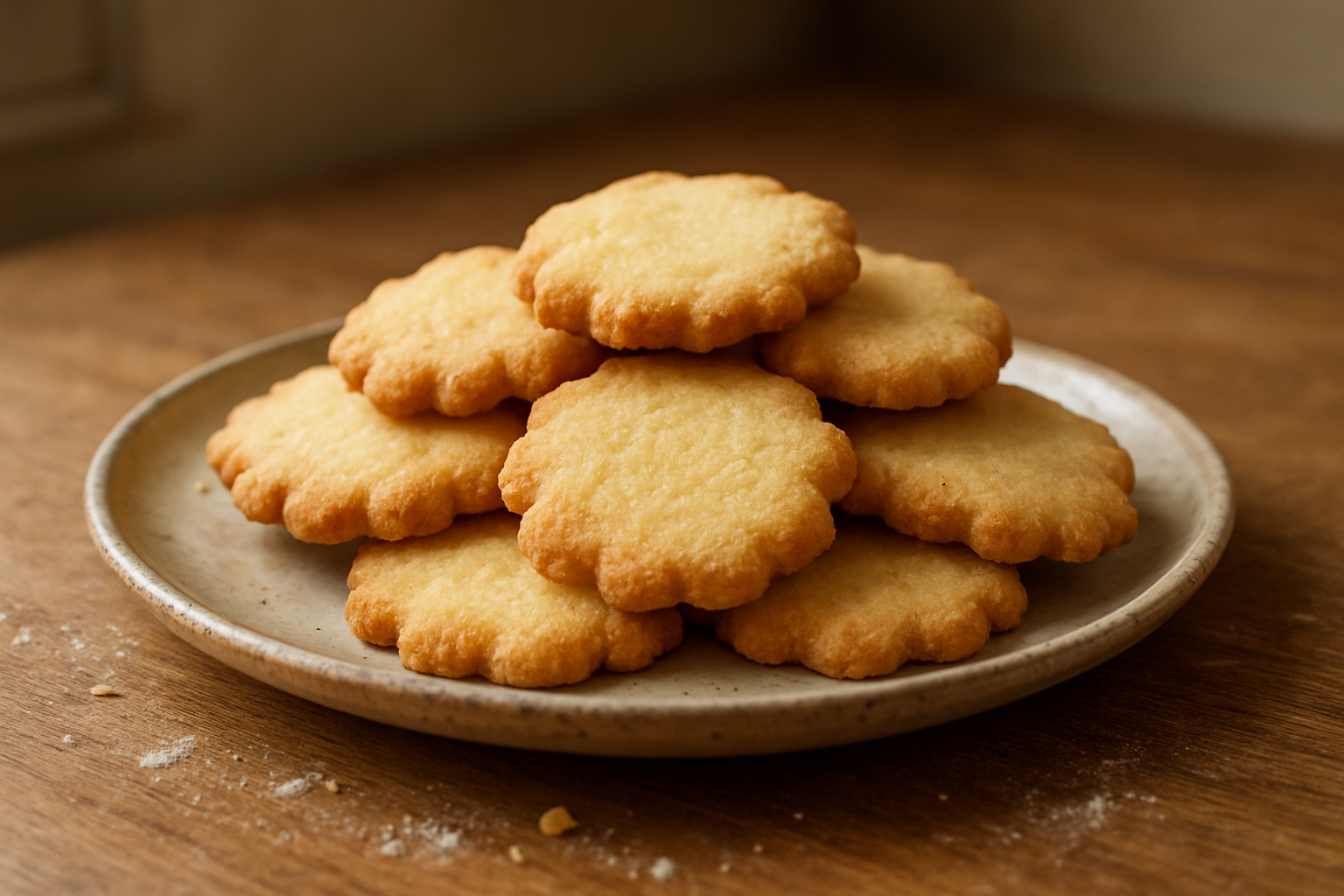
Crisp Butter Biscuits Without Eggs – Classic German Baking for Everyday
🛒 Ingredients
- ✓
150 g butter
- ✓
100 g sugar
- ✓
1 sachet vanilla sugar
- ✓
250 g plain flour
This recipe is also available in German.
📌 Overview
Crisp butter biscuits without eggs are a beloved everyday bake in German kitchens, especially in regions like Bavaria and Franconia. These biscuits rely on rich butter and simple ingredients to create a light, crunchy texture without any raising agents. Their buttery aroma and delicate crispness make them a timeless treat enjoyed year-round, embodying authentic German baking traditions.
👨🍳 Preparation
- 1
Melt the butter gently in a small saucepan over a low heat until fully liquid. Take it off the heat and leave it to cool until it firms up slightly again but is still soft enough to spread.
- 2
Transfer the cooled butter to a mixing bowl and beat with an electric hand whisk until light and fluffy. Add the sugar and vanilla sugar, then beat again until smooth and creamy.
- 3
Sift in the flour and mix with the dough hooks on a low speed until you have a smooth, slightly sticky dough.
- 4
Wrap the dough in cling film and chill it in the fridge for about 30 minutes, so it firms up and is easier to roll out.
- 5
Heat the oven to 190°C conventional. Dust your work surface and rolling pin generously with flour.
- 6
Roll out the dough in batches as thinly as possible, dusting with a little more flour as needed to stop it sticking.
- 7
Cut out biscuits using your favourite cutters and carefully transfer them with a palette knife to a baking tray lined with baking parchment. Leave a little space between them, as they will spread slightly in the oven.
- 8
Bake on the middle shelf for about 10 minutes, until golden with lightly browned edges.
- 9
Remove the tray from the oven and leave the biscuits to cool completely on the tray. This helps them become especially crisp.
🧠 Why It Works
This recipe balances the rich creaminess of butter with the subtle sweetness of sugar and vanilla, creating a smooth dough that bakes into perfectly crisp biscuits. The absence of eggs and raising agents highlights the butter’s role in providing moisture and tenderness, while chilling the dough ensures it rolls out thinly and bakes evenly. The gentle caramelisation of sugar during baking adds depth, and cooling on the tray allows the biscuits to firm up, achieving their signature crunch. This method respects traditional German baking principles, focusing on ingredient harmony and texture precision.
🛠️ Troubleshooting
Why are my biscuits too soft after baking?
If biscuits remain soft, they may need longer baking or cooling time. Ensure the dough is rolled thinly and bake until edges are golden. Cooling on the tray is essential for crispness.
How can I prevent the dough from sticking while rolling?
Chill the dough well before rolling and dust the work surface and rolling pin generously with flour. Rolling from the centre outwards helps maintain even thickness.
What if the biscuits spread too much during baking?
Make sure the butter is not too warm when mixing. Chilling the dough before baking and spacing biscuits adequately on the tray prevents excessive spreading.
Can I reheat the biscuits if they lose crispness?
Yes, briefly warming them in a low oven (around 150°C) for a few minutes can restore crispness without drying them out.
💡 Tips and Variations
- •
For a richer version, use a really good-quality salted butter, or replace a little of the butter with browned butter for a deeper, nuttier flavour.
- •
For neat, even biscuits, use a large rolling pin dusted with flour and always roll from the centre outwards.
- •
The real star here is the buttery flavour, with just a gentle hint of vanilla in the background.
- •
For a vegan version, swap the butter for a plant-based baking block and use a little vanilla extract in place of the vanilla sugar.
- •
For a different texture, you can use coconut fat instead of butter, which gives the biscuits a subtle exotic note.
- •
A small squeeze of lemon juice in the dough lifts the flavour beautifully and adds a fresh edge.
- •
For a quick gluten-free adaptation, replace the plain flour with a gluten-free flour blend, keeping an eye on the dough so the texture stays similar.
- •
The secret to these biscuits lies in getting the butter to the right temperature and rolling the dough gently and evenly – that’s what gives them their delicate, crisp finish.
📦 Storage
Keep the butter biscuits in an airtight biscuit tin, where they will stay fresh for several days. After a day in the tin, they will soften slightly and develop a lovely, more mellow texture.
🍷 Pairing
These crisp butter biscuits pair exquisitely with a vibrant Mosel Riesling, whose lively acidity and fruity notes cut through the buttery richness, enhancing the biscuit’s delicate sweetness. A Silvaner from Franconia complements the texture with its subtle earthiness and balanced minerality, reinforcing the German culinary heritage. For an international touch, an Italian Pinot Grigio offers a fresh, crisp profile with gentle mineral undertones that harmonise beautifully with the biscuits’ light, crisp character, making each bite a refined experience.
❓ F.A.Q.
Can I make these butter biscuits vegan?
Yes, replace the butter with a plant-based baking block and substitute vanilla sugar with vanilla extract to keep the flavour authentic while making the biscuits vegan-friendly.
How do I ensure the biscuits turn out crisp without eggs or raising agents?
The key is to use softened but not melted butter, chill the dough before rolling, and bake at the right temperature. Cooling the biscuits on the baking tray after baking also helps them crisp up perfectly.
Can I prepare the dough in advance?
Absolutely. Wrap the dough tightly in cling film and refrigerate for up to 24 hours. This resting period improves flavour and makes rolling easier.
Is it possible to make these biscuits gluten-free?
Yes, substitute plain flour with a gluten-free flour blend. Monitor the dough’s consistency as gluten-free flours can vary, adjusting flour quantity slightly if needed.
What is the best way to store these butter biscuits?
Store them in an airtight biscuit tin at room temperature. They stay fresh for several days and soften slightly after a day, developing a more mellow texture.
🏛️ History and Tradition
Butter biscuits without eggs have a long-standing place in German baking, particularly in southern regions like Bavaria where butter-rich pastries are traditional. Historically, these biscuits were made during festive seasons and everyday occasions alike, prized for their simplicity and buttery flavour. Their egg-free nature reflects resourceful baking practices, especially in times when eggs were scarce. This recipe embodies the German ethos of straightforward, high-quality ingredients and careful technique, reinforcing cultural identity and culinary heritage in modern kitchens.
There’s something so comforting about a simple batch of homemade butter biscuits, and these are proof that you don’t need a long list of ingredients to make something truly delicious. Crisp, buttery and wonderfully easy to bake, they’re perfect for sharing over a quiet cup of tea or setting out for family and friends. Give them a go in your own kitchen – I think they’ll quickly become a favourite.
Rate this recipe
Click or tap the stars to rate