
Alltagsküche
Kochen, wie es zuhause schmeckt
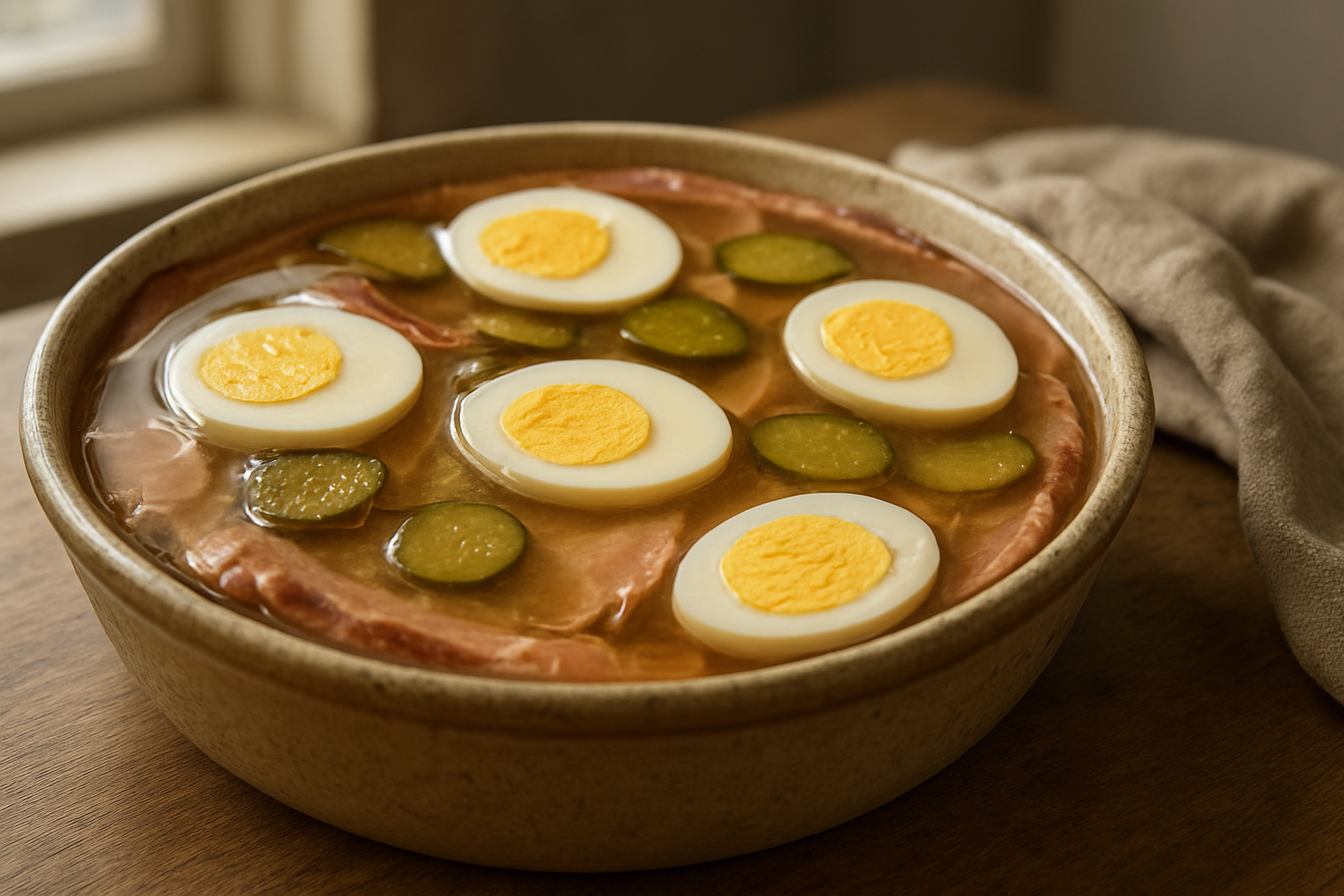
Eggs in Aspic: Classic German Recipe with Ham and Gherkins
🛒 Ingredients
- ✓
4 eggs
- ✓
500 ml water
- ✓
100 ml white wine vinegar
- ✓
1 bay leaf
- ✓
5 black peppercorns
- ✓
1 tsp salt
- ✓
1 tsp sugar
- ✓
6 sheets of gelatine
- ✓
4 slices cooked ham
- ✓
4 pickled gherkins
📊 Nutritional Information
This recipe is also available in German.
Explore these articles
📌 Overview
Eggs in aspic are a classic cold starter made with hard-boiled eggs, cooked ham, pickled gherkins and a clear, tangy vinegar jelly set with gelatine. This traditional German-style dish works well for cold platters, buffets, festive meals, family gatherings or as a savoury make-ahead starter with remoulade, fried potatoes or bread. The goal is an aspic that is firm enough to slice but still delicate rather than rubbery.
For a reliable result, three details matter: the gelatine must be correctly measured, the vinegar stock needs to be well balanced with salt and sugar, and the dish must be chilled long enough to set fully. The stock should be warm, not boiling, when the soaked gelatine is stirred in. A thin first layer of aspic also helps fix the eggs, ham and gherkins before the remaining liquid is poured over, so the ingredients do not float or shift.
If you like classic egg starters, Devilled Eggs are a zesty alternative for celebrations and buffets. For a lighter everyday option, try the Egg Skewers with Cream Cheese and Rocket. If you want a heartier German dish, the Hearty Farmer’s Breakfast with Pickled Herring is a stronger, more rustic option. For a more elegant egg-based recipe, Eggs Benedict with Béarnaise Sauce offers a richer brunch-style contrast.
👨🍳 How to make Eggs in Aspic
- 1
Boil the eggs in gently simmering water for about 10 minutes until hard-boiled. Cool them immediately under cold water, peel carefully and leave to cool completely.
- 2
For the aspic stock, put the water, white wine vinegar, bay leaf, peppercorns, salt and sugar in a saucepan. Bring briefly to the boil, remove from the heat and leave the spices to infuse for 10 minutes.
- 3
Soak the gelatine sheets in cold water for 5 to 10 minutes until softened. The water must be cold so the gelatine does not dissolve too early.
- 4
Strain the spiced stock through a fine sieve into a measuring jug. Measure 500 ml of liquid. If some has evaporated, top up with a little water to reach 500 ml.
- 5
Squeeze out the gelatine sheets and stir them into the warm, no longer boiling stock until fully dissolved. Stir slowly to avoid creating too many air bubbles.
- 6
Rinse a terrine dish or small moulds with cold water. Line the dish with the ham slices so the base and sides are covered as evenly as possible.
- 7
Slice the pickled gherkins. Arrange the eggs and gherkin slices on the ham. For cleaner slices, you can halve the eggs lengthways and place them cut side down.
- 8
Pour in only a small amount of aspic at first, just enough to fix the ingredients. Chill the dish for 15 to 20 minutes until this first layer begins to set.
- 9
Slowly pour the remaining aspic over the top. Make sure the eggs, ham and gherkins are fully covered.
- 10
Chill the eggs in aspic for at least 8 to 12 hours, preferably overnight, until completely set.
- 11
To unmould, dip the dish briefly in warm water, loosen the edges carefully and turn the aspic out onto a cold plate. Serve well chilled with remoulade, fried potatoes, bread or salad.
🧠 Why It Works
This recipe works because the acidity, salt, sugar, spices and gelatine are balanced in a clear ratio. White wine vinegar gives the aspic its typical freshness, sugar rounds off the sharpness, and bay leaf and peppercorns add classic savoury depth. The higher gelatine quantity makes the aspic firm enough to slice and unmould while holding the eggs and ham in place. The stock should not be boiling when the gelatine is added, because excessive heat can weaken the set. The first short chilling stage fixes the ingredients before the rest of the liquid is added. This produces a cleanly layered aspic that slices neatly after a full overnight chill.
🛠️ Troubleshooting
Why is my aspic not setting?
This is usually caused by too little gelatine, too much liquid or gelatine that has not fully dissolved. For 500 ml of stock, you need enough gelatine for a sliceable set. Always soak the sheets in cold water, squeeze them out and dissolve them completely in warm, not boiling, stock.
Why is my aspic too firm or rubbery?
Too much gelatine or very cold, prolonged chilling can make aspic feel firm and rubbery. Use the stated quantity and let the aspic set in the fridge, not in the freezer.
How do I stop the eggs floating in the aspic?
Pour in a thin first layer of aspic and let it partly set in the fridge before adding the rest. This fixing layer prevents the eggs and gherkins from floating upwards or moving around.
Why is my aspic cloudy instead of clear?
Cloudy aspic is often caused by boiling the stock too hard after seasoning, trapped air bubbles or spices that were not strained out carefully. Strain the stock through a fine sieve, stir the gelatine gently and avoid shaking the mould.
What can I do if the aspic tastes too sharp?
Next time, reduce the vinegar slightly or balance the acidity with a little more sugar. If the stock is already made, you can dilute it with a small amount of water before it sets, but the gelatine quantity must match the final liquid volume.
How do I unmould eggs in aspic cleanly?
Dip the mould in warm water for only a few seconds, loosen the edge gently with a thin knife and turn the aspic out onto a cold plate. If you warm it for too long, the outer layer will melt.
Can you freeze eggs in aspic?
No. Freezing damages the gel structure, and after thawing the aspic becomes watery. Eggs in aspic should be chilled, not frozen.
Can eggs in aspic be reheated?
No. Eggs in aspic are served cold. Heat melts the gelatine, destroys the shape and removes the sliceable texture that defines the dish.
💡 Tips and Variations
- •
For a clearer look, strain the stock through a fine sieve or muslin cloth after infusing, then stir the gelatine in slowly to avoid air bubbles.
- •
If you are preparing eggs in aspic for a buffet, use small individual moulds. They are easier to unmould and look neater on a cold platter.
- •
Cooked ham is the classic mild option. Black Forest ham gives a smokier flavour, but it is saltier, so use it thinly.
- •
For a vegetarian version, replace the ham with grilled aubergine slices, smoked tofu or blanched vegetables. For a fully vegetarian set, replace gelatine with agar-agar.
- •
If using agar-agar, follow the packet instructions carefully. It usually needs to be boiled in the liquid and often sets firmer than gelatine, so precise dosing matters.
- •
Pickled gherkins can be joined by small cornichons, blanched carrots, peas or pieces of asparagus. Make sure all additions are well drained before adding them to the mould.
- •
For extra freshness, add a little lemon zest or a few drops of lemon juice to the stock. Use only a small amount so the vinegar note does not become too sharp.
- •
The most important ingredient is time: eggs in aspic need several hours in the fridge. If unmoulded too early, the aspic may tear or collapse.
📦 Storage
Eggs in aspic should be stored well covered in the fridge and eaten within 2 days. It is best to unmould the dish shortly before serving so the surface stays smooth and does not dry out. Cover leftovers again and keep them chilled. Do not freeze or reheat, as gelatine loses its sliceable structure. For a buffet, serve the aspic well chilled and avoid leaving it at room temperature for too long.
🍷 Pairing
A Mosel Riesling Kabinett pairs well with eggs in aspic because its clear acidity echoes the vinegar and keeps the dish fresh. A Franconian Silvaner is a softer match, supporting the ham, egg and gherkin with gentle savoury notes. If you prefer an international option, a light Pinot Grigio with fresh minerality works without overpowering the aspic. For a non-alcoholic pairing, choose sparkling water with lemon, a dry herbal infusion or a light apple spritzer.
❓ F.A.Q.
How long do eggs in aspic need to set?
Eggs in aspic need at least 8 to 12 hours in the fridge to set properly. Overnight chilling is the most reliable option because the gelatine has time to bind fully and the dish is easier to unmould.
How much gelatine do I need for eggs in aspic?
For 500 ml of liquid, this recipe uses 6 gelatine sheets to create a sliceable aspic that can be unmoulded and served neatly.
Can I make eggs in aspic the day before?
Yes. Eggs in aspic are ideal for making ahead because they need overnight chilling. Prepare them the day before, keep them covered in the fridge and unmould shortly before serving.
What gelatine is best for eggs in aspic?
Gelatine sheets are convenient for classic eggs in aspic because they are easy to measure and dissolve clearly in warm stock. Soak them in cold water first and never add them to boiling liquid.
Can I make vegetarian eggs in aspic?
Yes, but two changes are needed: replace the ham with vegetables, smoked tofu or grilled aubergine, and replace gelatine with a vegetarian setting agent such as agar-agar.
What do you serve with eggs in aspic?
Remoulade, fried potatoes, bread, potato salad, green salad or a cold platter with pickles all work well. The side dish should complement the acidity of the aspic without making the meal too heavy.
How do you unmould eggs in aspic?
Dip the mould briefly in warm water, loosen the edge gently and turn the aspic out onto a cold plate. Small silicone moulds are often easier to unmould than a large terrine.
Can you freeze eggs in aspic?
No. Freezing makes the aspic watery and unstable after thawing, and the eggs also lose texture. Eggs in aspic should always be served freshly chilled.
🏛️ History and Tradition
Eggs in aspic, known as 'Eier in Aspik' in German, have been a celebrated dish in German culinary tradition since the 19th century, especially in southern regions like Bavaria and Franconia. Historically served during festive occasions such as Christmas and Easter, this dish showcases the art of aspic preparation, a hallmark of classic German cold starters. Its combination of preserved flavours and elegant presentation reflects the cultural emphasis on seasonal, locally sourced ingredients and meticulous cooking techniques, reinforcing its status as a staple in traditional German cuisine and festive tables.
Eggs in aspic work best when the stock, gelatine and chilling time are handled precisely. Hard-boiled eggs, ham, pickled gherkins and tangy vinegar jelly create a classic cold starter for buffets, festive platters and traditional meals. The key details are a sliceable gelatine ratio, a first fixing layer and enough time in the fridge, so the aspic is clear, stable and easy to serve.
Rate this recipe
Click or tap the stars to rate
Explore these guides
-
 Easy Egg Recipes: 30 Classic Dishes for Every Day
Discover 30 delicious and easy egg recipes perfect for busy weeknights, hearty breakfasts, and classic German-inspired family meals.
-
 50 Egg Recipes: Easy, Quick and Delicious Egg Dishes for Every Meal
Discover 50 easy, quick, and delicious egg recipes for every meal. From breakfast to dinner, find simple egg dishes you can cook at home in minutes.