
Alltagsküche
Kochen, wie es zuhause schmeckt
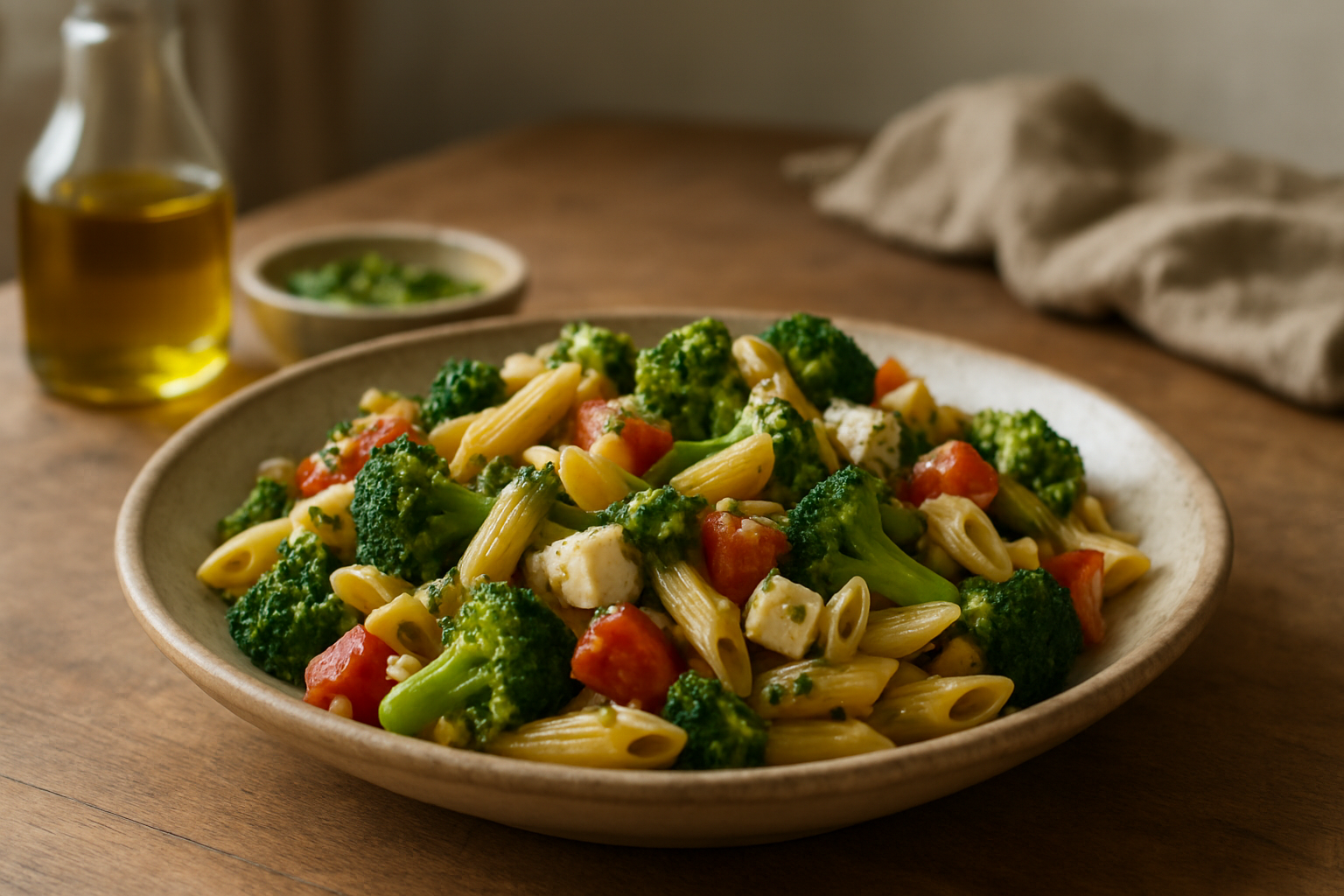
Broccoli Pasta Skillet with Feta and Pesto – Quick Mediterranean Dinner
🛒 Ingredients
- ✓
150 g pasta (such as penne or fusilli)
- ✓
200 g broccoli
- ✓
2 medium tomatoes
- ✓
1 small onion
- ✓
1 garlic clove
- ✓
100 g feta
- ✓
2 tbsp pesto (basil or your favourite kind)
- ✓
2 tbsp olive oil
- ✓
Salt
This recipe is also available in German.
📌 Overview
Broccoli pasta skillet is a quick, flavourful one-pan meal combining tender broccoli, al dente pasta, fresh tomatoes, and creamy feta cheese. Rooted in Mediterranean-inspired vegetarian cooking, this dish offers a balanced, wholesome option ideal for busy weekdays or light dinners. Its vibrant ingredients and simple technique make it a reliable favourite across home kitchens.
👨🍳 Preparation
- 1
Bring a large pan of well-salted water to the boil.
- 2
Add the pasta and cook for about 5 minutes.
- 3
Meanwhile, cut the broccoli into small florets and add them to the pasta. Cook for a further 5 minutes, until the pasta is al dente and the broccoli is just tender.
- 4
While that cooks, finely dice the tomatoes, onion and garlic.
- 5
Heat the olive oil in a large frying pan over a medium heat and gently cook the onion and garlic until softened and translucent.
- 6
Add the diced tomatoes and cook briefly until they begin to soften.
- 7
Drain the pasta and broccoli, then add them to the frying pan with the tomatoes.
- 8
Dice the feta and scatter it over the mixture in the pan.
- 9
Stir through the pesto and warm everything through briefly so the flavours come together.
- 10
Season with salt to taste and serve straight away.
🧠 Why It Works
This broccoli pasta skillet balances textures and flavours expertly: al dente pasta provides a firm bite, while lightly cooked broccoli retains freshness and crunch. The salty creaminess of feta contrasts with the bright acidity of tomatoes and the aromatic herbal notes of pesto, creating a harmonious fat–acid–salt interplay. Olive oil gently softens the onion and garlic, building a flavour base that ties the dish together. The short cooking time preserves the vegetables’ integrity, reflecting Mediterranean culinary principles and ensuring a satisfying, authentic taste experience.
🛠️ Troubleshooting
Why is my broccoli too soft or mushy in the pasta skillet?
Overcooking broccoli causes it to become mushy; add it to the pasta water only during the last 5 minutes and drain promptly to maintain a tender-crisp texture.
How do I prevent the pasta from drying out when reheating leftovers?
Reheat gently in a frying pan with a splash of water or olive oil to restore moisture and prevent the pasta from sticking or drying.
What if the dish tastes bland after cooking?
Adjust seasoning with salt and consider adding a squeeze of lemon juice before serving to brighten and balance the flavours.
Can I prepare this dish in advance?
Yes, you can cook and store it in the fridge for up to 2 days, but reheat gently to preserve texture and flavour.
💡 Tips and Variations
- •
For a richer version, use a creamier sheep’s cheese in place of standard feta, or add a handful of toasted pine nuts for extra texture.
- •
A useful kitchen tip: cook the pasta and broccoli together in a large pan to save both time and washing up.
- •
What makes this dish shine is the contrast between the fresh vegetables and the salty, creamy feta.
- •
This recipe is already vegetarian; for a vegan version, simply swap the feta for a plant-based alternative.
- •
Green beans or courgettes work beautifully here if you’d like to use them instead of broccoli.
- •
A squeeze of lemon juice just before serving lifts all the flavours and adds a lovely freshness.
- •
For a quick gluten-free and vegan adaptation, use gluten-free pasta and replace the feta with marinated tofu or a spoonful of cashew cream.
- •
The secret to this dish is the short cooking time, which keeps the broccoli with a bit of bite and the pasta perfectly al dente.
📦 Storage
Any leftovers can be kept covered in the fridge for up to 2 days. To reheat, warm gently in a frying pan with a splash of water or a little olive oil so the pasta doesn’t dry out.
🍷 Pairing
A dry German Riesling with its crisp acidity beautifully complements the fresh, vibrant flavours of the broccoli pasta skillet, enhancing the dish’s Mediterranean character. A Weißburgunder from Baden offers a fruity, subtle minerality that harmonises with the creamy feta and herbaceous pesto. For an international touch, an Italian Vermentino’s bright citrus notes and balanced body echo the dish’s freshness, while a light Pfalz Pinot Noir provides gentle tannins and red fruit aromas that support the pasta’s texture without overwhelming the delicate vegetable flavours.
❓ F.A.Q.
Can I use other vegetables instead of broccoli in this pasta skillet?
Yes, green beans or courgettes are excellent alternatives that maintain the dish’s texture and freshness while complementing the feta and pesto flavours.
How do I make this broccoli pasta skillet vegan?
Replace the feta with a plant-based cheese alternative or marinated tofu, and ensure the pesto is vegan or homemade without cheese.
What type of pasta works best for this recipe?
Short pasta shapes like penne or fusilli are ideal as they hold the sauce well and mix easily with broccoli florets.
How can I keep the broccoli crisp when cooking with pasta?
Add broccoli florets to the boiling pasta water during the last 5 minutes of cooking to ensure they remain tender yet slightly firm.
Is this dish suitable for gluten-free diets?
Absolutely, by substituting regular pasta with gluten-free varieties and using vegan feta alternatives if needed, this recipe can be adapted for gluten-free and vegan diets.
🏛️ History and Tradition
Broccoli pasta skillet is a modern interpretation of Mediterranean one-pan meals that combine fresh vegetables, cheese, and pasta for quick, wholesome nourishment. Rooted in Southern European culinary traditions, such dishes emphasise simplicity, seasonality, and balanced flavours. This recipe reflects the German home cook’s preference for practical, flavourful meals that can be prepared swiftly on busy days. Its vegetarian nature aligns with growing trends in Germany and neighbouring countries towards plant-based eating, reinforcing its relevance and authenticity within contemporary German cuisine.
With just a handful of ingredients and very little effort, you can have a balanced, flavour-packed meal on the table in no time. The combination of tender broccoli, salty feta and fragrant pesto makes this a dish well worth keeping in regular rotation. Give it a try at home and don’t be surprised if it becomes a family favourite to share again and again.
Rate this recipe
Click or tap the stars to rate