
Alltagsküche
Kochen, wie es zuhause schmeckt
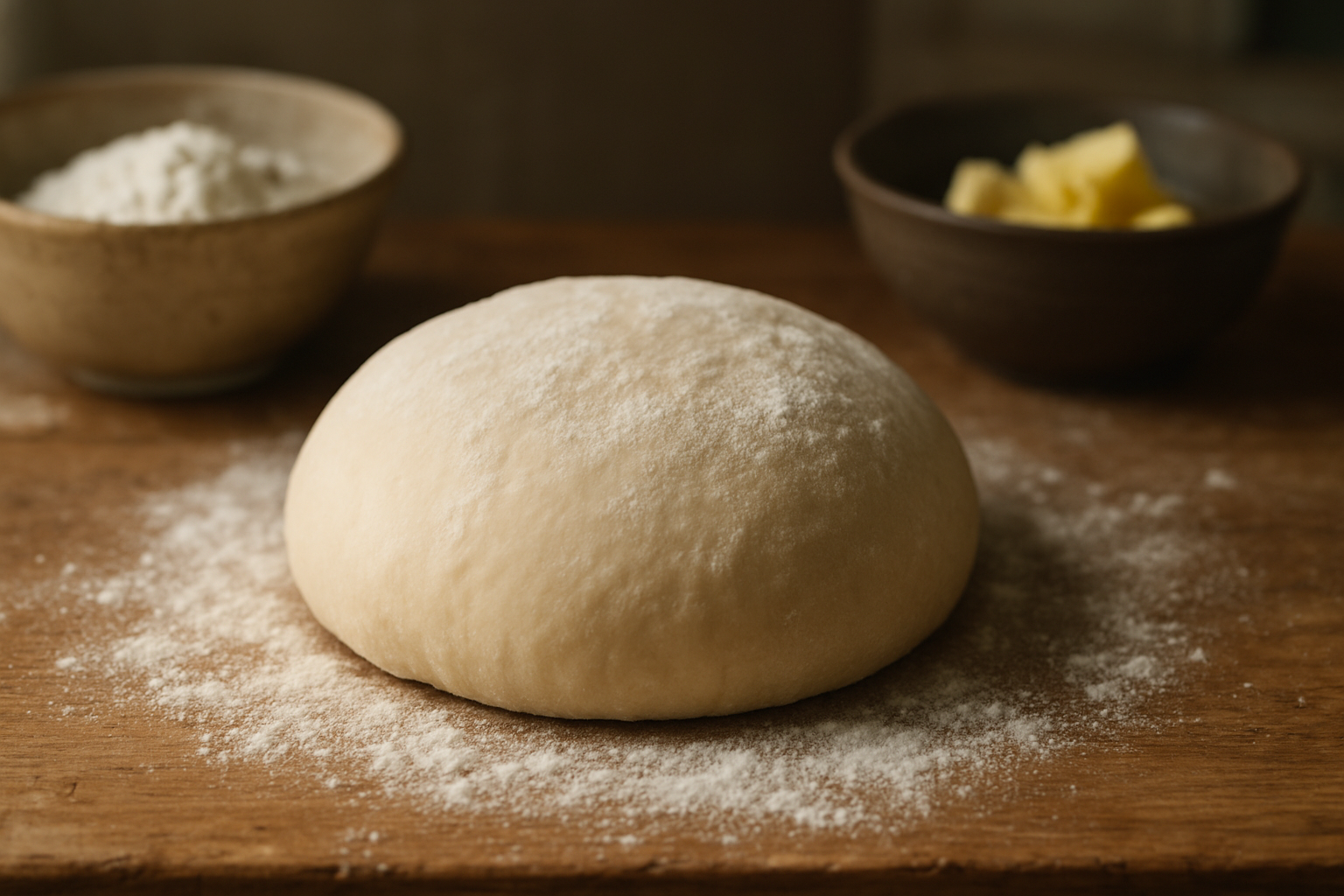
Basic Yeast Dough for Pizza, Flatbread and Savory Bakes
🛒 Ingredients
- ✓
500 g strong white flour or Type 550 wheat flour
- ✓
1 tsp salt
- ✓
20 g fresh yeast
- ✓
1 tsp sugar
- ✓
300 ml lukewarm water
- ✓
40 g soft butter
- ✓
A little flour for dusting the work surface
📊 Nutritional Information
This recipe is also available in German.
📌 Overview
This basic yeast dough is a simple all-purpose dough made with wheat flour, fresh yeast, lukewarm water, a little sugar, salt and soft butter. It is suitable for pizza-style bakes, savory sheet cakes, flatbreads, rolls or filled yeast pastries. The dough needs only about 10 minutes of active preparation and around 30 minutes of rising time before it can be rolled out, topped or shaped. The key is to use lukewarm water rather than hot water, knead until the dough feels smooth and elastic, and let it rise covered until it has visibly increased in volume.
👨🍳 How to make Basic Yeast Dough for Pizza, Flatbread and Savory Bakes
- 1
Mix the flour and salt in a large bowl. Keeping the salt distributed in the flour helps season the dough evenly without putting concentrated salt directly on the yeast.
- 2
Crumble the fresh yeast into the lukewarm water, add the sugar and stir until the yeast has dissolved. The water should feel warm but not hot; if it is too hot, it can weaken or kill the yeast.
- 3
Pour the yeast mixture into the flour and add the soft butter.
- 4
Knead everything for 8 to 10 minutes by hand, or about 5 minutes with a dough hook, until the dough is smooth, elastic and no longer dry or crumbly.
- 5
Shape the dough into a ball on a lightly floured work surface. If it feels very sticky, add only a little extra flour, because too much flour can make the finished bake dense.
- 6
Place the dough back in the bowl, dust lightly with flour, cover with a clean cloth and let it rise in a warm, draft-free place for about 30 minutes, until visibly puffed.
- 7
Roll out, shape or fill the dough according to the recipe you want to make. Add toppings or fillings only after the first rise.
- 8
Bake according to the final recipe. Thin pizza-style bakes usually need a hot oven, while thicker filled or topped doughs may need a slightly longer baking time at a moderate temperature.
🧠 Why It Works
The dough works because Type 550-style flour has enough protein to form a stable gluten structure, while kneading develops elasticity. Fresh yeast, dissolved in lukewarm water with a little sugar, starts fermenting quickly and helps the dough rise in a short time. Salt gives flavour and strengthens the dough structure, while soft butter makes the crumb more tender and easier to roll. The 30-minute rise gives the yeast enough time to loosen the dough before it is shaped or topped.
🛠️ Troubleshooting
Why does my yeast dough not rise?
The water may have been too hot, the yeast may be old, or the dough may be standing in a cold place. Use lukewarm water, check that the yeast is fresh and let the dough rise covered in a warm, draft-free spot.
Why is my yeast dough too sticky?
A slightly sticky dough is normal at first. Knead it for several minutes before adding flour. If it still sticks heavily, add flour only one tablespoon at a time so the dough does not become dry.
Why is my yeast dough dry or tough?
Too much flour was probably added, or the dough was not kneaded long enough. Add a small splash of lukewarm water and knead again until the dough becomes smoother.
Why does the dough shrink back when I roll it out?
It may not have rested long enough, or the gluten is too tight. Cover it and let it rest for another 10 minutes before rolling. This makes the dough easier to stretch.
Why does my yeast dough smell too strong?
The dough may have over-risen or been left in a very warm place for too long. Use it once it has visibly increased in volume rather than waiting until it collapses.
💡 Tips and Variations
- •
For pizza or thin flatbread, roll the dough out thinly after the first rise and bake it in a very hot preheated oven.
- •
For a softer savory sheet cake, roll the dough slightly thicker and let it rest for another 10 to 15 minutes after topping.
- •
Fresh yeast can usually be replaced with dry yeast, but the quantity should be adjusted according to the packet instructions.
- •
For a dairy-free version, replace the butter with a neutral oil or plant-based margarine.
- •
Do not add too much flour while kneading or rolling, because this can make the baked dough firm rather than soft.
- •
For a more aromatic dough, let it rise more slowly in the fridge for several hours after kneading, then bring it back to room temperature before shaping.
📦 Storage
- •
Use the dough immediately after the first rise for the best texture.
- •
The dough can be prepared a few hours ahead and kept covered in the fridge. Let it return to room temperature before rolling it out.
- •
For overnight storage, reduce the yeast slightly and let the dough rise slowly in the refrigerator.
- •
Unbaked yeast dough can be frozen after kneading. Wrap it tightly, freeze for up to 2 months and thaw in the fridge before letting it rise.
- •
Baked items made from this dough are best eaten fresh, but they can usually be reheated briefly in the oven to refresh the texture.
🍷 Pairing
- •
Use this dough as a base for pizza with tomato sauce, vegetables, cheese or cured meats.
- •
For a savory sheet bake, top it with onions, sour cream, herbs, cheese or seasonal vegetables.
- •
It also works for filled rolls, garlic bread, flatbread or simple dinner rolls served with soups and stews.
❓ F.A.Q.
Can I use this basic yeast dough for pizza?
Yes. This dough works well for pizza-style bakes, especially if rolled thinly and baked in a hot preheated oven.
Can I make yeast dough with dry yeast instead of fresh yeast?
Yes. Replace fresh yeast with dry yeast according to the conversion instructions on the packet. Dry yeast is usually mixed directly with the flour or dissolved in liquid depending on the type.
How long does basic yeast dough need to rise?
About 30 minutes is enough for this quick version, as long as the dough is kept warm and visibly increases in volume.
Can I prepare yeast dough in advance?
Yes. You can prepare it ahead and let it rise slowly in the fridge. For best results, use less yeast for a long cold rise and bring the dough to room temperature before shaping.
Can I freeze yeast dough?
Yes. Freeze it after kneading and before the main rise. Thaw it in the fridge, then let it rise at room temperature before rolling or shaping.
How do I make yeast dough soft and elastic?
Use lukewarm water, knead until smooth, avoid adding too much flour and do not skip the rising time. Butter also helps make the dough softer.
🏛️ History and Tradition
Yeast dough is one of the classic foundations of European home baking. Similar basic doughs are used for bread, rolls, pizza-style bakes, savory pastries and sweet enriched breads. The principle is simple: yeast produces gas during fermentation, which loosens the dough and gives baked goods their light texture. This version is a practical everyday dough, enriched with a small amount of butter for a softer crumb and made with Type 550-style wheat flour, which gives enough strength for rolling, shaping and topping.
This basic yeast dough is a useful foundation recipe for many savory bakes. The method is straightforward: dissolve the yeast in lukewarm water, knead the dough until smooth and let it rise until visibly puffed. Once mastered, the same dough can be adapted for pizza, flatbread, rolls, filled pastries or topped sheet bakes.
Rate this recipe
Click or tap the stars to rate