
Alltagsküche
Kochen, wie es zuhause schmeckt
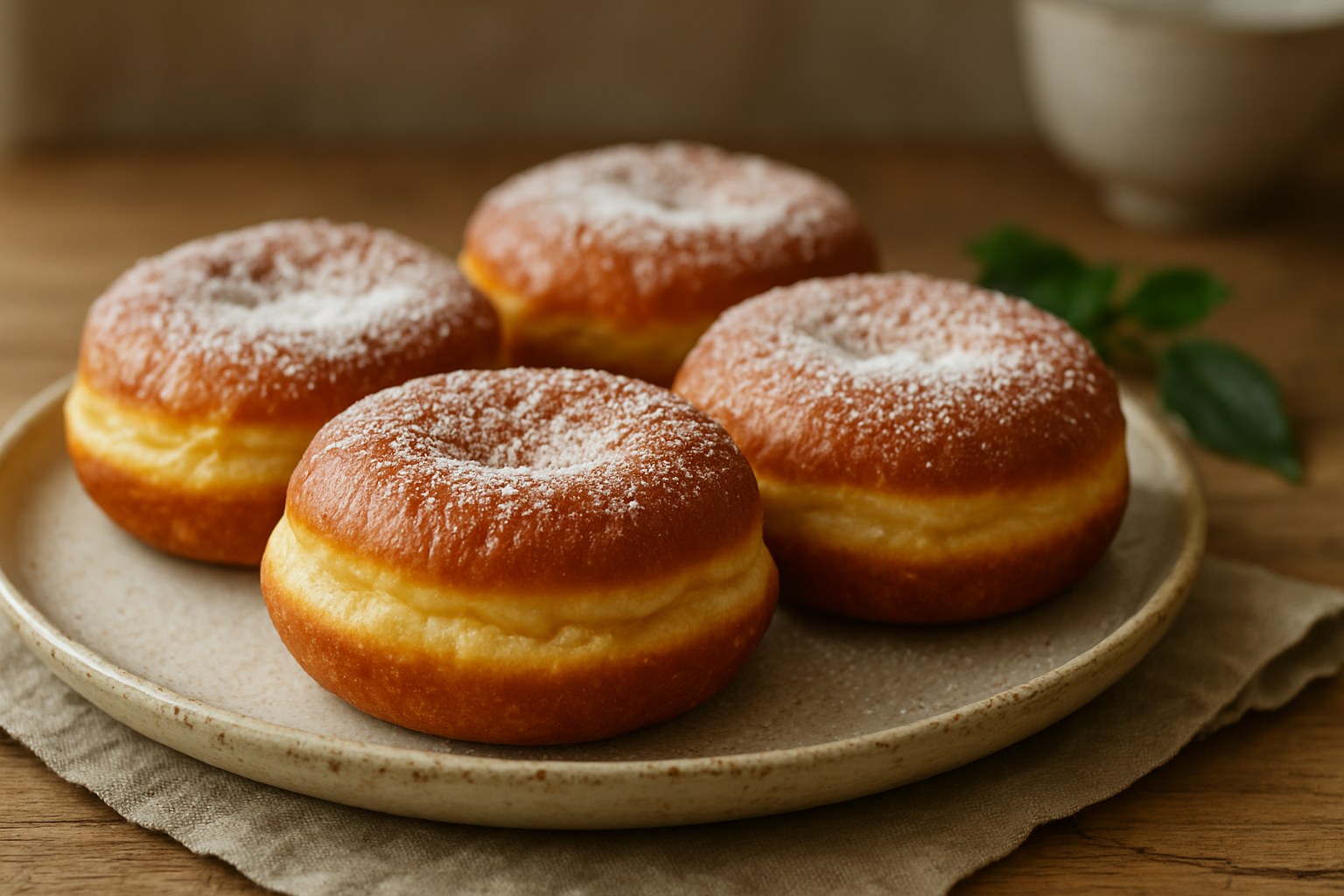
Authentic Ausgezogene Krapfen Recipe – Light & Crispy German Treat
🛒 Ingredients
- ✓
500 g plain flour
- ✓
1 pinch of salt
- ✓
250 ml lukewarm milk
- ✓
20 g fresh yeast
- ✓
30 g sugar
- ✓
50 g butter
- ✓
1 medium organic egg
- ✓
finely grated zest of 1 organic lemon
- ✓
icing sugar, for dusting
- ✓
fat for frying, such as vegetable oil or clarified butter
This recipe is also available in German.
📌 Overview
Ausgezogene Krapfen are a cherished German pastry known for their unique hand-stretched dough that creates a thin, airy centre surrounded by a soft, pillowy rim. Originating from Bavarian and Franconian baking traditions, these light, crisp doughnuts dusted with icing sugar offer nostalgic comfort and a taste of authentic German everyday cuisine.
👨🍳 Preparation
- 1
Mix the flour and salt in a large bowl, then make a well in the centre.
- 2
Dissolve the yeast in the lukewarm milk, stir in the sugar and leave for about 10 minutes until slightly frothy.
- 3
Pour the yeast mixture into the well and add the lemon zest.
- 4
Melt the butter gently, leave it to cool slightly, then add it to the bowl along with the egg.
- 5
Knead everything together by hand or with a stand mixer until you have a smooth, supple dough. If it feels too sticky, work in a little more flour.
- 6
Shape the dough into a ball, cover with a clean tea towel and leave in a warm place for about 30 minutes, or until noticeably risen.
- 7
Divide the dough into 6 equal portions, knead each one briefly again and shape into balls.
- 8
Flatten each ball slightly and press a dip into the middle.
- 9
Carefully stretch the dough from the centre outwards until the middle is thin, rolling the edge slightly inwards so it forms a thicker rim.
- 10
Place the shaped Krapfen on a floured board, cover with a tea towel and leave to rest for another 10 minutes.
- 11
Heat the frying fat in a deep-fat fryer or deep, heavy-based pan to 175°C.
- 12
Fry the Krapfen in batches, placing them into the hot fat with the closed side facing up. Try not to let fat run over the thin centre so it stays pale and airy.
- 13
After 1–2 minutes, turn them over and fry for a further 1–2 minutes until golden.
- 14
Lift out and drain on kitchen paper, dust generously with icing sugar and serve while still warm if you can.
🧠 Why It Works
The success of Ausgezogene Krapfen lies in the delicate balance of ingredients and technique: the yeasted dough combines the richness of butter and egg with the brightness of lemon zest, creating a tender yet elastic texture. Gentle hand-stretching forms a thin centre that fries quickly to a light, airy crispness, while the thicker rim remains soft and pillowy. The interplay of fat from frying and the subtle acidity from lemon zest enhances flavour depth, reflecting the regional German baking heritage and delivering a perfectly balanced, aromatic pastry.
🛠️ Troubleshooting
Why is my Ausgezogene Krapfen dough tearing during stretching?
Tearing usually occurs if the dough is too dry or not kneaded enough. Ensure the dough is smooth and elastic, and use a light touch when stretching, possibly aided by a rolling pin.
How can I avoid greasy Krapfen after frying?
Maintain the frying fat at a steady 175°C and avoid letting fat run over the thin centre. Drain the Krapfen well on kitchen paper immediately after frying.
What if my Krapfen are dense instead of light and airy?
Dense Krapfen often result from insufficient proofing or overworking the dough. Allow the dough to rise until noticeably puffed and handle it gently during shaping.
Can I prepare the dough in advance?
Yes, you can prepare the dough the day before and refrigerate it overnight. Bring it to room temperature before shaping and proofing to ensure proper rising.
How to reheat leftover Krapfen without losing crispness?
Warm them briefly in a preheated oven at 150°C to restore the crisp outer texture while keeping the interior soft.
💡 Tips and Variations
- •
For a richer finish, use clarified butter instead of regular butter for a deeper flavour and an even crisper crust.
- •
A practical tip: a rolling pin used with the lightest touch can help stretch the dough evenly without tearing it.
- •
The real character of these Krapfen comes from the airy yeasted dough and that gentle hint of lemon.
- •
This recipe is already vegetarian. For a vegan version, swap the butter for plant-based margarine and replace the egg with apple purée or soya flour.
- •
For a gluten-free alternative, use a gluten-free flour blend with xanthan gum, though you may need to adjust the handling of the dough slightly.
- •
A small splash of vanilla extract in the dough adds lovely warmth and depth.
- •
For a quick vegan and less sweet variation, use agave syrup instead of sugar and choose a plant-based milk.
- •
The secret to really good Krapfen lies in stretching the dough gently and frying at a steady temperature, so they stay light in the middle and crisp at the edges.
📦 Storage
These are best eaten fresh, but any leftovers can be kept in an airtight container at room temperature for up to 1 day. To refresh them, warm briefly in the oven at 150°C so they crisp up again.
🍷 Pairing
These Ausgezogene Krapfen pair exquisitely with a fresh Mosel Riesling Kabinett, whose bright acidity and delicate fruitiness balance the pastry's sweetness and buttery notes. A light Silvaner from Franconia complements the subtle lemon zest and airy texture with its mineral undertones and moderate acidity. For an international touch, a refined French Crémant offers elegant bubbles and crispness that enhance the Krapfen's lightness, creating a harmonious and celebratory tasting experience that honours German culinary tradition.
❓ F.A.Q.
What makes Ausgezogene Krapfen different from other German doughnuts?
Ausgezogene Krapfen are distinguished by their hand-stretched dough that creates a thin, airy centre with a soft rim, unlike typical filled or round doughnuts. This technique results in a light, crisp texture unique to Bavarian and Franconian baking traditions.
Can I make Ausgezogene Krapfen vegan or gluten-free?
Yes, for a vegan version, replace butter with plant-based margarine and the egg with apple purée or soya flour. For gluten-free, use a gluten-free flour blend with xanthan gum, but expect slight adjustments in dough handling.
How do I ensure the dough stretches without tearing?
Use a rolling pin with a very light touch to help stretch the dough evenly, and gently pull from the centre outwards by hand. The dough should be supple and well-kneaded to prevent tearing.
What is the best fat for frying Ausgezogene Krapfen?
Clarified butter or vegetable oil are ideal. Clarified butter adds a richer flavour and crisper crust, while vegetable oil provides a neutral taste and consistent frying temperature.
How should I store leftover Ausgezogene Krapfen?
Store leftovers in an airtight container at room temperature for up to one day. To refresh, warm briefly in a 150°C oven to restore crispness.
🏛️ History and Tradition
Ausgezogene Krapfen are a traditional German fried pastry with roots in Bavarian and Franconian baking dating back centuries. Historically enjoyed during festive seasons like Carnival and Christmas, they embody the craftsmanship of hand-stretched yeasted dough unique to southern Germany. This pastry reflects regional identity through its distinctive shape and preparation method, reinforcing its place in German culinary heritage and everyday culture. Their enduring popularity underscores the importance of artisanal baking techniques and authentic flavours in German gastronomy.
If you’ve never made Ausgezogene Krapfen at home before, this is a lovely place to start. With just a handful of ingredients and a little patience, you’ll be rewarded with something truly special: crisp at the edges, soft and airy in the middle, and full of comforting, old-world charm. They’re a joy to share, so do make a batch for family or friends and enjoy them warm, with plenty of icing sugar on top.
Rate this recipe
Click or tap the stars to rate