
Alltagsküche
Kochen, wie es zuhause schmeckt
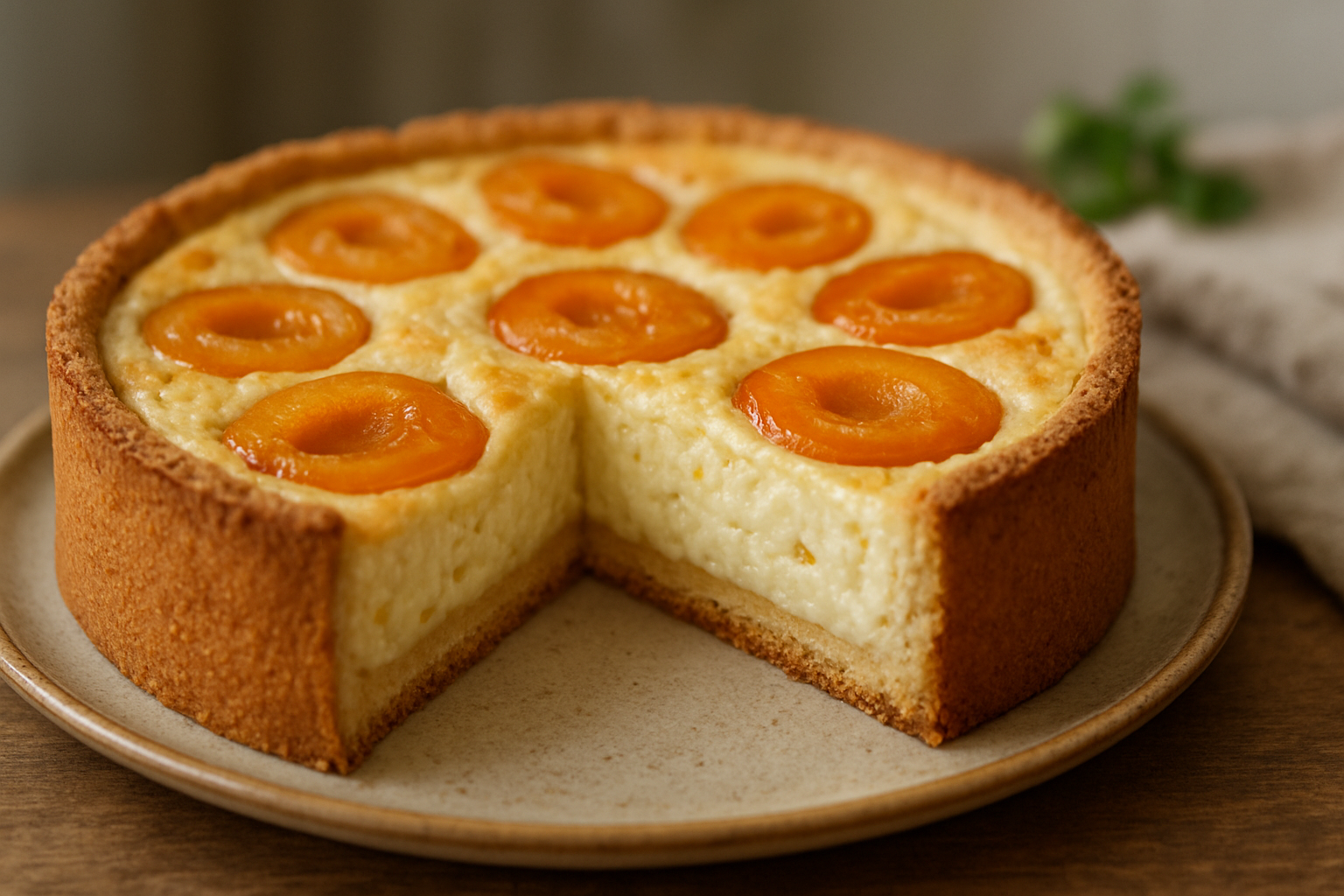
Apricot Tart with Rice Pudding Filling: Creamy German Summer Bake
🛒 Ingredients
- ✓
500 ml milk
- ✓
90 g caster sugar
- ✓
finely grated zest of 1/2 lemon
- ✓
150 g pudding rice
- ✓
juice of 1/2 lemon
- ✓
2 tbsp apricot jam
- ✓
250 g plain flour
- ✓
60 g caster sugar
- ✓
a pinch of salt
- ✓
finely grated zest of 1/2 lemon
- ✓
125 g cold butter
- ✓
2–3 tbsp cold water
- ✓
3 eggs
- ✓
500 g apricots from a jar, well drained
- ✓
icing sugar, for dusting
This recipe is also available in German.
📌 Overview
This apricot tart with rice pudding filling combines a pre-baked shortcrust pastry base with creamy pudding rice, lemon zest and well-drained apricots. The main search intent behind this recipe is clear: readers want a tart that does not turn soggy, a filling that sets properly when sliced, and a fruit layer that stays fresh rather than watery. This method is built around those points. The rice pudding is cooked slowly until thick, the apricots are drained carefully, and the pastry base is briefly blind-baked before the filling is added. The result is a German-style summer tart that fits a 26 cm springform tin and works well for afternoon coffee, family gatherings or a make-ahead dessert table.
👨🍳 How to make Apricot Tart with Rice Pudding Filling
- 1
Warm the milk with 90 g of the sugar and the finely grated lemon zest in a heavy-based saucepan. Stir in the pudding rice and bring it just to the boil so the sugar dissolves and the lemon flavour infuses the milk.
- 2
Turn the heat down immediately, cover the pan and let the rice cook gently for 40–45 minutes. Stir every 5–7 minutes, scraping the bottom of the pan so the rice does not catch. By the end, the mixture should be thick and creamy rather than loose or milky.
- 3
Remove the pan from the heat, take off the lid and leave the rice pudding to cool for at least 20–30 minutes, until only lukewarm. Stir in the lemon juice and apricot jam. If the rice pudding is still very hot when the eggs are added later, they may curdle.
- 4
Heat the oven to 200°C conventional. If using a fan oven, use 180°C and watch the pastry edges, as they may brown more quickly.
- 5
For the shortcrust pastry, mix the flour, 60 g sugar, salt, lemon zest and cold butter cut into small pieces. Rub together with your fingertips or use a dough hook until the mixture resembles coarse crumbs. Add 2–3 tbsp cold water and bring the dough together only until it holds.
- 6
Roll the pastry out thinly and use it to line a greased 26 cm springform tin. Press it into the base and sides, forming a rim about 3 cm high. Prick the base several times with a fork and, if possible, chill the lined tin for 10–15 minutes to reduce shrinking.
- 7
Blind-bake the pastry base on the middle shelf for 10 minutes. It should still look pale, but the surface should appear dry. This helps the base resist moisture from the apricots and rice pudding filling.
- 8
Separate the eggs. Beat the egg yolks thoroughly into the lukewarm rice pudding until the mixture is smooth and evenly combined.
- 9
Whisk the egg whites to stiff but not dry peaks, then fold them into the rice pudding mixture in two additions. Use a spatula and gentle movements to keep as much air in the filling as possible.
- 10
Drain the jarred apricots very well and pat them dry with kitchen paper if they still look wet. Arrange them evenly over the pre-baked pastry base so every slice contains fruit.
- 11
Spoon the rice pudding filling over the apricots and smooth the top. Make sure the filling reaches the edges so the tart sets evenly.
- 12
Bake on the middle shelf for a further 40–45 minutes at 200°C. The tart is ready when the filling is lightly golden, the pastry edge looks baked and the centre only has a slight wobble.
- 13
Leave the tart to cool in the tin for about 10 minutes, then run a knife carefully around the edge, release the sides and let it cool completely on a wire rack. Do not slice it before the rice pudding filling has fully set.
- 14
Dust with icing sugar just before serving, so the top stays dry and attractive.
🧠 Why It Works
This apricot tart with rice pudding filling works because each component solves a specific technical problem. The pre-baked shortcrust pastry creates a stable, lightly crisp base and helps prevent a soggy bottom. The rice pudding is fully cooked and thickened before baking, so the oven does not have to evaporate excess liquid from the filling. Egg yolks help bind the rice pudding, while whipped egg whites lighten the texture and allow the filling to set without becoming dense. Lemon zest and lemon juice keep the dairy-rich filling from tasting heavy, while the apricots bring enough acidity to balance the sweetness. The three most important success factors are a thick rice pudding, well-drained fruit and enough cooling time before slicing.
🛠️ Troubleshooting
Why is my rice pudding filling too runny after baking?
The most common reason is that the rice pudding was still too loose before it went into the tart. It should cook for 40–45 minutes until thick and creamy, with no obvious free milk left in the pan. The rice pudding should also be only lukewarm before the eggs are added. After baking, let the tart cool completely, as the filling firms up as the rice starch, egg yolks and egg whites set.
How do I stop the shortcrust pastry base from becoming soggy?
Blind-bake the base for 10 minutes, prick it before baking and drain the apricots very thoroughly. If the fruit is especially juicy, sprinkle the pre-baked base with a thin layer of ground almonds, fine breadcrumbs or a little cornflour before adding the apricots. This absorbs excess moisture without changing the flavour much.
Why did my pastry shrink around the edge?
Shortcrust pastry shrinks when it is overworked, too warm or stretched into the tin. Handle the dough briefly, use cold butter and chill the lined springform tin for 10–15 minutes before blind-baking. Press the pastry into place without pulling it up the sides.
What should I do if the top is browning but the filling is still soft?
Cover the tart loosely with foil or baking parchment and continue baking until the centre only has a slight wobble. Do not move it higher in the oven, as that will brown the surface faster. If using a fan oven, reduce the temperature to 180°C.
Can I use fresh apricots without making the tart watery or too sharp?
Yes, but choose ripe yet firm apricots. Very hard apricots can taste too sharp after baking, while overripe ones release too much juice. Halve and stone them, pat the cut sides dry and add a thin layer of ground almonds under the fruit if they seem particularly juicy.
Can I make this apricot tart ahead of time?
Yes, this tart is a good make-ahead dessert because the rice pudding filling becomes more stable as it cools. Bake it the day before, let it cool completely, then cover and refrigerate it. Take it out 30–45 minutes before serving. Do not slice it while still warm, or the filling may spill out.
💡 Tips and Variations
- •
For a richer rice pudding filling, replace 100 ml of the milk with double cream. Avoid replacing too much milk, though, because the filling can become heavy unless the lemon note stays bright.
- •
If using fresh apricots, choose fruit that is ripe but still firm. In most regions, apricots are at their best in early to midsummer, when they have enough sweetness but still hold their shape.
- •
For extra protection against a soggy base, brush the pre-baked pastry with a thin layer of apricot jam or sprinkle it with 1–2 tbsp ground almonds before adding the fruit.
- •
A splash of vanilla extract or the seeds from half a vanilla pod work very well in the rice pudding filling and give the tart a warmer dessert aroma without overpowering the apricots.
- •
Peaches or nectarines are the best substitutes if apricots are unavailable. As with apricots, the key is to avoid fruit that is too wet or overripe.
- •
For a gluten-free version, use a suitable gluten-free flour blend designed for shortcrust pastry. The dough may be more fragile, so chill it well and roll it out gently.
- •
A vegan adaptation is possible, but the texture will not be identical to the classic version. Plant-based milk works well for the rice pudding, aquafaba is the closest substitute for whipped egg whites, and the egg yolks need to be replaced with a suitable plant-based binder.
- •
The most important finishing step is cooling. Once the tart is fully set, it slices cleanly and the contrast between crisp pastry, creamy rice pudding and soft apricots is much clearer.
📦 Storage
Because the tart contains a rice pudding and egg filling, it should be stored covered in the fridge once completely cool. It will keep for 3–4 days. For the best texture, take it out of the fridge 30–45 minutes before serving so the filling tastes creamy again and the pastry is not fridge-cold. Freezing is possible but not ideal, as the rice pudding filling can become slightly grainy after thawing.
🍷 Pairing
This apricot tart with rice pudding filling pairs especially well with a German Riesling Kabinett, whose bright acidity reflects the apricot and lemon notes while keeping the creamy filling from feeling heavy. A Franconian Silvaner is a gentler, more mineral option that works well with the shortcrust pastry and dairy-rich texture. For a non-alcoholic pairing, serve it with chilled lemon balm tea, lightly sweetened black tea or apricot iced tea. The best pairing is something fresh and clean, so the rice pudding filling remains balanced rather than overly rich.
❓ F.A.Q.
How long should I cook the rice pudding for an apricot tart with rice pudding filling?
Cook the pudding rice gently for 40–45 minutes. It should be soft, thick and creamy, not loose or milky. If there is still visible liquid in the pan, cook it uncovered for a few more minutes before cooling it.
Can I use fresh apricots instead of jarred apricots?
Yes, fresh apricots work very well when they are ripe, fragrant and still firm. Halve and stone them, then pat the cut sides dry. If the fruit is very juicy, protect the pastry with a thin layer of ground almonds or fine breadcrumbs.
Do I need to blind-bake the pastry for this apricot tart?
Yes, blind-baking is strongly recommended. The rice pudding filling and apricots both add moisture, so a 10-minute pre-bake gives the shortcrust base a better chance of staying firm rather than becoming soggy.
Can I bake this apricot tart the day before serving?
Yes, and it is often easier to slice the next day. The filling sets more firmly as it cools. Store the tart covered in the fridge overnight, then bring it closer to room temperature before serving.
Is this apricot tart with rice pudding filling vegetarian?
Yes, it is vegetarian because it contains milk, butter and eggs but no gelatine or meat-based ingredients. A vegan version is possible with plant-based milk, vegan butter and egg substitutes, but the filling will set differently from the traditional recipe.
How do I know when the rice pudding tart is fully baked?
The top should be lightly golden, the pastry edge should look baked and the centre should only wobble slightly. If the centre looks liquid, bake for another 5–10 minutes. If the surface browns too quickly, cover it loosely and continue baking.
Can I serve the tart warm?
It is better not to serve it straight from the oven. While warm, the rice pudding filling is still soft and may run when sliced. Let the tart cool completely, or serve it only slightly warmed after it has fully set.
🏛️ History and Tradition
Apricot tarts with creamy fillings have a long tradition in German home baking, especially in southern regions like Bavaria and Franconia where apricots are abundant. Historically, rice pudding was a cherished dessert ingredient, often combined with seasonal fruits to create celebratory dishes. This tart reflects the German penchant for balancing rich dairy-based fillings with fresh, local fruit, often enjoyed during summer festivals and family gatherings. Its enduring popularity underscores the cultural value placed on simple, authentic ingredients and seasonal produce in German culinary heritage.
This apricot tart with rice pudding filling is a reliable German-style summer bake when the rice pudding is cooked until thick, the shortcrust pastry is pre-baked and the apricots are drained properly. The contrast between crisp pastry, creamy filling, lemon aroma and soft fruit makes it more distinctive than a simple fruit tart, while still using familiar ingredients. Serve it well cooled and slightly tempered for the cleanest slices and the best balance of flavour.
Rate this recipe
Click or tap the stars to rate