
Alltagsküche
Kochen, wie es zuhause schmeckt
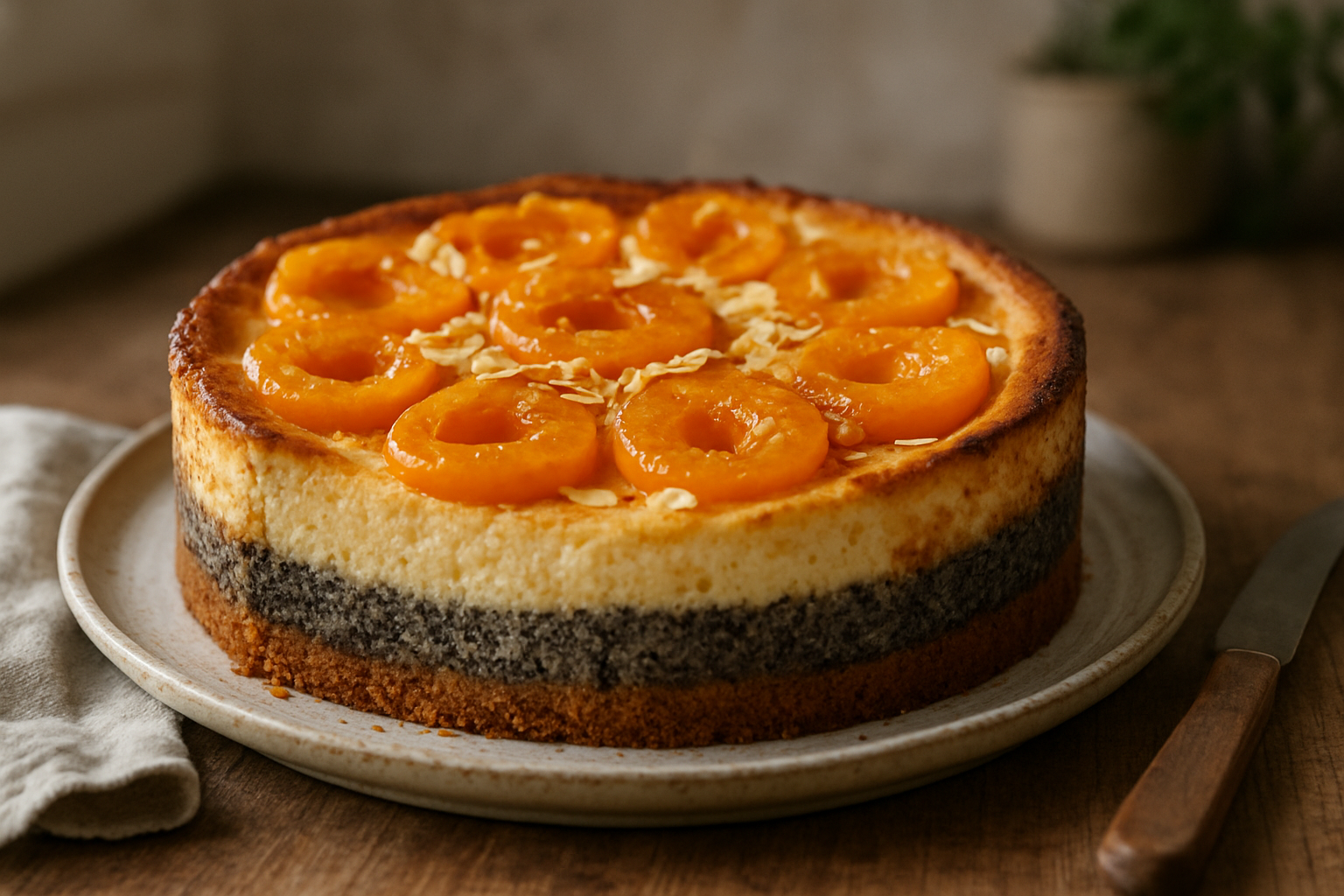
Apricot Poppy Seed Cheesecake Tart: Creamy Summer Bake
🛒 Ingredients
- ✓
250 g plain flour
- ✓
250 g sugar in total (75 g for the pastry, 75 g for the poppy seed layer, 100 g for the cheesecake filling)
- ✓
1 pinch of salt
- ✓
1 tsp finely grated lemon zest, divided
- ✓
1 egg for the pastry
- ✓
125 g cold butter, diced
- ✓
200 ml milk
- ✓
100 g ground poppy seeds
- ✓
50 g ground almonds
- ✓
1 sachet vanilla sugar
- ✓
2 eggs for the poppy seed layer
- ✓
250 g ricotta
- ✓
200 g soured cream
- ✓
1 tbsp lemon juice
- ✓
4 eggs for the cheesecake filling
- ✓
2 tbsp cornflour
- ✓
400 g apricots, fresh or from a jar, well drained
- ✓
50 g flaked almonds
- ✓
2 tbsp apricot jam
- ✓
1 tbsp water
This recipe is also available in German.
📌 Overview
This apricot poppy seed cheesecake tart is a layered summer bake made with buttery shortcrust pastry, a moist poppy seed and almond layer, creamy cheesecake filling and fruity apricots. It is especially good for making ahead because the tart needs to cool completely and chill for several hours before slicing. The key points are a well-chilled pastry, a cooled poppy seed mixture, well-drained apricots and a cheesecake filling that is baked only until set but still creamy. This gives you a stable, moist tart that slices cleanly.
You may also find it useful to look at recipes Blueberry Cheesecake Traybake, Strawberry Tartlets Recipe with Crisp Shortcrust for Summer Baking, and Advocaat Cheesecake with Quark and Raisins, in addition to this one.
👨🍳 How to make Apricot Poppy Seed Cheesecake Tart
- 1
For the shortcrust pastry, mix the flour, 75 g sugar, salt and half the lemon zest in a bowl. Add the egg and cold diced butter, then work quickly into a smooth dough.
- 2
Shape the dough into a flat disc, wrap it and chill for at least 30 minutes. A flat disc chills faster and is easier to roll out later.
- 3
Preheat the oven to 175°C conventional heat. Line the base of a 26 cm springform tin with baking parchment, then grease and lightly flour the sides.
- 4
Roll out the chilled pastry on a lightly floured surface and use it to line the base and sides of the tin. Prick the base several times with a fork and keep the tin chilled until needed.
- 5
For the poppy seed layer, bring the milk to the boil in a saucepan. Stir in the ground poppy seeds, ground almonds, 75 g sugar and vanilla sugar, then let the mixture thicken gently over low heat for 2–3 minutes.
- 6
Remove the poppy seed mixture from the heat and let it cool until only lukewarm. Only then beat in the 2 eggs so they do not scramble in the hot mixture.
- 7
Spread the poppy seed mixture evenly over the chilled pastry base and chill the tin for 30–45 minutes. This helps the layer stay stable when the cheesecake filling is added.
- 8
For the cheesecake filling, mix the ricotta, soured cream, lemon juice, remaining lemon zest, 100 g sugar, 4 eggs and cornflour until smooth. Do not overbeat, as too much air can cause cracks.
- 9
Carefully pour the cheesecake filling over the poppy seed layer and smooth the surface. Bake on the lower shelf for 35–40 minutes, until the surface is lightly set but the centre still has a slight wobble.
- 10
Meanwhile, prepare the apricots. Halve and stone fresh apricots; if using jarred apricots, drain them very well and pat them dry so they do not water down the filling.
- 11
Arrange the apricots over the partially baked cheesecake layer, scatter with flaked almonds and bake for another 20–25 minutes, until the almonds are golden and the filling looks stable.
- 12
Switch off the oven, open the door slightly and leave the tart inside for 15 minutes. This helps the filling settle slowly and reduces the risk of cracks.
- 13
Warm the apricot jam with the water and stir until smooth. Brush a thin layer over the still-warm tart to glaze the apricots and almonds.
- 14
Leave the tart to cool completely in the tin on a wire rack. Chill for at least 2 hours, preferably 4 hours, before slicing.
🧠 Why It Works
This recipe works because every layer has a clear role: the chilled shortcrust pastry creates a stable, buttery base, the poppy seed and almond layer adds nutty depth and helps hold moisture, and the ricotta and soured cream filling sets creamy but sliceable with the help of eggs and cornflour. The poppy seed mixture must cool before the eggs are added, otherwise they can scramble. The apricots are added only once the cheesecake layer has partly set, so they do not sink and release too much juice into the filling. Lemon zest and juice keep the filling fresh, while the apricot glaze adds shine, protection and light fruity sweetness.
🛠️ Troubleshooting
Why is my apricot poppy seed cheesecake tart not setting?
The filling is often too soft if it was underbaked, the cornflour was not mixed in evenly or the apricots released too much liquid. Bake until the edges are set and the centre only wobbles slightly. Jarred or frozen apricots must be drained very well.
Why does the cheesecake filling crack as it cools?
Cracks are usually caused by overbeating, excessive heat or cooling too quickly. Mix the filling until smooth but not airy, bake at a moderate temperature and let the tart sit in the switched-off oven with the door slightly open for 15 minutes.
How do I stop the shortcrust pastry from shrinking?
The pastry needs to stay cold and should rest for at least 30 minutes. Do not roll it out when it is too warm and do not stretch it into the tin. Pricking the base helps with air pockets, but it does not replace chilling.
Why is the pastry base soggy?
A soggy base can happen if the poppy seed layer is too hot or too wet when added, or if the apricots release too much juice. Let the poppy seed mixture cool, keep the lined tin chilled and pat jarred or thawed apricots dry before using.
What should I do if the top browns too quickly?
If the almonds or surface brown too fast, cover the tart loosely with baking parchment or foil. Continue baking on the lower shelf so the filling can finish setting without the top burning.
How do I slice the tart cleanly?
The tart must cool completely and chill for at least 2 hours. For very neat slices, use a sharp knife dipped in hot water and wiped clean between cuts. Straight after baking, the filling is too soft to slice cleanly.
💡 Tips and Variations
- •
For an especially rich filling, replace the ricotta with mascarpone. The tart will be denser and creamier, so it is best served well chilled.
- •
If using fresh apricots, choose ripe but not over-soft fruit. Very soft apricots release too much juice during baking and can make the surface uneven.
- •
Frozen apricots can be used, but they must be fully thawed and very well drained. Place them on kitchen paper before arranging them on the tart.
- •
For more aroma, add 1/2 tsp ground cardamom or a little vanilla to the cheesecake filling. Both work well with poppy seeds and apricots, but should be used sparingly.
- •
If you do not have poppy seeds, replace the layer with ground almonds, finely chopped walnuts or another nut filling. The flavour will change, but the nutty structure remains.
- •
For a gluten-free version, use a gluten-free flour blend suitable for shortcrust pastry. Keep the dough well chilled, as gluten-free pastry can break more easily.
- •
A vegan version is possible but technically more demanding because the pastry, poppy seed layer and cheesecake filling all contain eggs and dairy. Use plant-based butter, plant-based milk, vegan cream cheese or quark alternative and a reliable egg replacer designed for baked fillings.
- •
The tart often tastes better the next day because the poppy seeds, apricots and cheesecake filling have time to settle together. For guests, it is ideal to bake it the day before.
📦 Storage
Let the apricot poppy seed cheesecake tart cool completely, then keep it well covered in the fridge. It stays fresh for up to 3 days and is best served cold or after 15–20 minutes at room temperature. Do not reheat it in the microwave, as the cheesecake filling can soften unevenly. Freezing is possible, but the apricots may release some liquid after thawing and the top can become softer.
🍷 Pairing
Apricot poppy seed cheesecake tart pairs especially well with a Mosel Riesling Kabinett because its acidity refreshes the creamy filling and supports the apricot fruit. A Franconian Silvaner is a calmer regional choice and works well with poppy seeds, almonds and buttery pastry. If you prefer a slightly sweeter pairing, choose an off-dry late-harvest Riesling. For a non-alcoholic option, serve black tea, apricot tea, milky coffee or sparkling water with lemon.
❓ F.A.Q.
Can I bake apricot poppy seed cheesecake tart the day before?
Yes, and it is recommended. The tart needs time to cool and set. After a night in the fridge, the filling is firmer, the layers slice more cleanly and the flavour becomes more balanced.
Can I use fresh, frozen or jarred apricots?
Yes, all three work. Fresh apricots should be ripe but not overly soft. Frozen apricots must be fully thawed. Jarred and thawed apricots should be drained very well and patted dry before use.
Why does the poppy seed mixture need to cool before adding eggs?
If eggs are stirred into a very hot poppy seed mixture, they can scramble and make the layer grainy. The mixture should be only lukewarm before the eggs are mixed in.
How do I make the cheesecake filling extra creamy?
Mix the ricotta and soured cream until smooth, but do not whip in too much air. Cornflour helps stabilise the filling, while gentle baking and slow cooling keep it from drying out or cracking.
Can I make apricot poppy seed cheesecake tart gluten-free?
Yes. Replace the plain flour in the pastry with a gluten-free flour blend suitable for cakes or shortcrust pastry. Keep the dough well chilled because gluten-free pastry is often more fragile.
How long does apricot poppy seed cheesecake tart keep?
Well covered, the tart keeps in the fridge for up to 3 days. Because it contains a cheesecake filling, it should not stand at room temperature for long, especially in warm weather.
🏛️ History and Tradition
The apricot poppy seed cheesecake tart is a traditional German dessert with roots in Bavarian and Franconian baking customs, where poppy seeds and seasonal fruits are celebrated in summer pastries. Historically, poppy seeds have been valued in German cuisine for their nutty flavour and symbolic significance in festive baking. This tart reflects the region’s penchant for combining creamy cheese fillings with fruit and nut elements, often enjoyed during warm months and family gatherings. Its enduring popularity underscores the dish’s cultural identity and culinary heritage within German vegetarian baking traditions.
Apricot poppy seed cheesecake tart works best when the pastry, poppy seed layer and cheesecake filling are prepared with control: the pastry stays cold, the poppy seed mixture cools before the eggs are added, and the apricots are well drained. After baking, the tart needs enough chilling time to become creamy, stable and easy to slice. The result is a fruity, nutty summer dessert that is ideal for guests and make-ahead baking.
Rate this recipe
Click or tap the stars to rate