
Alltagsküche
Kochen, wie es zuhause schmeckt
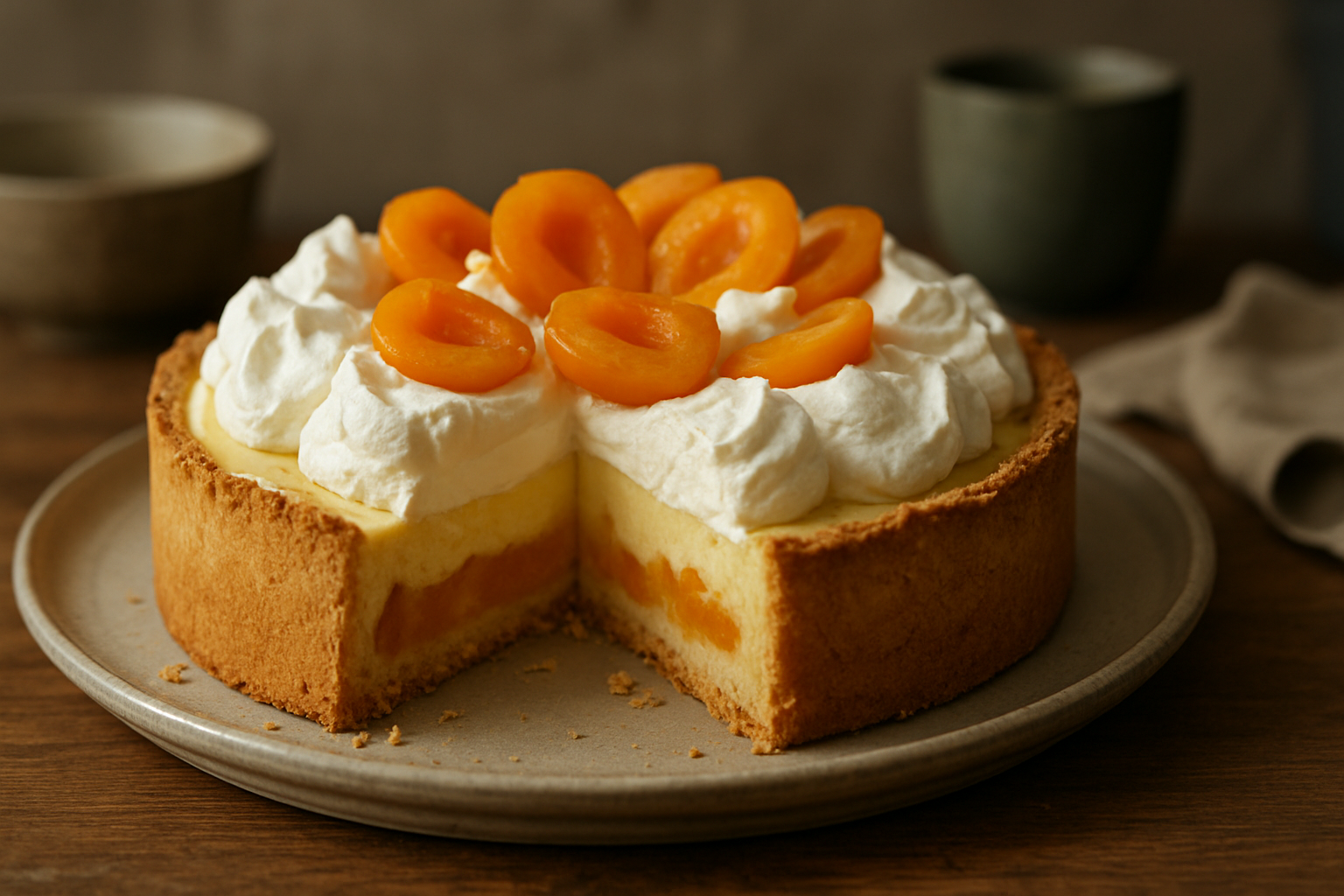
Apricot Tart Recipe with Buttery Shortcrust – Perfect for Summer Afternoons
🛒 Ingredients
- ✓
200 g cold butter
- ✓
100 g icing sugar
- ✓
1 pinch of salt
- ✓
300 g plain flour
- ✓
1 egg yolk
- ✓
1 tin apricots (about 400 g)
- ✓
150 ml red wine
- ✓
1 tsp orange flavouring
- ✓
1 sachet vanilla custard powder
- ✓
50 g sugar
- ✓
a little dried breadcrumbs, for dusting
- ✓
200 ml double cream
- ✓
1 sachet vanilla sugar
This recipe is also available in German.
📌 Overview
An apricot tart is a classic German dessert featuring a crisp, buttery shortcrust base topped with bright, tangy apricots and smooth vanilla cream. Popular in regions like Baden-Württemberg and Bavaria, this tart is a seasonal favourite during summer and early autumn, celebrated for its harmonious blend of textures and flavours. Its authentic preparation reflects traditional German baking techniques and festive family gatherings.
👨🍳 Preparation
- 1
Cut the cold butter into small cubes. Rub or work it together with the icing sugar, salt, flour and egg yolk until you have a smooth shortcrust pastry. Knead briefly with your hands until supple, shape into a ball, wrap in cling film and chill for at least 30 minutes.
- 2
Drain the apricots, reserving the juice. Pour the juice into a saucepan with the red wine and orange flavouring, then warm gently.
- 3
Mix the vanilla custard powder with the sugar and 6 tablespoons of the red wine mixture until smooth. Bring the remaining liquid to the boil, then stir in the custard mixture. Cook, stirring, until thickened, then leave to cool slightly.
- 4
Heat the oven to 175°C. Grease a 22 cm tart tin and dust lightly with breadcrumbs.
- 5
Roll out the pastry on a lightly floured surface and use it to line the tin, pressing it in neatly and raising a slight edge around the sides. Prick the base several times with a fork.
- 6
Set 3 apricot halves aside for decoration. Dice half of the remaining apricots and scatter them evenly over the pastry base.
- 7
Blitz the rest of the apricots to a purée and stir them into the vanilla custard mixture. Spoon the filling evenly over the diced apricots in the tart case.
- 8
Bake on the middle shelf for about 35 minutes, until the pastry is golden. Remove from the oven and leave the tart to cool completely on a wire rack.
- 9
Whip the double cream with the vanilla sugar until it holds its shape, then spoon it over the cold tart in generous dollops. Top each with the reserved apricot halves for the classic ‘fried egg’ look.
🧠 Why It Works
This apricot tart balances a rich, crumbly shortcrust pastry with the natural acidity and sweetness of apricots, enhanced by a subtle red wine and orange infusion. The vanilla custard filling adds a creamy, aromatic layer that complements the fruit’s sharpness, while the whipped cream topping introduces lightness and a velvety texture. The interplay of fat from butter, acid from fruit and wine, and sweetness from sugar creates a well-rounded flavour profile typical of German desserts. The careful chilling and baking steps ensure a crisp base that holds the moist filling without sogginess, preserving the tart’s structural integrity and mouthfeel.
🛠️ Troubleshooting
Why is my shortcrust pastry tough instead of crumbly?
Overworking the dough develops gluten, making it tough. Handle the dough gently and briefly, and ensure the butter is cold to achieve a tender, crumbly texture.
What if the custard filling is too runny after cooking?
Ensure the custard powder is fully dissolved before adding to boiling liquid and cook until visibly thickened. If still runny, return to heat and stir gently until it thickens further.
How can I avoid the whipped cream topping from weeping?
Use well-chilled double cream and whip it just until soft peaks form. Adding vanilla sugar helps stabilise it. Serve the tart soon after topping to prevent weeping.
Can I freeze the apricot tart?
Freezing is not recommended due to the cream topping and delicate pastry, which may lose texture. Instead, store covered in the fridge and consume within two days.
💡 Tips and Variations
- •
For a richer, more fragrant pastry, try replacing part of the butter with marzipan.
- •
Make sure the pastry is properly chilled before rolling it out, as this makes it much easier to handle.
- •
What makes this tart so appealing is the balance between the bright apricot sharpness and the sweetness of the vanilla cream.
- •
For a dairy-free version, use a plant-based butter, a non-dairy whipping cream alternative and a suitable plant-based vanilla custard powder.
- •
Peaches or nectarines work beautifully in place of the apricots if you fancy a slight variation.
- •
A small squeeze of lemon juice in the apricot filling will lift the fruit flavour nicely.
- •
To make it gluten-free, swap the plain flour for a gluten-free flour blend and check that the custard powder is gluten-free too.
- •
The real magic of this tart lies in the contrast of crisp pastry, soft fruit filling and airy cream, which makes every bite feel rather special.
📦 Storage
Keep the tart covered in the fridge and enjoy within 2 days, so the cream stays fresh and the pastry does not soften too much.
🍷 Pairing
This apricot tart pairs exquisitely with a German Riesling Kabinett, whose crisp acidity and subtle minerality highlight the tart’s fruity brightness and balance its creamy vanilla notes. A Weissburgunder from Baden offers a gentle body and delicate fruitiness that complements the buttery shortcrust and soft apricot layers. For an international touch, an Italian Pinot Grigio with its fresh acidity and light floral aromas harmonises beautifully, enhancing the dessert’s refreshing character while respecting its German culinary roots.
❓ F.A.Q.
Can I use fresh apricots instead of canned for this tart?
Yes, fresh apricots can be used when in season. Choose ripe but firm apricots, halve and pit them, then proceed with the recipe. You may need to adjust the sugar slightly depending on their sweetness.
How do I prevent the shortcrust pastry from becoming soggy?
Dusting the tart tin with dried breadcrumbs before lining it with pastry helps absorb excess moisture. Also, chilling the dough before baking and baking the tart until golden ensures a crisp base.
Is it possible to prepare this tart in advance?
You can prepare the tart base and filling a day ahead and refrigerate them separately. Assemble and add the whipped cream topping just before serving to maintain freshness and texture.
What are good seasonal occasions to serve this apricot tart?
This tart is ideal for summer and early autumn celebrations, including garden parties, family gatherings, and traditional German festivities like Erntedankfest (harvest festival).
Can I make a dairy-free version of this apricot tart?
Absolutely. Substitute butter with plant-based margarine, use a non-dairy whipping cream alternative, and select a vegan vanilla custard powder to keep the tart dairy-free while preserving its flavour and texture.
🏛️ History and Tradition
Apricot tarts have a long-standing place in German baking traditions, especially in southern regions like Baden-Württemberg and Bavaria, where apricot cultivation thrives. Historically, these tarts celebrated the summer harvest, combining local fruit with classic shortcrust pastry techniques passed down through generations. Often enjoyed during family gatherings and festive occasions such as Erntedankfest, the apricot tart embodies the German emphasis on seasonal, regional ingredients and artisanal baking craftsmanship. Its enduring popularity reinforces its role as a cultural and culinary symbol within traditional German desserts.
If you’re after a pudding that feels both nostalgic and a little bit playful, this apricot ‘fried egg’ tart is such a lovely one to make. It’s a real crowd-pleaser, perfect for sharing over tea with family or friends, and it looks wonderfully cheerful on the table. Do give it a try at home — I think it’s the sort of bake you’ll come back to again and again.
Rate this recipe
Click or tap the stars to rate